Özet
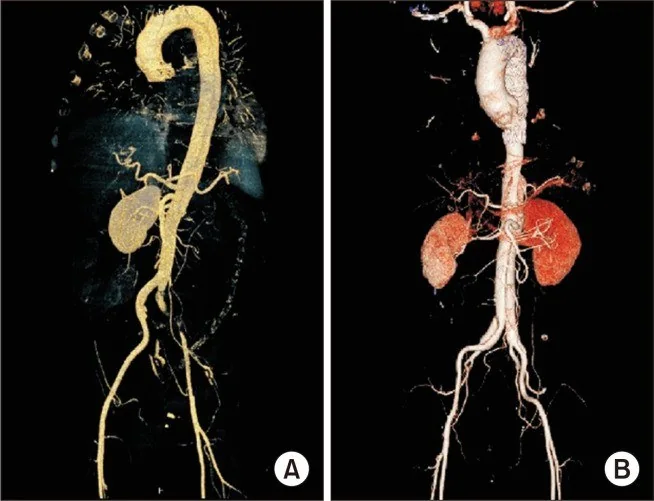
Akut aort diseksiyonunda brakiyosefalik trunkus, sol ana karotis, sol subklavyen veya aşağı uzanım varsa visseral dallar, böbrek ve iliak arterlerin akımı bozulabilir. BTA, dalın hangi lümenden beslendiğini, flebin ostiumu kapatıp kapatmadığını ve distal organ perfüzyonunu aynı incelemede gösterir. Dal damarına uzanan diseksiyon flebi dalın gerçek lümeninde kalıcı daralmaya yol açarak sabit obstrüksiyon oluşturabilir; dinamik obstrüksiyonda aorttaki hareketli flep dal ostiumunu aralıklı olarak kapatır. Yalnız damar daralmasını raporlayıp distal organ hasarını atlamak, klinik olarak önemli iskemi ve infarktı gözden kaçırabilir.
Faz ve pencere
- BTA tanısal
- İnce kesit arteriyel BTA'da intimal septumun dal ostiumuna uzanması, ostiumu örtmesi veya gerçek lümeni daraltması; dal boyunca kontrast dolum kusuru ve ilgili organda azalmış/heterojen kontrastlanma aranır.
- Gecikmiş tanısal
- Arteriyel fazda zayıf ya da asimetrik görünen böbrek ve visseral parankim kontrastlanmasının sürüp sürmediği, gecikmiş görüntüde dal akımının geç dolup dolmadığıyla karşılaştırılır; gecikmiş dolum tek başına canlılığı kanıtlamaz.
Önerilen pencereler: Anjiyo (G 600 / M 150), Batın (G 400 / M 50), Yumuşak doku (G 400 / M 40).
BT bulguları
- Ostiumda septum örtüşmesi — dal aort lümeninden çıkarken hareketli flebin ağzı kısmen ya da tamamen kapatması dinamik akım engelini düşündürür.
- Dala uzanan diseksiyon — intimal flebin dal lümeninde devam etmesi ve dalın gerçek lümeninin daralması sabit obstrüksiyon lehinedir.
- Dal içinde parsiyel tromboz — Dal damarında tromboz görülebilir; dal damarının açıklığını değerlendirin.
- Gerçek lümen kollapsı — aort kesitinde hilal biçimli dar gerçek lümen, birden fazla gerçek lümenden köken alan dalın akımını azaltabilir.
- Dalın yalancı lümenden köken alması — Açık bir dal damarı gerçek veya yalancı lümenden beslenebilir; malperfüzyon şüphesinde dal kontrastlanmasını ve ilgili organın kontrastlanmasını birlikte değerlendirin.
- Organ hipoperfüzyonu — Böbreklerde asimetrik, bağırsakta azalmış kontrastlanma malperfüzyon şüphesini destekleyebilir.
- İnfarkt — böbrek veya dalakta periferik kama biçimli parankim defekti ve komşu dalın tıkanıklığı birlikte izlenebilir.
Ölçütler ve sınıflamalar
- Dinamik, sabit ve birleşik dal obstrüksiyonu
- Dinamik obstrüksiyonda aorttaki hareketli diseksiyon flebi dal ostiumunu aralıklı olarak kapatır; sabit obstrüksiyonda flep dal damarına uzanarak gerçek lümenin kalıcı kollapsına yol açar. Her iki mekanizma aynı dalda birlikte bulunabilir.
Normalde
Aort diseksiyonunda arkus dallarının tutulumu ve patent dal damarlarının gerçek ya da yalancı lümenden beslendiği belirtilmelidir. Şüpheli dalda azalmış damar opasifikasyonunu ve ilgili organda gecikmiş ya da azalmış kontrastlanmayı değerlendirin.
Normal BT ile kıyasla
Aynı bölgenin, kaynak veri setinde patoloji içermediği belirtilen bir BT incelemesini kesit kesit kaydırın; organ sınırlarını açarak anatomiyi hasta görüntüsüyle karşılaştırın. Küçük rastlantısal bulgular tümüyle dışlanmamıştır.
Kaynak: TotalSegmentator v2.01 veri seti (Wasserthal ve ark., Radiology: Artificial Intelligence 2023), CC BY 4.0, vaka s0115; organ sınırları veri setinin otomatik segmentasyonundan, birleştirilerek sadeleştirildi. Görüntüler 2,5 mm kesit aralığına yeniden örneklendi.
Ayırıcı tanı
- Aterosklerotik ostial stenoz
- Ateroskleroz, renal arter stenozunun nedenlerinden biridir.
- Aortik tromboz veya oklüzif hastalık
- Akut aortik tromboz ve oklüzif hastalık, aort diseksiyonunun ayırıcı tanısında yer alır.
- Vaskülit
- Aortit, aort duvarının inflamasyonudur ve akut aortik acillerin ayırıcı tanısında yer alabilir.
- Kontrast zamanlama artefaktı
- karışmamış kontrast yalancı dolum kusurları yapabilir; ince kesitlerde ve gecikmiş fazda kaybolması artefaktı destekler.
Tuzaklar
- Tek bir statik BTA karesi dinamik ostium kapanmasını yakalamayabilir; dar dal görünümü ile klinik iskemi uyumsuzsa aort gerçek lümen basısını ve organ kontrastlanmasını birlikte belirtin.
- Dalın yalancı lümenden köken alması tek başına malperfüzyon anlamına gelmez; tromboz, darlık ve distal parankim bulgusunu arayın.
- Arteriyel fazda asimetrik böbrek kontrastlanması malperfüzyon şüphesini doğurabilir; böbrek kontrastlanmasını dal damar opasifikasyonuyla birlikte değerlendirin.
- Aort içindeki kontrast karışım artefaktı flep benzeri çizgi oluşturabilir; gerçek diseksiyon septumu çok düzlemli görüntülerde duvar boyunca devam eder ve lümenleri ayırır.
Kendini dene
Diseksiyon flebi sol renal arter içine ilerliyor; arter lümeni dar ve böbrekte kama biçimli defekt var. Mekanizma hangisi?
Cevabı göster
Sabit dal obstrüksiyonu. Dal damarına uzanan flep gerçek lümende kalıcı kollapsa yol açarak sabit obstrüksiyonu destekler; dinamik obstrüksiyonda aorttaki mobil flep dal ostiumunu aralıklı kapatır. Dal damarında flebin devam etmesi statik obstrüksiyonla uyumludur; BT'de malperfüzyon, damar opasifikasyon azalması ve organ kontrastlanma kusuruyla değerlendirilebilir.
Aort gerçek lümeni daralmış, dal ostiumu septumla örtülü; dal içinde flep yok. Hangi açıklama daha olası?
Cevabı göster
Dinamik malperfüzyon. Dal içine uzanım olmadan ostiumun aort septumu tarafından örtülmesi ve gerçek lümen kollapsı dinamik mekanizmayı düşündürür. Dal damarına uzanan flep statik obstrüksiyonla; aorttaki mobil flebin ostiumu aralıklı kapatması dinamik obstrüksiyonla uyumludur.
Kaynaklar
Bu sayfadaki 39 cümle ve 2 quiz sorusu aşağıdaki kaynaklardan alıntılarla tek tek karşılaştırıldı; 14 cümle bu karşılaştırmada düzeltildi (2026-10-09).
- Staged visceral revascularization prior to central aortic repair in acute type A aortic dissection complicated by mesenteric malperfusion: a case reportpmc.ncbi.nlm.nih.gov
- Modernizing Aortic Dissection Classification in the Era of Endovascular and Hybrid Repair: Implications for Radiology Reportingpmc.ncbi.nlm.nih.gov
- Acute type B aortic dissection after ruptured thoracoabdominal aortic aneurysm repair resulting in thoracoabdominal branch endoprosthesis collapse and malperfusionpmc.ncbi.nlm.nih.gov
- David-V Procedure Combined with Zone 2 Arch Replacement for Acute Stanford Type A Dissectionpmc.ncbi.nlm.nih.gov
- Radiologic reporting of DeBakey type I aortic dissection: key preoperative and postoperative findings of the AMDS hybrid stentpmc.ncbi.nlm.nih.gov
- ACR Appropriateness Criteria® Suspected Acute Aortic Syndrome.pubmed.ncbi.nlm.nih.gov
- Rescue Percutaneous Stenting for Cerebral Malperfusion With Acute Aortic Dissection Following TAVR.pubmed.ncbi.nlm.nih.gov
- Dissected Aorta Repair Through Stent Implantation trial: Canadian results.pubmed.ncbi.nlm.nih.gov
- Malperfusions in Acute Type B Aortic Dissection-Predictors of Outcomes.pubmed.ncbi.nlm.nih.gov
- Prospective multicenter clinical trial (STABLE) on the endovascular treatment of complicated type B aortic dissection using a composite device design.pubmed.ncbi.nlm.nih.gov
- Endograft repair of complicated acute type B aortic dissections.pubmed.ncbi.nlm.nih.gov
- Correlation of the femoral pulse and mesenteric perfusion pressure in acute aortic dissection.pubmed.ncbi.nlm.nih.gov
- Analysis of intimal extent and predictors of renal atrophy in patients with aortic dissection.pubmed.ncbi.nlm.nih.gov
- Anatomic suitability for "off-the-shelf" thoracic single side-branched endograft in patients with type B aortic dissection.pubmed.ncbi.nlm.nih.gov
- Dynamic and Static Vessel Malperfusion as a Consequence of Acute Type B Aortic Dissection.pubmed.ncbi.nlm.nih.gov
- Midterm Outcome of Branch Vessel Stenting for Superior Mesenteric Artery Malperfusion Complicating with Acute Aortic Dissection.pubmed.ncbi.nlm.nih.gov
- CT angiography features of organ malperfusion and imaging biomarker for postoperative adverse complications in acute type A aortic dissection.pubmed.ncbi.nlm.nih.gov
- Prognostic Impact of Branch Vessel Involvement on Computed Tomography versus Clinical Presentation of Malperfusion in Patients With Type a Acute Aortic Dissection.pubmed.ncbi.nlm.nih.gov
- Visceral and renal malperfusion syndromes in acute aortic dissection type A: the fate of the branch vessel.pubmed.ncbi.nlm.nih.gov
- Multidisciplinary management of acute type A aortic dissection presenting with atypical symptoms, abdominal hemorrhage, and Rh-negative blood type: a case report.pubmed.ncbi.nlm.nih.gov
- Endovascular repair of a complicated acute type B aortic dissection in a pediatric patient with visceral and lower-extremity malperfusion.pubmed.ncbi.nlm.nih.gov
- Renal artery involvement as a predictor of severe malperfusion in acute type A aortic dissection: a retrospective cohort study.pubmed.ncbi.nlm.nih.gov
- Staged visceral revascularization prior to central aortic repair in acute type A aortic dissection complicated by mesenteric malperfusion: a case report.pubmed.ncbi.nlm.nih.gov
- Intraoperative Detection of Distal True Lumen Collapse and Endovascular Salvage Following Frozen Elephant Trunk Repair for Acute Stanford Type A Intramural Hematoma.pubmed.ncbi.nlm.nih.gov
- Total endovascular repair of a post-TEVAR Crawford extent II thoracoabdominal aortic aneurysm with concomitant renal artery aneurysm: a case report.pubmed.ncbi.nlm.nih.gov
- A Case of High-Risk Acute Stanford Type B Aortic Dissection in a Right-Sided Aortic Arch Presenting With Transient Hemiparesis.pubmed.ncbi.nlm.nih.gov
- Femoral Arterial Perfusion Guided by Intraoperative Transesophageal Echocardiography for Mesenteric Malperfusion in Acute Type A Aortic Dissection.pubmed.ncbi.nlm.nih.gov
- Computational studies on visceral artery lesions and aortic pathologies involving visceral branches: a comprehensive review for the clinician.pubmed.ncbi.nlm.nih.gov
- The Diagnostic Value of D-Dimer Testing in the Differential Diagnosis of Acute Abdomen in the Emergency Department.pubmed.ncbi.nlm.nih.gov
- Fibromuscular Dysplasia: A Focused Review for the Cardiologist.pubmed.ncbi.nlm.nih.gov
- MDCT Imaging of Non-Traumatic Thoracic Aortic Emergencies and Its Impact on Diagnosis and Management-A Reappraisal.pubmed.ncbi.nlm.nih.gov
- Dual percutaneous management of Dunning type III iatrogenic aortic dissection during percutaneous coronary intervention: a case report.pubmed.ncbi.nlm.nih.gov
- Clinical outcomes of external fenestration TEVAR in Stanford type B aortic dissection involving the left subclavian artery: a retrospective study.pubmed.ncbi.nlm.nih.gov
- Preliminary results of one-stage repair of residual aortic dissection using dense mesh stent combined with release and post-processing techniques.pubmed.ncbi.nlm.nih.gov
- Beyond Atherosclerosis and Fibromuscular Dysplasia: Rare Causes of Renovascular Hypertension.pubmed.ncbi.nlm.nih.gov
- Acute aortic syndromes and aortic emergencies.pubmed.ncbi.nlm.nih.gov
- Operative Procedures for Ultrasound Assessment of Extracranial Artery Disease: A Narrative Review by the Italian Society for Vascular Investigation (SIDV).pubmed.ncbi.nlm.nih.gov
- Malperfusion in acute type A aortic dissection: how we handle the challenge?pubmed.ncbi.nlm.nih.gov
- Complex adult congenital heart disease on cross-sectional imaging: an introductory overview.pubmed.ncbi.nlm.nih.gov
- Thrombolysis in spontaneous coronary artery dissection: a case report of acute catastrophic dissection requiring coronary artery bypass surgery and delayed heart transplant in a young woman with fibromuscular dysplasia.pubmed.ncbi.nlm.nih.gov
- Mechanisms of aortic dissection: From pathological changes to experimental and <i>in silico</i> models.pubmed.ncbi.nlm.nih.gov
- Clinical Imaging and Innovations in Aortic Aneurysm and Dissection.pubmed.ncbi.nlm.nih.gov
- A practical approach to the management of percutaneous coronary intervention complications.pubmed.ncbi.nlm.nih.gov
- Middle cerebral artery dissection: pathophysiology, diagnosis, and therapeutic options.pubmed.ncbi.nlm.nih.gov
- CT Imaging Findings of Pulmonary Artery Stenosis: A Pictorial Review.pubmed.ncbi.nlm.nih.gov
- 2022 ACC/AHA guideline for the diagnosis and management of aortic disease: A report of the American Heart Association/American College of Cardiology Joint Committee on Clinical Practice Guidelines.pubmed.ncbi.nlm.nih.gov
- 2022 ACC/AHA Guideline for the Diagnosis and Management of Aortic Disease: A Report of the American Heart Association/American College of Cardiology Joint Committee on Clinical Practice Guidelines.pubmed.ncbi.nlm.nih.gov
- 2022 ACC/AHA Guideline for the Diagnosis and Management of Aortic Disease: A Report of the American Heart Association/American College of Cardiology Joint Committee on Clinical Practice Guidelines.pubmed.ncbi.nlm.nih.gov
- Endovascular Management of Post-Dissection Thoracoabdominal Aortic Aneurysms After the Acute Phase: Mid-Term Outcomes of F/BEVAR.pubmed.ncbi.nlm.nih.gov
- CIRSE Standards of Practice on the Endovascular Management of Descending Thoracic Aortic Disease.pubmed.ncbi.nlm.nih.gov
- Endovascular technology for aortic arch repair: from innovation to integration.pubmed.ncbi.nlm.nih.gov
- Assessing Venous Congestion in Acute and Chronic Heart Failure: A Review of Splanchnic, Cardiac and Pulmonary Ultrasound: Part 1: Conventional B-Mode, Colordoppler, and Vexus Protocol.pubmed.ncbi.nlm.nih.gov
- Aortic arch registry of type a aortic dissection (AoArch) - rationale, design and definition criteria.pubmed.ncbi.nlm.nih.gov
- Long-term safety and effectiveness of the "OptEase" vena cava filter.pubmed.ncbi.nlm.nih.gov
- Predictors of One-Year Mortality in Hospitalized Patients with Splenic Infarction: Survival Analysis of a Retrospective Cohort in Taiwan.pubmed.ncbi.nlm.nih.gov
- Intravascular Lymphoma-Associated Stroke: A Systematic Review of Case Studies.pubmed.ncbi.nlm.nih.gov
- CT-Centered Multimodality Imaging of Arterial Wall Fragility in Acute Aortic Syndromes: A Narrative Review of Imaging Markers and Clinical Implications.pubmed.ncbi.nlm.nih.gov
- Acute aortic dissection masquerading as large bowel obstruction: a case report.pubmed.ncbi.nlm.nih.gov
- Modernizing Aortic Dissection Classification in the Era of Endovascular and Hybrid Repair: Implications for Radiology Reporting.pubmed.ncbi.nlm.nih.gov
- Catastrophic STS/SVS type B3 aortic dissection complicated by hepatic portal venous gas and multi-organ malperfusion: a case report.pubmed.ncbi.nlm.nih.gov
- Cerebral protection strategies in aortic arch surgery: a review of techniques and outcomes.pubmed.ncbi.nlm.nih.gov
- Managing Dialysis-Associated Haemodynamic Instability in Critical Calcific Left Main Stem Disease With Tachycardia-Bradycardia Syndrome Using Intravascular Lithotripsy-Assisted Percutaneous Coronary Intervention and Permanent Pacemaker Implantation.pubmed.ncbi.nlm.nih.gov
- Use of Calcium Modification in Percutaneous Coronary Intervention: A Comprehensive Review.pubmed.ncbi.nlm.nih.gov
- Stent Undersizing and Malapposition: Mechanical Causes of Acute and Late Stent Failure.pubmed.ncbi.nlm.nih.gov
- Point-of-Care Transesophageal Echocardiography in Emergency and Intensive Care: An Evolving Imaging Modality.pubmed.ncbi.nlm.nih.gov
- Cardiovascular and Clinical Manifestations of Marfan Syndrome and Other Inherited Connective Tissue Disorders with Coexisting Genetic Variants.pubmed.ncbi.nlm.nih.gov
- Multimodality Imaging in a Patient With MINOCA and Anomalous Coronary Artery.pubmed.ncbi.nlm.nih.gov
- Aortitis as a High-Risk Vascular Syndrome: Integrating Phenotype-Driven Diagnosis, Multidisciplinary Assessment, and Personalised Management.pubmed.ncbi.nlm.nih.gov
- Idiopathic IgG4-negative perivascular fibrosis with extensive thoracic aortic, coronary artery, and supra-aortic branch involvement: A case report.pubmed.ncbi.nlm.nih.gov
- Giant left main coronary artery aneurysm in a young adult female with suspected incomplete Kawasaki disease: a case report.pubmed.ncbi.nlm.nih.gov
- Fontan Failure: Current State of the Art in Mechanical Circulatory Support and Transplantation.pubmed.ncbi.nlm.nih.gov
- Perioperative mortality in patients with acute aortic dissection and coronary artery problems: report of 3 cases and literature review.pubmed.ncbi.nlm.nih.gov
- Case Report: Improved axillary artery cannulation and extracorporeal membrane oxygenation bridging therapy for cardiogenic shock caused by Marfan syndrome combined with aortic dissection.pubmed.ncbi.nlm.nih.gov
- The Dean Effect: An Aortic Arch Flow Artifact Mimicking Dissection.pubmed.ncbi.nlm.nih.gov
- Optimizing low contrast volume thoracic CT angiography: From the basics to the advanced.pubmed.ncbi.nlm.nih.gov
- Contrast opacification on thoracic CT angiography: challenges and solutions.pubmed.ncbi.nlm.nih.gov
- Type 2 Myocardial Infarction: Navigating Diagnostic Pathways and Therapeutic Crossroads Between Invasive and Conservative Strategies.pubmed.ncbi.nlm.nih.gov
- Society for Cardiovascular Magnetic Resonance 2023 Cases of SCMR case series.pubmed.ncbi.nlm.nih.gov
- Conference Proceedings: Select Abstracts Presented at the 2025 Advocate Aurora Scientific Day.pubmed.ncbi.nlm.nih.gov
- Circumferential False Lumen Exclusion: A Technique for Indirect Cannulation of a Dissected Innominate Artery in Acute Type A Aortic Syndromes.pubmed.ncbi.nlm.nih.gov
- Aortic remodeling after thoracic endovascular aortic repair and Provisional ExTension To Induce COmplete ATtachment to treat complicated type B aortic dissection.pubmed.ncbi.nlm.nih.gov
- Imaging of acute pelvic pain.pubmed.ncbi.nlm.nih.gov
- Segmental vertebral artery agenesis with deep cervical reconstitution in a cervicothoracic variant cluster.pubmed.ncbi.nlm.nih.gov
- Patient-specific computational simulation for thoracic endovascular aortic repair in patients with Stanford type B aortic dissection.pubmed.ncbi.nlm.nih.gov
- Impact of left subclavian artery management on surgical efficiency and perioperative cerebral infarction in type A aortic dissection under deep hypothermic circulatory arrest: a single-center retrospective cohort study.pubmed.ncbi.nlm.nih.gov
- Utility of Intravascular Ultrasound to Diagnose Type A Aortic Dissection Presenting as Acute Myocardial Infarction.pubmed.ncbi.nlm.nih.gov
- Iatrogenic Aortocoronary Dissection: Management and Outcomes.pubmed.ncbi.nlm.nih.gov
- External Carotid Artery Pseudoaneurysm: A Rare Cause of Ischemic Stroke via Internal Carotid Artery Compression-A Case Report.pubmed.ncbi.nlm.nih.gov
- Rare and Unusual Consequences of Blunt Abdominal Trauma-The Significance of Anatomical Anomalies.pubmed.ncbi.nlm.nih.gov
- Role of imaging in visceral vascular emergencies.pubmed.ncbi.nlm.nih.gov
- Childhood Cerebral Vasculitis : A Multidisciplinary Approach.pubmed.ncbi.nlm.nih.gov
- Acute Myocardial Infarction in Pregnancy: A Multidisciplinary Approach.pubmed.ncbi.nlm.nih.gov
- A Novel Protocol for Feasibility and Safety in Early Discharge with ACS.pubmed.ncbi.nlm.nih.gov
- Implantation of ascyrus medical dissection stent, our first-hand experience.pubmed.ncbi.nlm.nih.gov
- Congenital Anomalies and Variations of the Carotid and Vertebral Arteries: A Case-Based Imaging Review.pubmed.ncbi.nlm.nih.gov
- Major Vessels of the Interclavicular Suprasternal Space: A Suprasternal Notch-Referenced Topographic Classification with Potential Procedural Relevance.pubmed.ncbi.nlm.nih.gov
- Coexistence of Autoantibodies against the Golgi Complex and Ro52 Antigen in a Patient with Nonspecific Interstitial Pneumonia.pubmed.ncbi.nlm.nih.gov
- Coronary-Driven Cerebral Revascularization in Type 2a Takayasu Arteritis: A Rare Multisystem Collateral Phenotype.pubmed.ncbi.nlm.nih.gov
- Stanford Type B aortic dissection following transradial coronary angiography in a patient with an aberrant right subclavian artery: a case report.pubmed.ncbi.nlm.nih.gov
- Central Aortic Cannulation for Total Coronary Revascularization via Anterior Thoracotomy: A Single-Center Initial Experience.pubmed.ncbi.nlm.nih.gov
- Early results of transcatheter electrosurgical aortic septotomy for endovascular repair of chronic dissecting aortoiliac aneurysms.pubmed.ncbi.nlm.nih.gov
- The Prognostic-Diagnostic paradox of lead aVR: From 'STEMI-Equivalent' to 'High-Risk NOMI' in the era of precision cardiology.pubmed.ncbi.nlm.nih.gov
- Clinical characteristics and diagnostic challenges of non-ST-segment elevation acute coronary syndrome patients with normal electrocardiograms: a review.pubmed.ncbi.nlm.nih.gov
- Spinal cord protection in open and endovascular aortic surgery: current strategies, controversies and future directions.pubmed.ncbi.nlm.nih.gov
- Deep learning and high-resolution magnetic resonance vascular wall imaging: current challenges and future perspectives.pubmed.ncbi.nlm.nih.gov
- Clinical Applications of Cardiac Computed Tomography: A Focused Review for the Clinical Cardiologists.pubmed.ncbi.nlm.nih.gov
- "Left Main" Pattern Electrocardiogram: A Diagnostic Trap for Cardiologists.pubmed.ncbi.nlm.nih.gov
- Real-Time Proximal Extension of Acute Stanford Type B Aortic Dissection During CTA.pubmed.ncbi.nlm.nih.gov
- Preoperative CT diagnosis of aberrant right subclavian artery and prediction of a nonrecurrent laryngeal nerve: a case report.pubmed.ncbi.nlm.nih.gov
- Bilateral Renal Artery Thrombosis With Distal Abdominal Aortic Dissection as the First Presentation of Takayasu Arteritis.pubmed.ncbi.nlm.nih.gov
- Treatment of a Type II Endoleak from an Atypical Mediastinal Collateral Branch Following Total Arch Replacement with Frozen Elephant Trunk.pubmed.ncbi.nlm.nih.gov
- Case series: Arterial tortuosity syndrome confirmed by homozygous <i>SLC2A10</i> variants.pubmed.ncbi.nlm.nih.gov
- Duodenal Obstruction and Grade III Acute Cholangitis Following Pancreaticoduodenal Artery Aneurysm Rupture During Conservative Management of Acute Type B Aortic Dissection: A Case Report.pubmed.ncbi.nlm.nih.gov
- Case Report: Iatrogenic left main coronary artery dissection during premature ventricular contraction ablation managed with emergent coronary artery bypass grafting.pubmed.ncbi.nlm.nih.gov
- Left Ventricular Apical Cannulation in Acute Type A Aortic Dissection.pubmed.ncbi.nlm.nih.gov
Eğitim amaçlıdır; hasta başında tanı ve tedavi kararının yerine geçmez. İçerik yapay zekâ destekli bir süreçle güncel literatüre göre cümle cümle kaynaklarla karşılaştırıldı, ancak uzman radyolog incelemesinden geçmedi. Klinik kararlarda güncel kılavuzları, kurum protokollerini ve radyoloji raporunu esas alın.