Özet
Organize pnömoni, enfeksiyon sonrası, ilaç, bağ dokusu hastalığı veya başka akciğer hasarlarıyla ilişkili olabilen bir akciğer hasarı yanıtıdır; kriptojenik biçimi de bulunur. BT'de yamalı konsolidasyon ve buzlu cam opasitelerinin plevra altı ya da bronkovasküler dağılımını gösterir, ancak görünüm tek başına nedeni kanıtlamaz. Ters halo ve lezyonların zaman içinde yer değiştirmesi tanıyı akla getirebilir; bunlar özgül işaret değildir. Enfeksiyon veya tümörün organize pnömoni sanılması uygun tanısal değerlendirmeyi geciktirebilir.
Faz ve pencere
- İnce kesit (HRCT) tanısal
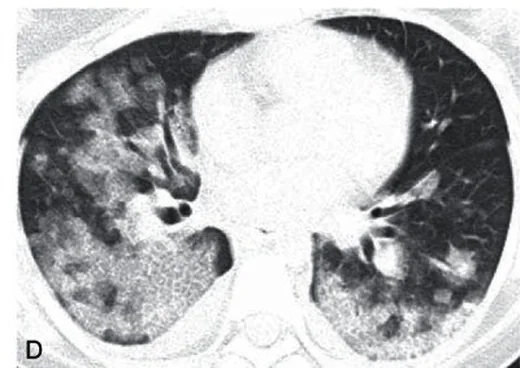
- Organize pnömoni örüntüsünde periferik veya peribronkovasküler buzlu cam opasiteleri ve konsolidasyonlar ile perilobüler opasiteler ve ters halo görülebilir; ters halo, merkezî buzlu camı hilal ya da halka biçimli konsolidasyonun çevrelediği görünümdür.
- Kontrastsız
- Aynı parankimal opasiteler ve dağılım seçilebilir; kontrastsız kesitler örüntüyü tanımlar fakat organizasyonu veya altta yatan nedeni tek başına doğrulamaz.
Önerilen pencereler: Akciğer (G 1500 / M -600).
BT bulguları
- Organize pnömonide subplevral konsolidasyonlar hava bronkogramı içerebilir.
- Plevra altı, bronkovasküler ya da her iki dağılımda alveoler opasiteler
- Konsolidasyonla komşu veya ayrı alanlarda buzlu cam dansiteleri
- Ters halo (atoll) işareti — merkezde buzlu cam, çevresinde kısmi veya tam konsolidasyon halkası
- İkincil pulmoner lobül çevresini izleyen kavisli perilobüler opasiteler
- Önceki incelemeye göre gerileyen bir opasite alanıyla birlikte başka lobda yeni konsolidasyon odağı
- Organize pnömoni örüntüsünde perilobüler kalınlaşma, traksiyon bronşektazisi veya fokal hacim kaybı görülebilir.
Normalde
Organize pnömoni örüntüsünde buzlu cam opasiteleri ve küçük konsolidasyonlar periferik veya peribronkovasküler dağılım gösterebilir; opasitelerin plevraya ve bronkovasküler demete göre dağılımını kaydet.
Normal BT ile kıyasla
Aynı bölgenin, kaynak veri setinde patoloji içermediği belirtilen bir BT incelemesini kesit kesit kaydırın; organ sınırlarını açarak anatomiyi hasta görüntüsüyle karşılaştırın. Küçük rastlantısal bulgular tümüyle dışlanmamıştır.
Kaynak: TotalSegmentator v2.01 veri seti (Wasserthal ve ark., Radiology: Artificial Intelligence 2023), CC BY 4.0, vaka s1278; organ sınırları veri setinin otomatik segmentasyonundan, birleştirilerek sadeleştirildi. Görüntüler 2,5 mm kesit aralığına yeniden örneklendi.
Ayırıcı tanı
- Lober bakteriyel pnömoni
- segment/lob sınırına oturan daha yoğun hava boşluğu konsolidasyonu ve klinik enfeksiyon bulguları öne çıkar; göç eden odaklar tipik değildir.
- Ters halo işareti organize pnömoniye özgü değildir; enfeksiyöz ve enfeksiyon dışı akciğer hastalıklarında da görülebilir.
- Pulmoner ödem ayırıcı tanısında düzgün interlobüler septal kalınlaşma görülebilir.
- Eozinofilik pnömoni
- kronik eozinofilik pnömonide bilateral periferik ağırlıklı konsolidasyon ve/veya buzlu cam opasiteleri görülebilir; histopatolojide organize pnömoni paterni eşlik edebilir.
- Akciğer kanseri organize pnömoniyi taklit edebilir; organize pnömoni tanısı belirsiz olduğunda histopatolojik doğrulama gerekebilir.
Tuzaklar
- Ters halo işareti kriptojenik organize pnömoniye özgü değildir; halkanın nodüler iç kenarı, çevre nodüller ve kavite invaziv enfeksiyonu öne çıkarabilir.
- Bir tek BT'de 'göç' saptanamaz; eski incelemeyle yan yana bakıp gerileyen ve yeni beliren odakları ayrı ayrı doğrula.
- Perilobüler kavisleri gerçek interlobüler septal kalınlaşma sanma; opasitenin aynı alanda buzlu cam/konsolidasyonla birlikte lobül dış sınırını izlemesi organizasyon örüntüsünü destekler.
Kendini dene
Öksürüğü olan hastada iki taraflı, yamalı subplevral opasiteler var; önceki konsolidasyon gerilerken başka lobda yenisi ortaya çıkmış. Örüntü hangisini destekler?
Cevabı göster
Organize pnömoni. Dağılımın yamalı olması ve farklı zamanlarda başka bölgelerde belirmesi organize pnömoni paternini destekler. Lober pnömoni çoğunlukla tek anatomik lobda yoğunlaşır; ödemde septal ve vasküler eşlikçiler aranır, aspergilloz için nodüler halo/kavite ve risk bağlamı önemlidir.
Ters halo halkasının içinde ve çevresinde küçük nodüller ile bir kavite fark ediliyor. Hangi olasılık özellikle yeniden düşünülmelidir?
Cevabı göster
İnvaziv fungal enfeksiyon. Nodüler halka ve kavite, immün baskılanma bağlamında invaziv fungal enfeksiyon lehine uyarıcı morfolojik işaretlerdir. Organize pnömonide ters halo görülebilir, fakat bu görünüm tek başına özgül değildir; ödem ve atelektazi bu nodüler kavite paternini açıklamaz.
İlgili konular
Kaynaklar
Bu sayfadaki 35 cümle ve 2 quiz sorusu aşağıdaki kaynaklardan alıntılarla otomatik olarak karşılaştırıldı; 4 cümle bu karşılaştırmada düzeltildi (2026-10-09).
- Pictorial guide for variants of Covid-19: CT imaging and interpretationpmc.ncbi.nlm.nih.gov
- An Integrated Radiologic-Pathologic Understanding of COVID-19 Pneumoniapmc.ncbi.nlm.nih.gov
- Similarities and Differences of Early Pulmonary CT Features of Pneumonia Caused by SARS-CoV-2, SARS-CoV and MERS-CoV: Comparison Based on a Systemic Reviewpmc.ncbi.nlm.nih.gov
- Chronic Eosinophilic Pneumonia: A Diagnostic Challenge With Atypical Bronchoalveolar Lavage Findings and an Organizing Pneumonia Patternpmc.ncbi.nlm.nih.gov
- A Mimic of Metastatic Malignancy: Dietary Supplement‐Associated Drug‐Induced Lung Injury Presenting as Multiple Pulmonary Nodules With an Acute Fibrinous and Organizing Pneumonia Patternpmc.ncbi.nlm.nih.gov
- Nonspecific Interstitial Pneumonia: What Is the Optimal Approach to Management?pubmed.ncbi.nlm.nih.gov
- Similarities and Differences of Early Pulmonary CT Features of Pneumonia Caused by SARS-CoV-2, SARS-CoV and MERS-CoV: Comparison Based on a Systemic Review.pubmed.ncbi.nlm.nih.gov
- Pictorial guide for variants of Covid-19: CT imaging and interpretation.pubmed.ncbi.nlm.nih.gov
- An Integrated Radiologic-Pathologic Understanding of COVID-19 Pneumonia.pubmed.ncbi.nlm.nih.gov
- Clinical and radiological features of immune checkpoint inhibitor-related pneumonitis in lung cancer and non-lung cancers.pubmed.ncbi.nlm.nih.gov
- Middle East respiratory syndrome coronavirus (MERS-CoV) infection: chest CT findings.pubmed.ncbi.nlm.nih.gov
- Interstitial pneumonia related to undifferentiated connective tissue disease: pathologic pattern and prognosis.pubmed.ncbi.nlm.nih.gov
- Clinical-imaging characteristics and management of anti-JO-1 and non-JO-1 anti-synthetase syndrome-associated interstitial lung disease.pubmed.ncbi.nlm.nih.gov
- Focal organizing pneumonia simulating lung malignancy: treated with prednisolone.pubmed.ncbi.nlm.nih.gov
- Temporal changes of lung computed tomography findings pulmonary COVID-19 infection.pubmed.ncbi.nlm.nih.gov
- Everolimus-induced pneumonitis in neuroendocrine neoplasms: correlation of CT findings and clinical signs.pubmed.ncbi.nlm.nih.gov
- Nivolumab-induced interstitial lung disease in a patient with gastric cancer.pubmed.ncbi.nlm.nih.gov
- A case of vildagliptin-induced interstitial pneumonia.pubmed.ncbi.nlm.nih.gov
- An unusual radiologic manifestation of hypersensitivity pneumonia.pubmed.ncbi.nlm.nih.gov
- Potential association of bronchoalveolar lavage lipid-laden macrophages with disease severity and corticosteroid response in interstitial lung disease: a pilot study.pubmed.ncbi.nlm.nih.gov
- Characteristics, prognosis, and risk factors for relapse in patients with cryptogenic organizing pneumonia: A prospective cohort study in China.pubmed.ncbi.nlm.nih.gov
- A Mimic of Metastatic Malignancy: Dietary Supplement-Associated Drug-Induced Lung Injury Presenting as Multiple Pulmonary Nodules With an Acute Fibrinous and Organizing Pneumonia Pattern.pubmed.ncbi.nlm.nih.gov
- <i>Aspergillus fumigatus</i>-induced acute fibrinous and organizing pneumonia complicated by spontaneous subcutaneous and mediastinal emphysema: a case report and literature review.pubmed.ncbi.nlm.nih.gov
- Chronic Eosinophilic Pneumonia: A Diagnostic Challenge With Atypical Bronchoalveolar Lavage Findings and an Organizing Pneumonia Pattern.pubmed.ncbi.nlm.nih.gov
- From imaging clue to diagnosis: <i>Pseudomonas putida</i> pneumonia with the reversed halo sign-navigating diagnosis and treatment.pubmed.ncbi.nlm.nih.gov
- Lipoid Pneumonia: HRCT and MRI Spectrum, Diagnostic Pitfalls, and Imaging-Based Diagnostic Workflow.pubmed.ncbi.nlm.nih.gov
- New insights into imaging of pulmonary metastases from extra-thoracic neoplasms.pubmed.ncbi.nlm.nih.gov
- Acute and chronic eosinophilic pneumonia: an overview.pubmed.ncbi.nlm.nih.gov
- Pulmonary tularemia presenting as bilateral pulmonary nodules during BEP chemotherapy for testicular embryonal carcinoma: A diagnostic challenge.pubmed.ncbi.nlm.nih.gov
- Case Report: Invasive mucinous adenocarcinoma mimicking interstitial pneumonia with autoimmune features: diagnostic pitfalls and reflections.pubmed.ncbi.nlm.nih.gov
- Metastatic Breast Cancer Presenting as an Organizing Pneumonia Pattern on Chest CT: A Case Report.pubmed.ncbi.nlm.nih.gov
- Uncommon Causes of Interlobular Septal Thickening on CT Images and Their Distinguishing Features.pubmed.ncbi.nlm.nih.gov
- Autoimmune Pulmonary Alveolar Proteinosis in a Patient With Chronic Disseminated Blastomycosis: A Case Report.pubmed.ncbi.nlm.nih.gov
- Quantitative spectral computed tomography biomarkers for idiopathic inflammatory myopathy-associated interstitial lung disease: a dual-layer detector computed tomography study.pubmed.ncbi.nlm.nih.gov
- How I diagnose and treat organizing pneumonia in hematopoietic cell transplant recipients.pubmed.ncbi.nlm.nih.gov
- Drug-Induced Interstitial Lung Disease in Lung Cancer Patients.pubmed.ncbi.nlm.nih.gov
- Radiation Recall Pneumonitis: Imaging Appearance and Differential Considerations.pubmed.ncbi.nlm.nih.gov
- The many faces of cryptogenic organizing pneumonia (COP).pubmed.ncbi.nlm.nih.gov
- Amiodarone-induced granulomatous lung injury mimicking organizing pneumonia: a case report.pubmed.ncbi.nlm.nih.gov
- Primary Biliary Cholangitis-Associated Granulomatous Interstitial Lung Disease: Pulmonary Epithelial-Interface Injury Supporting the Concept of Generalized Autoimmune Epithelitis.pubmed.ncbi.nlm.nih.gov
- Management of pneumonia by the emergency radiologist.pubmed.ncbi.nlm.nih.gov
- Radiologic patterns of interstitial lung disease: a pictorial review based on the 2025 European Respiratory Society/American Thoracic Society Classification.pubmed.ncbi.nlm.nih.gov
- Case Report: The "atoll sign": a case series on an unusual radiological pattern of immune-mediated pneumonitis.pubmed.ncbi.nlm.nih.gov
- Distinguishing Organizing Pneumonia from Malignancy During Cancer Surveillance: Predominant Diagnostic Value of Imaging over Systemic Inflammatory Biomarkers.pubmed.ncbi.nlm.nih.gov
- The reverse halo sign in emergency chest CT: A diagnostic guide across diverse pulmonary conditions.pubmed.ncbi.nlm.nih.gov
- Comprehensive radiologic-pathologic correlation in systemic sclerosis-associated interstitial lung disease: identification of an early-stage CT findings.pubmed.ncbi.nlm.nih.gov
- Fleischner Society: Glossary of Terms for Thoracic Imaging.pubmed.ncbi.nlm.nih.gov
- Algorithmic Approach to the Diagnosis of Organizing Pneumonia: A Correlation of Clinical, Radiologic, and Pathologic Features.pubmed.ncbi.nlm.nih.gov
- Radiologic Abnormalities in Prolonged SARS-CoV-2 Infection: A Systematic Review.pubmed.ncbi.nlm.nih.gov
- Immune checkpoint inhibitor therapy‑related pneumonitis: How, when and why to diagnose and manage (Review).pubmed.ncbi.nlm.nih.gov
- Medication-induced lung disease in children.pubmed.ncbi.nlm.nih.gov
- Non-metastatic causes of multiple pulmonary nodules.pubmed.ncbi.nlm.nih.gov
- Quantitative assessment of lung mechanical properties in ARDS using X-ray computed tomography.pubmed.ncbi.nlm.nih.gov
- CFD Modeling of Airflow and Aerosol Transport in the Human Respiratory System: A Comprehensive Review.pubmed.ncbi.nlm.nih.gov
- Polyphenol-enriched fraction of <i>Acacia seyal</i> Delile (Mimosaceae) inhibits human triple-negative breast cancer cells and exhibits anticancer and immunomodulatory effects in a DMBA-induced breast cancer model.pubmed.ncbi.nlm.nih.gov
- Invasive Pulmonary Aspergillosis-Mimicking <i>Pseudomonas aeruginosa</i> Pneumonia in Immunocompromised Patients: Radiologic Differentiation.pubmed.ncbi.nlm.nih.gov
- Invasive mucinous adenocarcinoma of the lung: integrating molecular landscape, imaging phenotypes, and translational therapeutic strategies.pubmed.ncbi.nlm.nih.gov
- A novel computed tomography-based multi-parameter decision tree algorithm model for preoperatively predicting the risk of lymph node metastasis in surgically resectable synchronous multiple primary lung cancer.pubmed.ncbi.nlm.nih.gov
- Adult Acute Respiratory Distress Syndrome (ARDS) Caused by Human Rhinovirus During Janus Kinase Inhibitor Therapy for Rheumatoid Arthritis: A Case Report and Literature Review.pubmed.ncbi.nlm.nih.gov
- ICU predictive factors of fibrotic changes following COVID-19 related ARDS: a RECOVIDS substudy.pubmed.ncbi.nlm.nih.gov
- Mixed Invasive <i>Aspergillus</i>-<i>Mucorales</i> Pulmonary Coinfection in a Diabetic Patient: An Uncommon Dual Fungal Pneumonia and Literature Review.pubmed.ncbi.nlm.nih.gov
- New developments in the biology of fibroblast growth factors.pubmed.ncbi.nlm.nih.gov
- Chronic Eosinophilic Pneumonia: A Pneumopathy With Many Faces.pubmed.ncbi.nlm.nih.gov
- Chronic Eosinophilic Pneumonia Masquerading as Non-resolving Upper Lobe Pneumonia.pubmed.ncbi.nlm.nih.gov
- Incidental Lung Lesions on the CT Component of Oncologic FDG PET/CT: A Pictorial Review of Interpretive Pitfalls and Diagnostic Clues.pubmed.ncbi.nlm.nih.gov
- Korean Guidelines for Diagnosis and Management of Interstitial Lung Disease: Cryptogenic Organizing Pneumonia.pubmed.ncbi.nlm.nih.gov
- Very severe aplastic anemia in a child with pulmonary mucormycosis: a case report.pubmed.ncbi.nlm.nih.gov
- Clinical Insights and Therapeutic Strategies for the Treatment of Interstitial Lung Disease in Patients with Anti-Neutrophil Cytoplasmic Antibody-Associated Vasculitis: Current Trends and Future Directions.pubmed.ncbi.nlm.nih.gov
- A mouse model of E-cigarette or vaping product use-associated lung injury (EVALI) induced by nose-only exposure to aerosolized vitamin E acetate and associated macrophage dysfunction.pubmed.ncbi.nlm.nih.gov
- Systematic review of postradiotherapy bronchiolitis obliterans organizing pneumonia in women with breast cancer.pubmed.ncbi.nlm.nih.gov
- High-Resolution CT Findings in Interstitial Lung Disease Associated with Connective Tissue Diseases: Differentiating Patterns for Clinical Practice-A Systematic Review with Meta-Analysis.pubmed.ncbi.nlm.nih.gov
- Postinfluenza Organizing Pneumonia in an Older Adult Successfully Treated With Corticosteroids: A Case Report.pubmed.ncbi.nlm.nih.gov
- Late-Onset Mesalazine-Induced Eosinophilic Pneumonitis Presenting as Non-Resolving Pneumonia: A Diagnostic Pitfall in Ulcerative Colitis.pubmed.ncbi.nlm.nih.gov
- The first CT-based classification system for pulmonary actinomycosis: correlating imaging patterns with therapeutic strategies and prognosis in a highly misdiagnosed disease.pubmed.ncbi.nlm.nih.gov
- Ten Questions on Using Lung Ultrasonography to Diagnose and Manage Pneumonia in Hospital-at-Home Model: Part II-Confounders and Mimickers.pubmed.ncbi.nlm.nih.gov
- Case Report: Organizing pneumonia associated with AQP4-antibody neuromyelitis optica spectrum disorder in children.pubmed.ncbi.nlm.nih.gov
- Acute Fibrinous and Organizing Pneumonia Versus Organizing Pneumonia: A Comparative Study of Clinical, Radiological, Histological, and Immunophenotypic Features.pubmed.ncbi.nlm.nih.gov
- Case Report: Pulmonary brucellosis presenting as multiple cavitary lung lesions on imaging.pubmed.ncbi.nlm.nih.gov
- Beyond Infection and Malignancy: Diagnostic Pitfalls in Pulmonary Granulomatosis with Polyangiitis.pubmed.ncbi.nlm.nih.gov
- Diagnostic approach in acute hypoxemic respiratory failure.pubmed.ncbi.nlm.nih.gov
- Pulmonary Manifestations of Inflammatory Bowel Disease and Treatment Strategies.pubmed.ncbi.nlm.nih.gov
- Histologic patterns of chronic interstitial lung disease in dogs.pubmed.ncbi.nlm.nih.gov
- Imaging of pediatric pulmonary infections: A pictorial review.pubmed.ncbi.nlm.nih.gov
- Reversed halo sign: from a clinico-radiologic-pathologic point of view.pubmed.ncbi.nlm.nih.gov
- Pulmonary Manifestations in Patients With Hematologic Malignancies: In Pursuit of an Accurate Diagnosis.pubmed.ncbi.nlm.nih.gov
- Clinical features, management, and outcomes of pulmonary mucormycosis: a decade-long retrospective study from a single center in central China.pubmed.ncbi.nlm.nih.gov
- Migratory Pulmonary Infiltrates Mimicking Malignancy, Tuberculosis, and Sarcoidosis in an Apparently Immunocompetent Adult: A Case of Tissue-Proven Invasive Fungal Disease Due to a Non-<i>marneffei</i><i>Penicillium</i> Species.pubmed.ncbi.nlm.nih.gov
- CT manifestations of pulmonary mucormycosis: Influence of risk factor, symptom duration, and glycemic control.pubmed.ncbi.nlm.nih.gov
- Subacute invasive pulmonary aspergillosis following breast cancer treatment: A one-year diagnostic odyssey.pubmed.ncbi.nlm.nih.gov
- Imaging of Small Cell Lung Cancer: An Updated Overview of Current and Emerging Applications.pubmed.ncbi.nlm.nih.gov
- From guidelines to radiology practice: navigating the 2023 ASCO guidelines for advanced gastroesophageal cancer and beyond.pubmed.ncbi.nlm.nih.gov
- Clinicopathologic Features of Isolated AFOP Nodules Radiologically Mimicking Malignancy in Post COVID-19 Patients: A Case Series Study.pubmed.ncbi.nlm.nih.gov
- Pneumonitis Associated with Immune Checkpoint Inhibitors and Targeted Anticancer Therapies: A Retrospective Case Series of 12 Patients.pubmed.ncbi.nlm.nih.gov
- Morphological computed tomography phenotypes in pulmonary sarcoidosis at diagnosis: splitting and lumping based on predictors of clinical progression.pubmed.ncbi.nlm.nih.gov
- Precise discrimination of mycobacterial pulmonary diseases via multimodal machine learning integrating chest CT and clinical markers.pubmed.ncbi.nlm.nih.gov
- Transfer learning with fuzzy decision support for multi-class lung disease classification: performance analysis of pre-trained CNN models.pubmed.ncbi.nlm.nih.gov
- Multimodality imaging of COVID-19 pneumonia: from diagnosis to follow-up. A comprehensive review.pubmed.ncbi.nlm.nih.gov
- Challenges in the Differential Diagnosis of COVID-19 Pneumonia: A Pictorial Review.pubmed.ncbi.nlm.nih.gov
- Peri- and intra-nodular radiomic features based on 18 F-FDG PET/CT to distinguish lung adenocarcinomas from pulmonary granulomas.pubmed.ncbi.nlm.nih.gov
- Epidural analgesia for adults undergoing cardiac surgery with or without cardiopulmonary bypass.pubmed.ncbi.nlm.nih.gov
- Case Report: Neurogenic pulmonary edema coupled with myocardial damage following tenecteplase thrombolysis for acute ischemic stroke.pubmed.ncbi.nlm.nih.gov
- Point-of-Care Lung Ultrasound in Small Animal Emergency and Critical Care Medicine: A Clinical Review.pubmed.ncbi.nlm.nih.gov
- Establishment of seven lung ultrasound phenotypes: a retrospective observational study of an LUS registry.pubmed.ncbi.nlm.nih.gov
- Drug-Induced Pulmonary Toxicity in the Era of Immunotherapy and Biologics: A Narrative Review of Mechanism, Diagnosis, and Management.pubmed.ncbi.nlm.nih.gov
- Identification of imaging-based pulmonary and extrapulmonary treatable traits in COPD: a review.pubmed.ncbi.nlm.nih.gov
- AWMF S2k Guideline: Diagnosis and Assessment of Lung Disease Caused by Occupational Silica Dust Exposure (Silicosis) - Disease No. 4101 as per Occupational Diseases Ordinance (BKV) Annex 1.pubmed.ncbi.nlm.nih.gov
- Pediatric Congenital Lung Malformation: Advanced Imaging Techniques in Pre- and Neonatal Evaluation.pubmed.ncbi.nlm.nih.gov
- Conventional chest CT features are associated with Ki-67 labeling index in lung adenocarcinoma: a single-center retrospective radiopathologic study.pubmed.ncbi.nlm.nih.gov
- Pulmonary Edema: A Pictorial Review of Imaging Manifestations and Current Understanding of Mechanisms of Disease.pubmed.ncbi.nlm.nih.gov
- Lung imaging methods: indications, strengths and limitations.pubmed.ncbi.nlm.nih.gov
- Role of computed tomography in quantitative assessment of emphysema.pubmed.ncbi.nlm.nih.gov
- Comprehensive analysis of imaging and pathological features in 20 cases of pulmonary mucosa-associated lymphoid tissue (MALT) lymphoma: a retrospective study.pubmed.ncbi.nlm.nih.gov
- Postoperative Pulmonary Complications: Clinical and Imaging Insightspubmed.ncbi.nlm.nih.gov
- Imaging in patients with acute dyspnea when cardiac or pulmonary origin is suspected.pubmed.ncbi.nlm.nih.gov
- Ground-glass opacity (GGO): a review of the differential diagnosis in the era of COVID-19.pubmed.ncbi.nlm.nih.gov
Eğitim amaçlıdır; hasta başında tanı ve tedavi kararının yerine geçmez, tıbbi tavsiye değildir. Metinler yapay zekâ desteğiyle yazıldı ve otomatik bir adımda kaynak alıntılarıyla karşılaştırıldı; bu bir tıbbi doğrulama değildir ve içerik uzman radyolog incelemesinden geçmedi. Klinik kararlarda güncel kılavuzları, kurum protokollerini ve radyoloji raporunu esas alın.