Özet
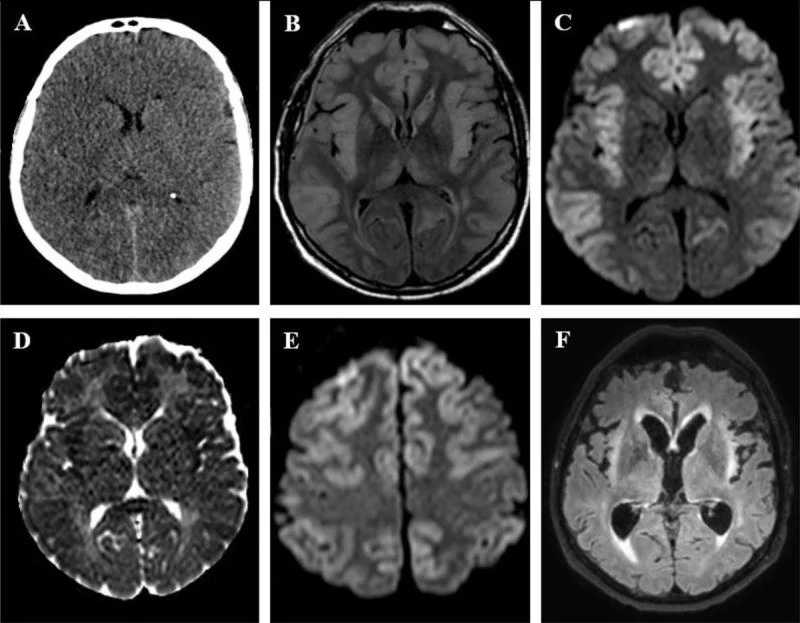
Karaciğer yetmezliği, üre döngüsü bozukluğu veya başka hiperammonemi nedenleri bulunan bilinç değişikliği ve nöbet hastasında beyin BT, ağır serebral ödemi ve kitle etkisini gösterebilir. İnsula ve singulat korteksin bilateral simetrik tutulumu hiperammonemik ensefalopatide bilinen bir görüntüleme paternidir; bu bölgesel dağılım MR çalışmalarında tanımlanmıştır; BT’de erken bölgesel değişiklikler belirgin olmayabilir. BT'de ağır evrede diffüz serebral şişme ve beyin ödemi görülebilir; bu bulgular intrakraniyal hipertansiyonu dolaylı olarak düşündürür. Bölgesel kortikal paternin BT’de seçilememesi hiperammonemiyi dışlamaz; yaygın ödem veya herniasyonun atlanması intrakraniyal kitle etkisini gerçekte olduğundan hafif gösterebilir.
Faz ve pencere
- Kontrastsız tanısal
- Hiperammonemiyle ilişkilendirilen bölgesel kortikal patern MR’da tanımlanmıştır; kontrastsız BT’de erken bölgesel değişiklikler belirgin olmayabilir. Ağır serebral ödem geliştiğinde BT'de diffüz parankim şişmesi görülebilir; eşlik eden bası bulguları intrakraniyal hipertansiyonu dolaylı olarak düşündürür. Kontrastsız BT'de değerlendirme yaygın ödem ve kitle etkisi bulguları üzerinedir.
Önerilen pencereler G genişlik, M merkez; değerler Hounsfield birimi (HU)
- BeyinG 80 / M +40
- SubduralG 200 / M +75
BT bulguları
- İnsular tutulum — hiperammonemik ensefalopatide bilateral simetrik insula değişiklikleri MR’da tanımlanmıştır; BT’de erken bölgesel hipodensite belirgin olmayabilir.
- Singulat girus tutulumu — singulat korteks insulalarla birlikte MR’da simetrik etkilenebilir; BT’de erken bölgesel değişiklikler belirgin olmayabilir.
- Gri-beyaz ayrım azalması — yaygın serebral ödem geliştiğinde kortikal gri-beyaz sınır bulanıklaşabilir; bu bulgu hiperammonemiye özgü değildir.
- Perirolandik korteks görünümü — bazı MR serilerinde bu bölge korunurken başka olgularda etkilenebilir; tutulumun varlığı veya yokluğu tek başına tanıyı dışlamaz.
- Derin gri cevher eşlikçisi — talamus, bazal ganglion veya beyin sapında değişiklik görülebilir ancak bu bulgular olgudan olguya değişir.
- Yaygın serebral ödem — BT’de sulkus ve ventrikül basısı, ağır parankim şişmesini gösterebilir.
- Herniasyon işaretleri — sisternal silinme, unkal yer değiştirme veya diğer herniasyon bulguları ağır kitle etkisini gösterir.
- Akut hiperammonemik ensefalopatide MR’da insular ve singulat korteks ağırlıklı sinyal değişiklikleri görülebilir; küçük bir olgu serisinde perirolandik alan ve posterior oksipital lob korunmuştur.
Normalde
Normal incelemede singulat girus hemisferin medial yüzünde değerlendirilir. Aynı düzeyde iki insulanın kortikal kalınlığını ve dansitesini karşılaştır; ardından suprasellar ve perimezensefalik sisternlerin açıklığını değerlendir.
Normal BT ile kıyasla
Aynı bölgenin, kaynak veri setinde patoloji içermediği belirtilen bir BT incelemesini kesit kesit kaydırın; organ sınırlarını açarak anatomiyi hasta görüntüsüyle karşılaştırın. Küçük rastlantısal bulgular tümüyle dışlanmamıştır.
Kaynak: TotalSegmentator v2.01 veri seti (Wasserthal ve ark., Radiology: Artificial Intelligence 2023), CC BY 4.0, vaka s0103; organ sınırları veri setinin otomatik segmentasyonundan, birleştirilerek sadeleştirildi. Görüntüler 2,5 mm kesit aralığına yeniden örneklendi.
Ayırıcı tanı
- Hipoksik-iskemik hasar da diffüz kortikal yaralanma nedenleri arasında yer alır ve hiperammonemi ile aynı ayırıcı grupta değerlendirilir; ayrım için klinik hipoksi veya iskemi öyküsü gerekir.
- Hipoglisemik ensefalopati
- ağır ve kalıcı hipoglisemi ensefalopatiye yol açabilir ve görüntüleme paterni tek başına ayırt ettirmez; ayırıcı tanı klinik ve biyokimyasal bağlam gerektirir.
- Ensefalit
- herpes simpleks ensefalitinde frontotemporal loblarda inflamasyon ve hiperintensiteler görülebilir; klinik ve MR bulguları birlikte değerlendirilir.
- Karbon monoksit hasarı
- BT'de bilateral globus pallidusta düşük dansite görülebilir; bu görünüm özgül değildir ve maruziyet öyküsüyle birlikte değerlendirilir.
Tuzaklar
- İnsular-perirolandik dağılımı BT’de her hastada görülecek bir işaret gibi sunma; bu bölgesel patern esas olarak MR çalışmalarında tanımlanmıştır.
- BT’nin normal ya da özgül olmayan olması hiperammonemiyi dışlamaz; insula-singulat görüntüleme paterni MR’da tarif edilmiştir.
- İnsular ve singulat korteksin iki tarafını değerlendir; akut hiperammonemik ensefalopatide bu bölgelerde bilateral MR anormallikleri tanımlanmıştır.
- Sulkusların korunmasını ağır intrakraniyal basınç etkisinin bulunmadığı şeklinde genelleme; sistern ve ventrikül görünümü de ayrıca incelenmelidir.
Kendini dene
Akut hiperammonemik ensefalopatide MR çalışmalarında tanımlanan karakteristik kortikal tutulum dağılımı hangisidir?
Cevabı göster
Bilateral insular ve singulat korteks tutulumu. Akut hiperammonemik ensefalopatide MR'da insular ve singulat kortekslerde bilateral anormallikler tanımlanmıştır; diğer dağılımlar bu paternin karakteristik özellikleri değildir.
Amonyak düzeyi yüksek ve bilinç değişikliği olan hastada BT, insular kortekste belirgin fark göstermiyor. En uygun çıkarım hangisidir?
Cevabı göster
BT'de bölgesel patern belirgin olmayabilir. İnsular ve singulat bölgesel patern esas olarak MR'da tanımlanmıştır; BT erken dönemde belirgin bulgu göstermeyebilir, bu nedenle normal BT hiperammonemiyi dışlamaz.
İlgili konular
Kaynaklar
Bu sayfadaki 35 cümle ve 2 quiz sorusu aşağıdaki kaynaklardan alıntılarla otomatik olarak karşılaştırıldı; 15 cümle bu karşılaştırmada düzeltildi (2026-10-12).
- Acute Hyperammonemic Encephalopathy in Adults: Imaging Findingspmc.ncbi.nlm.nih.gov
- MRI Findings in Acute Hyperammonemic Encephalopathy: Three Cases of Different Etiologies: Teaching Point: To recognize MRI findings in acute hyperammonemic encephalopathypubmed.ncbi.nlm.nih.gov
- Brain magnetic resonance imaging findings in hyperammonemic hepatic encephalopathy: A case series and literature reviewpubmed.ncbi.nlm.nih.gov
- Imaging Patterns of Toxic and Metabolic Brain Disorderspubs.rsna.org
- Herpes Simplex Virus-1 Encephalitis in Adults: Pathophysiology, Diagnosis, and Managementpmc.ncbi.nlm.nih.gov
- The insula: anatomic study and MR imaging display at 1.5 Tpubmed.ncbi.nlm.nih.gov
- Imaging in Acute Anterior Circulation Ischemic Stroke: Current and Futurepubmed.ncbi.nlm.nih.gov
- Toward a Common Terminology for the Gyri and Sulci of the Human Cerebral Cortexpmc.ncbi.nlm.nih.gov
- Hypoxic-Ischemic Brain Injury: Imaging Findings from Birth to Adulthoodpubs.rsna.org
- Gastric Bypass Associated Hyperammonemia (GaBHA): A Case Study, Scoping Review of the Literature, and Proposed New Pathophysiologic Mechanismpmc.ncbi.nlm.nih.gov
- Nonhepatic hyperammonemic encephalopathy complications following bariatric surgery: a case report and review of the literaturepmc.ncbi.nlm.nih.gov
- Recurrent Reversible Stroke-Like Encephalopathy After 5-Fluorouracil (5-FU) Chemotherapy: A Case Report and Literature Reviewpmc.ncbi.nlm.nih.gov
- Acute hyperammonemic encephalopathy after fluoropyrimidine-based chemotherapypmc.ncbi.nlm.nih.gov
- In vivo N-15 MRS study of glutamate metabolism in the rat brain.pubmed.ncbi.nlm.nih.gov
- [FOLFIRINOX-induced hyperammonemic encephalopathy in a patient with pancreatic cancer].pubmed.ncbi.nlm.nih.gov
- Histopathological examination of characteristic brain MRI findings in acute hyperammonemic encephalopathy: A case report and review of the literature.pubmed.ncbi.nlm.nih.gov
- Sunitinib-associated hyperammonemic encephalopathy.pubmed.ncbi.nlm.nih.gov
- Capecitabine-induced hyperammonemic encephalopathy.pubmed.ncbi.nlm.nih.gov
- Bariatric Surgery Causing Hyperammonemia.pubmed.ncbi.nlm.nih.gov
- A Case of Valproate-Induced Hyperammonemic Encephalopathy.pubmed.ncbi.nlm.nih.gov
- "CHOICES": An acronym to aid in delineating potential causes of non-metabolic, non-infectious acute toxic leukoencephalopathy.pubmed.ncbi.nlm.nih.gov
- Pronounced reversible hyperammonemic encephalopathy associated with combined valproate-topiramate therapy in a 7-year-old girl.pubmed.ncbi.nlm.nih.gov
- Brain MRI and magnetic resonance spectroscopy findings in patients with hyperargininemia.pubmed.ncbi.nlm.nih.gov
- Endoscopic-Assisted (Through a Mini Craniotomy) Corpus Callosotomy Combined With Anterior, Hippocampal, and Posterior Commissurotomy in Lennox-Gastaut Syndrome: A Pilot Study to Establish Its Safety and Efficacy.pubmed.ncbi.nlm.nih.gov
- Delayed Cerebral Abnormalities in Acute Hyperammonemic Encephalopathy.pubmed.ncbi.nlm.nih.gov
- An Unusual Cause of Altered Mental Status in Multiple Myeloma: An Extraosseous Manifestation.pubmed.ncbi.nlm.nih.gov
- Neuroimaging in Children With Inherited Metabolic Epilepsies.pubmed.ncbi.nlm.nih.gov
- Propionic Acidemia: Gray Matter Disease Meets Subcortical Leukodystrophy.pubmed.ncbi.nlm.nih.gov
- Beware the Ides of Chemotherapy: A Report on Hyperammonemic Encephalopathy Induced by FOLFOX-6 (5-Fluorouracil, Leucovorin, and Oxaliplatin).pubmed.ncbi.nlm.nih.gov
- Recurrent Hyperammonemic Encephalopathy in Adults with Citrin Deficiency: A Case Report of Two Genetically Confirmed Cases.pubmed.ncbi.nlm.nih.gov
- Case Report: Adult liver transplantation using a long-standing mesocaval shunt as portal inflow in congenital absence of the portal vein with atypical variceal bleeding and refractory shunt encephalopathy.pubmed.ncbi.nlm.nih.gov
- Neuroimaging findings of inborn errors of metabolism: urea cycle disorders, aminoacidopathies, and organic acidopathies.pubmed.ncbi.nlm.nih.gov
- Neuroimaging Pearls from the MDS Congress Video Challenge. Part 1: Genetic Disorders.pubmed.ncbi.nlm.nih.gov
- Metabolic Strokes in Propionic Acidemia: Transient Hemiplegic Events Without Encephalopathy.pubmed.ncbi.nlm.nih.gov
- 소아 신경영상에서 보이는 비선천성 원인의 영상 소견: 임상 화보.pubmed.ncbi.nlm.nih.gov
- Charting the Normal Development of Structural Brain Connectivity in Utero Using Diffusion MRI.pubmed.ncbi.nlm.nih.gov
- Subtyping schizophrenia via machine learning by using structural neuroimaging.pubmed.ncbi.nlm.nih.gov
- Mild and repetitive mild traumatic brain injury: Changes in microglial cells and synapses.pubmed.ncbi.nlm.nih.gov
- A color-coded atlas of the cortical surface anatomy of the equine brain.pubmed.ncbi.nlm.nih.gov
- Brain alteration of PCOS: neuroimaging and function.pubmed.ncbi.nlm.nih.gov
- Three-dimensional microsurgical anatomy of the cerebral hemisphere from medial to lateral: a fiber-dissection study.pubmed.ncbi.nlm.nih.gov
- Refractory Post-TIPS Hepatic Encephalopathy Complicated by Small Bowel Obstruction: A Therapeutic Dilemma.pubmed.ncbi.nlm.nih.gov
- Reappraising the bifrontal decompressive craniectomy: A systematic literature review of indications, outcomes, and clinical applications.pubmed.ncbi.nlm.nih.gov
- A systematic review of brain structural and functional alterations in pediatric mild traumatic brain injury.pubmed.ncbi.nlm.nih.gov
- Acute hepatic encephalopathy presenting as cortical laminar necrosis: case report.pubmed.ncbi.nlm.nih.gov
- Clinico-radiological spectrum of bilateral temporal lobe hyperintensity: a retrospective review.pubmed.ncbi.nlm.nih.gov
- Post-meal loss of consciousness in an adult patient with carbamoyl phosphate synthetase 1 deficiency and two newly identified heterozygous variants: a case report.pubmed.ncbi.nlm.nih.gov
- Recurrent hyperammonemic encephalopathy in a breast cancer patient receiving capecitabine therapy: a case report and literature review.pubmed.ncbi.nlm.nih.gov
- A case of folinic acid, fluorouracil and oxaliplatin (FOLFOX) chemotherapy regimen associated neurotoxicity and review of literature.pubmed.ncbi.nlm.nih.gov
- Fatal Late-Onset Ornithine Transcarbamylase Deficiency in an Adolescent: A Case Report.pubmed.ncbi.nlm.nih.gov
- Long-Term Follow-Up of Patients With Mitochondrial Carbonic Anhydrase VA Deficiency. A Case Report and Literature Review.pubmed.ncbi.nlm.nih.gov
- Acute hyperammonemic encephalopathy masquerading as postoperative delirium in a patient who underwent lung surgery: a case report.pubmed.ncbi.nlm.nih.gov
- Physiotherapeutic Protocol Focusing Proprioceptive Neuromuscular Facilitation Approach in Viral Encephalitis: A Case Report.pubmed.ncbi.nlm.nih.gov
- Macroscopic and Microscopic Cerebral Findings in Drug and Alcohol Abusers: The Point of View of the Forensic Pathologist.pubmed.ncbi.nlm.nih.gov
- Post-operative management of children after lung transplantation.pubmed.ncbi.nlm.nih.gov
- Valproate-associated hyperammonemic encephalopathy in subarachnoid hemorrhage: a diagnosis to consider.pubmed.ncbi.nlm.nih.gov
- Hyperammonemic Encephalopathy and Thyroid Storm Leading to Coma: A Case Report.pubmed.ncbi.nlm.nih.gov
- Acute Acquired Metabolic Encephalopathy Based on Diffusion MRI.pubmed.ncbi.nlm.nih.gov
- Review of diffuse cortical injury on diffusion-weighted imaging in acutely encephalopathic patients with an acronym: "CRUMPLED".pubmed.ncbi.nlm.nih.gov
- Brain Magnetic Resonance Imaging in Wilson's Disease-Significance and Practical Aspects-A Narrative Review.pubmed.ncbi.nlm.nih.gov
- Endocrine, metabolic, nutritional, and toxic disorders leading to dementia.pubmed.ncbi.nlm.nih.gov
- A founder mutation in <i>CA5A</i> causing intrafamilial and interfamilial phenotypic variability in a cohort of 18 patients with carbonic anhydrase VA deficiency.pubmed.ncbi.nlm.nih.gov
- The transaminase-ω-amidase pathway senses oxidative stress to control glutamine metabolism and α-ketoglutarate levels in endothelial cells.pubmed.ncbi.nlm.nih.gov
- Brain lesions in pediatric abusive head trauma: prevalence, pathophysiology, patterns, and a classification system.pubmed.ncbi.nlm.nih.gov
- Case report of 18F-FDG PET/CT features of hypoglycemic encephalopathy.pubmed.ncbi.nlm.nih.gov
- Application value of three-dimensional arterial spin labeling perfusion imaging in investigating cerebral blood flow dynamics in normal full-term neonates.pubmed.ncbi.nlm.nih.gov
- Beta-ketothiolase deficiency with progressive basal ganglia and extra basal ganglia involvement: CT-MRI correlation in a pediatric metabolic encephalopathy: A case report.pubmed.ncbi.nlm.nih.gov
- Hippocampi and midbrain lesions in carbon monoxide intoxication: a rare case report.pubmed.ncbi.nlm.nih.gov
- Optimizing hyperbaric oxygen initiation time in carbon monoxide poisoning: a 3-hour window enhances neurological recovery via lactate clearance.pubmed.ncbi.nlm.nih.gov
- Hypoglycemic Encephalopathy Caused by Insulinoma With Reversible High Signals in the White Matter on Diffusion-Weighted MRI: A Case Report.pubmed.ncbi.nlm.nih.gov
- Rapidly Progressing Encephalopathy in a 49-Year-Old Female: Creutzfeldt-Jakob Disease.pubmed.ncbi.nlm.nih.gov
- Pathophysiology-driven neuroimaging: decoding brain injury in sepsis.pubmed.ncbi.nlm.nih.gov
- Hypoglycemic encephalopathy with extensive brain injuries: A case report.pubmed.ncbi.nlm.nih.gov
- Disorders of organic acid metabolism and epilepsy.pubmed.ncbi.nlm.nih.gov
- Cortical laminar necrosis triggered by hepatic encephalopathy and post-traumatic subarachnoid hemorrhage: Case report.pubmed.ncbi.nlm.nih.gov
- MR Neuroimaging in Pediatric Inborn Errors of Metabolism.pubmed.ncbi.nlm.nih.gov
- Update on hypoxic-ischemic brain injury: Prognosis and management.pubmed.ncbi.nlm.nih.gov
- 18F-FDG PET/CT for post-cardiac-arrest brain injury: current evidence and future directions.pubmed.ncbi.nlm.nih.gov
- Cyclic Alternating Patterns of Encephalopathy (CAPE) in Acute Brain Injury Through a Quantitative Electroencephalogram (QEEG) Perspective: A Case Series.pubmed.ncbi.nlm.nih.gov
- Neurological emergencies associated with COVID-19: stroke and beyond.pubmed.ncbi.nlm.nih.gov
- Radiological assessment of dementia: the Italian inter-society consensus for a practical and clinically oriented guide to image acquisition, evaluation, and reporting.pubmed.ncbi.nlm.nih.gov
- A Case of Fatal Herpes Simplex Virus 1 Encephalitis Complicated by Status Epilepticus: From Elective Phlebectomy to Intensive Care.pubmed.ncbi.nlm.nih.gov
- Pediatric Meningeal Diseases: What Radiologists Need to Know.pubmed.ncbi.nlm.nih.gov
- Autoimmune encephalitis: what the radiologist needs to know.pubmed.ncbi.nlm.nih.gov
- Multiterritory Acute Ischemic Stroke with Bilateral Middle Cerebellar Peduncle T2/FLAIR Hyperintensities in the Setting of a Fatal Systemic Arterial Thrombotic Process: A Case Report.pubmed.ncbi.nlm.nih.gov
- Diagnostic utility of delayed cerebral angiography in suspected artery of Percheron infarction presenting as bilateral paramedian thalamic infarction: A case report.pubmed.ncbi.nlm.nih.gov
- Posterior reversible encephalopathy syndrome in dengue virus infection with concurrent encephalitis and ischemic stroke: a case report.pubmed.ncbi.nlm.nih.gov
- N-Methyl-D-Aspartate Receptor Encephalitis, Post Herpes Encephalitis in Two Pediatric Cases.pubmed.ncbi.nlm.nih.gov
- Comprehensive review of post-treatment imaging in head and neck cancers: from expected to unexpected and beyond.pubmed.ncbi.nlm.nih.gov
- Supranuclear Vertical Gaze Palsy in Movement Disorders.pubmed.ncbi.nlm.nih.gov
- Recurrent brief positional vertigo as the initial presentation of medial branch of the posterior inferior cerebellar artery territory cerebellar infarction: a case report.pubmed.ncbi.nlm.nih.gov
- Where Does the Signal Go? Technical Challenges of CT Perfusion in Lacunar and Infratentorial Stroke.pubmed.ncbi.nlm.nih.gov
- Beyond hypoxic-ischemic encephalopathy: genetic insights and precision diagnosis in neonatal encephalopathies.pubmed.ncbi.nlm.nih.gov
- The invisible emergencies: metabolic and neuro-critical disorders often missed in the pediatric ED - a narrative review.pubmed.ncbi.nlm.nih.gov
- MASLD-Induced Hyperammonemia With Atypical, Restricted Diffusion Pattern Suggesting Mixed Metabolic and Hypoxic-Anoxic Injury.pubmed.ncbi.nlm.nih.gov
- Reversible Metabolic and Liver Disease in Complex III Deficiency: Novel Variants Expand the Reported <i>UQCRC2</i>-Associated Phenotype.pubmed.ncbi.nlm.nih.gov
- Hyperinsulinism-hyperammonemia syndrome associated with GLUD1 gene mutation: a case series.pubmed.ncbi.nlm.nih.gov
- Hypoglycemic Encephalopathy in a Patient With Diabetes Mellitus: A Case Report.pubmed.ncbi.nlm.nih.gov
- Vigabatrin-related MRI changes and tapering strategy in hemispherotomy for infantile spasms: illustrative case.pubmed.ncbi.nlm.nih.gov
- Dengue-Associated Encephalopathy With Multiple Cranial Neuropathies and Multisystem Involvement in a Patient With Epilepsy: A Comprehensive Case Report With Longitudinal Multimodality Imaging.pubmed.ncbi.nlm.nih.gov
- Herpes simplex virus encephalitis following acute brain injury: illustrative cases.pubmed.ncbi.nlm.nih.gov
- Masked by Aneurysmal Hemorrhage: Herpes Simplex Virus (HSV)-2 Encephalitis in a Patient With Subarachnoid and Intraparenchymal Hemorrhage.pubmed.ncbi.nlm.nih.gov
- A Fatal Herpes Simplex Encephalitis with a Normocellular Cerebrospinal Fluid: A Case Report.pubmed.ncbi.nlm.nih.gov
- Therapeutic Plasma Exchange as a Bridge to Spontaneous Recovery in Pediatric Acute Liver Failure in a Resource-Limited Setting: A Prospective Single-Center Experience in Morocco.pubmed.ncbi.nlm.nih.gov
- Liver Transplantation Despite Active Intracranial Hemorrhage in Acetaminophen-Induced Acute Liver Failure: A Case Report.pubmed.ncbi.nlm.nih.gov
- Fulminant hyperammonemia during intensive chemotherapy in the setting of previously unrecognized partial ornithine transcarbamylase deficiency.pubmed.ncbi.nlm.nih.gov
- Ammonia storm: unmasking a suspected rare proximal urea cycle disorder in adulthood.pubmed.ncbi.nlm.nih.gov
- Late-onset ornithine transcarbamylase deficiency with neurological damage and serial brain multimodality monitoring: a case report.pubmed.ncbi.nlm.nih.gov
- Potentially Reversible and Recognizable Acute Encephalopathic Syndromes: Disease Categorization and MRI Appearances.pubmed.ncbi.nlm.nih.gov
- Nonfatal Hyperammonemic Encephalopathy as a Late Complication of Roux-en-Y Gastric Bypass.pubmed.ncbi.nlm.nih.gov
- Guidelines for Neuroprognostication in Comatose Adult Survivors of Cardiac Arrest.pubmed.ncbi.nlm.nih.gov
- Prolonged Hypoglycemic Encephalopathy: A Case Report.pubmed.ncbi.nlm.nih.gov
- Pathophysiology, clinical manifestations, and prognostic insights of cerebral fat embolism: a literature review.pubmed.ncbi.nlm.nih.gov
- Acute large vessel occlusion stroke as a neurovascular complication of immune thrombotic thrombocytopenic purpura: Mechanical thrombectomy and neurocritical care challenges.pubmed.ncbi.nlm.nih.gov
- Thalamic aphasia as an uncommon manifestation of thalamic stroke due to artery of Percheron occlusion: Case report with literature review.pubmed.ncbi.nlm.nih.gov
- Association of 24-Hour Computed Tomography Infarct Density on Functional Outcomes in Stroke: Secondary Analysis From the AcT Trial.pubmed.ncbi.nlm.nih.gov
- Lateralization of Bilateral Temporal Lobe Epilepsy After Vagus Nerve Stimulation Surgery.pubmed.ncbi.nlm.nih.gov
- Opportunistic CNS Viral Infections in Immunocompromised Patients.pubmed.ncbi.nlm.nih.gov
- Toxic-Induced Encephalopathy Following Chemsex in a Young HIV-Positive Male: A Complex Case of Acute Cognitive Impairment with Anterograde Amnesia and Behavioral Alterations.pubmed.ncbi.nlm.nih.gov
- Novel pathogenic variant in a mild case of type B molybdenum cofactor deficiency: case report and literature review.pubmed.ncbi.nlm.nih.gov
- The early fogging effect in cerebral infarction - a case report and review of the literature.pubmed.ncbi.nlm.nih.gov
Eğitim amaçlıdır; hasta başında tanı ve tedavi kararının yerine geçmez, tıbbi tavsiye değildir. Metinler yapay zekâ desteğiyle yazıldı ve otomatik bir adımda kaynak alıntılarıyla karşılaştırıldı; bu bir tıbbi doğrulama değildir ve içerik uzman radyolog incelemesinden geçmedi. Klinik kararlarda güncel kılavuzları, kurum protokollerini ve radyoloji raporunu esas alın.