
Özet
Hounsfield birimi, BT görüntülerinde dokuların X ışını zayıflamasını sayısal olarak ifade eder; örneğin yağ −60 ile −100, kas +20 ile +60, kemik ise +120 ile +300 HU arasında ölçülür. Bu değerler yağ, sıvı, kalsifikasyon ve kan gibi materyalleri ayırt etmeye yardım eder; iyotlu kontrast da ölçülen atenüasyonu değiştirir. ROI sonucu yalnız dokunun özelliğine değil, ROI'nin boyutuna, yerleşimine, kesit kalınlığına ve rekonstrüksiyonuna bağlıdır. Hatalı örnekleme bir kisti solid lezyon gibi gösterebilir veya gerçek kontrastlanmayı maskeleyebilir.
Faz ve pencere
- Kontrastsız tanısal
- İyot verilmeden ölçülen atenüasyon lezyonun başlangıç değerini ve yağ, sıvı, kan ya da kalsifikasyon gibi yüksek/düşük atenüasyon bileşenlerini gösterir; kontrastlanma iddiası için tek başına yeterli değildir.
- Portal tanısal
- Eşleştirilmiş kontrastsız ve kontrastlı serilerde HU değişimi veya iyot haritaları, lezyonun gerçek kontrastlanmasını değerlendirirken komşu yapılar nedeniyle oluşan yalancı yoğunluk artışlarını (pseödoenhancement) ayırt etmeye yardımcı olur.
Önerilen pencereler: Batın (G 400 / M 50), Karaciğer (G 150 / M 30), Mediasten (G 350 / M 50), Beyin (G 80 / M 40), Kemik (G 1800 / M 400).
BT bulguları
- Kas dokusu genellikle +20 ile +60 HU arasında, kemik +120 ile +300 HU arasında ve yağ −60 ile −100 HU arasında ölçülür.
- Kortikal kemik çoğunlukla pozitif ve yüksek HU, makroskopik yağ negatif HU gösterir; biyolojik doku aralıkları örtüştüğü için tek bir değer histoloji tanısı koydurmaz.
- ROI ortalaması, daire veya elips içine alınan voksel değerlerinin ortalamasıdır; ROI lezyon sınırına ya da komşu damara taşarsa ölçüm kontamine olur.
- Manuel bölge seçimi, rekonstrüksiyon ayarları ve saçılma/yapay artefaktlar, ölçülen HU değerlerinin değişkenliğini doğrudan etkiler; bu nedenle standartlaştırılmış ROI yerleşimi ve teknik protokol tutarlılığı ölçüm güvenilirliği açısından kritiktir.
- Aynı odak için kontrastsız ve kontrastlı seri kıyaslanırken eş düzey, benzer ROI boyutu ve aynı rekonstrüksiyon kullanılması ölçüm farkını daha anlamlı kılar.
- Küçük kistik odakta çevre parankimden gelen foton zayıflaması ölçümü yapay yükseltebilir; bu pseudoenhancement gerçek iyot tutulumu değildir.
Ölçütler ve sınıflamalar
- Suyun referans atenüasyonu
- Yağ dokusu genellikle −60 ile −100 HU arasında, kas dokusu +20 ile +60 HU arasında ve kemik +120 ile +300 HU arasında ölçülür.
- Havanın yaklaşık referans atenüasyonu
- Kemik ve yoğun yapılar genellikle +100 HU üzerindedir; kalsifikasyon ve kortikal kemik çok yüksek değerler verir.
- Renal kitlede nicel BT kontrastlanma eşiği
- Renal kistlerde kontrastsız ve kontrastlı BT atenüasyonları karşılaştırılabilir; küçük kistlerde kontrastlı görüntülerde pseudoenhancement ölçülebilir.
Normalde
Karaciğer parankiminin BT atenüasyonu ROI’lerle ölçülebilir; ölçüm alanı yalnız karaciğer dokusunu içermeli ve büyük damarlardan kaçınmalıdır. Karaciğer atenüasyonunu ölçmek için birden fazla ROI yerleştirin; ROI’ler yalnız karaciğer dokusunu içermeli ve büyük damarlardan, kistlerden ve fokal lezyonlardan kaçınmalıdır.
Normal BT ile kıyasla
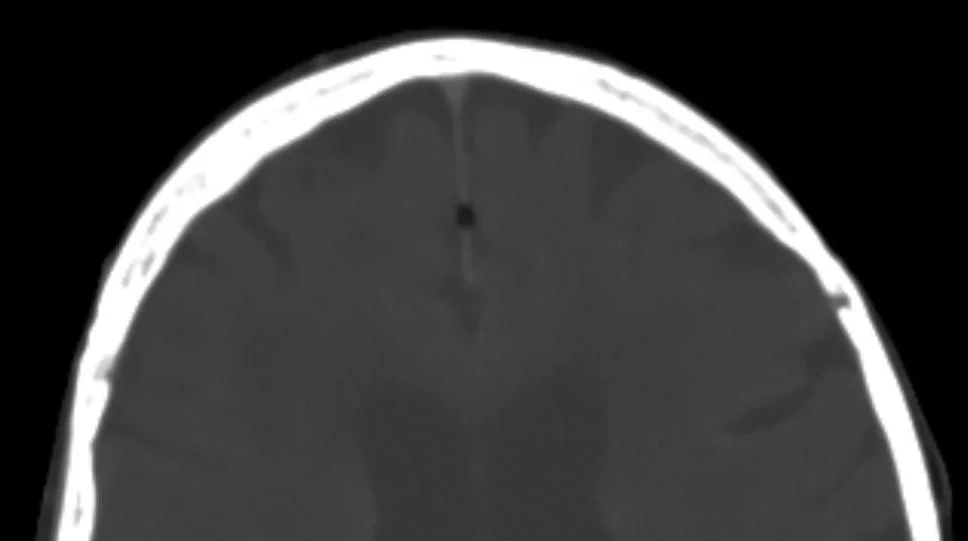
Aynı bölgenin, kaynak veri setinde patoloji içermediği belirtilen bir BT incelemesini kesit kesit kaydırın; organ sınırlarını açarak anatomiyi hasta görüntüsüyle karşılaştırın. Küçük rastlantısal bulgular tümüyle dışlanmamıştır.
Kaynak: TotalSegmentator v2.01 veri seti (Wasserthal ve ark., Radiology: Artificial Intelligence 2023), CC BY 4.0, vaka s0541; organ sınırları veri setinin otomatik segmentasyonundan, birleştirilerek sadeleştirildi. Görüntüler 2,5 mm kesit aralığına yeniden örneklendi.
Ayırıcı tanı
- Yağ içeren odak
- negatif HU ve makroskopik yağın düzgün iç dağılımı ile ayırt edilir.
- Basit sıvı
- suya yakın düşük atenüasyon ve kontrast sonrası gerçek artış olmaması beklenir.
- İntrakraniyal kanama
- kontrastsız BT'de subaraknoid aralıktaki kan hiperdens görülebilir.
- Kalsifikasyon
- çok yüksek odaksal atenüasyon ve kemik penceresinde belirgin yoğunlukla tanınır.
- İyotlu kontrast uygulaması sonrası HU artışını, hiperdensitelerle karıştırmamak için iyot kantifikasyonu veya sanal kontrastsız görüntüler kullanılması önerilir.
Tuzaklar
- Küçük lezyonda büyük ROI kullanımı komşu parankimi ortalamaya katar; ROI'yi odağın içinde tutup kenar vokselini dışlayın.
- Fazlar arasında solunum hareketi lezyonun farklı bölümünün ölçülmesine yol açar; yalnız aynı anatomik düzeydeki karşılaştırmayı yorumlayın.
- İncelenen renal kistlerde kontrastlı 120-kVp BT’de pseudoenhancement ölçülmüştür; bir çalışmada ortalama artış kullanılan rekonstrüksiyona göre 11,8–12,8 HU’dur.
Kendini dene
Konvansiyonel 120-kVp BT’de küçük renal kistlerde kontrastlı görüntülerde ortalama yaklaşık 12 HU’luk bir artış ölçülüyor. Bu durum en çok hangisini düşündürür?
Cevabı göster
Yalancı atenüasyon artışı (pseudoenhancement). Konvansiyonel 120-kVp görüntülerde renal kistlerin ortalama atenüasyon artışı, kullanılan rekonstrüksiyona göre 11,8–12,8 HU olarak ölçülmüştür; bu bulgu pseudoenhancement ile uyumludur.
Karaciğer odağının ROI'si hem lezyonu hem komşu portal veni içeriyor. HU neden güvenilmez?
Cevabı göster
İyotlu kan ölçüme karışır. Kontrastlı portal venin yüksek atenüasyonu ROI ortalamasını yükseltir; pencereleme ve düzlem dönüşü HU örneklemini doğrudan değiştirmez.
Bu konunun yer aldığı turlar
İlgili konular
Kaynaklar
Bu sayfadaki 36 cümle ve 2 quiz sorusu aşağıdaki kaynaklardan alıntılarla tek tek karşılaştırıldı; 12 cümle bu karşılaştırmada düzeltildi (2026-10-09).
- Beyond tumor burden: PET/CT-derived psoas muscle quality and survival outcomes in metastatic NSCLC patients treated with nivolumabpmc.ncbi.nlm.nih.gov
- Age-related changes in the parotid gland: a computed tomography-based radiomics studypmc.ncbi.nlm.nih.gov
- The impact of sarcopenia on proximal junctional kyphosis following long-segment spinal fusion for adult spinal deformity: a propensity score-matched cohort studypmc.ncbi.nlm.nih.gov
- Vertebral CT attenuation outperforms standard clinical fracture risk prediction tools in detecting osteoporotic disease in lung cancer screening participantspmc.ncbi.nlm.nih.gov
- Circulatory microRNAs as potential biomarkers for fatty liver disease: the Rotterdam studypmc.ncbi.nlm.nih.gov
- Epicardial and Pericoronary Adipose Tissue, Coronary Inflammation, and Acute Coronary Syndromes.pubmed.ncbi.nlm.nih.gov
- Do we underdiagnose osteoporosis in patients with pyogenic spondylodiscitis?pubmed.ncbi.nlm.nih.gov
- Dual-Energy Computed Tomography Applications for the Evaluation of Cervical Lymphadenopathy.pubmed.ncbi.nlm.nih.gov
- Sinogram-based attenuation correction in PET/CT.pubmed.ncbi.nlm.nih.gov
- Design and fabrication of a personalized anthropomorphic phantom using 3D printing and tissue equivalent materials.pubmed.ncbi.nlm.nih.gov
- Manufacturing and evaluation of a multi-purpose Iranian head and neck anthropomorphic phantom called MIHAN.pubmed.ncbi.nlm.nih.gov
- Skeletal Muscle Composition Predicts Outcome in Critically Ill Patients.pubmed.ncbi.nlm.nih.gov
- Combining Washout and Noncontrast Data From Adrenal Protocol CT: Improving Diagnostic Performance.pubmed.ncbi.nlm.nih.gov
- Deep learning-based T1-enhanced selection of linear attenuation coefficients (DL-TESLA) for PET/MR attenuation correction in dementia neuroimaging.pubmed.ncbi.nlm.nih.gov
- Association between visceral and subcutaneous adipose depots and incident cardiovascular disease risk factors.pubmed.ncbi.nlm.nih.gov
- Bilateral adrenal enhancement revised-adrenal-to-spleen ratio as an appropriate mortality predictor.pubmed.ncbi.nlm.nih.gov
- Computed tomography density histogram analysis to evaluate pulmonary emphysema in ex-smokers.pubmed.ncbi.nlm.nih.gov
- Fabrication of an anthropomorphic heterogeneous mouse phantom for multimodality medical imaging.pubmed.ncbi.nlm.nih.gov
- Study on the combined application of selected virtual monoenergetic imaging, virtual non-contrast imaging, and adaptive statistical iterative reconstruction-V in head and neck CT angiography using 256-slice wide-body CT.pubmed.ncbi.nlm.nih.gov
- Understanding Photon-Counting CT: Physics, Detector Technology, and Image Reconstructions.pubmed.ncbi.nlm.nih.gov
- Stepwise micro-CT analysis of sample processing effects on the 3D morphology of human intervertebral discs.pubmed.ncbi.nlm.nih.gov
- Giant Mature Cystic Perihepatic Teratoma in an Adult Woman.pubmed.ncbi.nlm.nih.gov
- Whole-body Dual-source Photon-counting CT in Multiple Myeloma-The Value of Virtual Monoenergetic Imaging for Lesion Vitality Assessment.pubmed.ncbi.nlm.nih.gov
- Role of Multimodal Cardiac Imaging in Pericardial Effusions and Tamponade.pubmed.ncbi.nlm.nih.gov
- Toward accessible quantification of bone mineral density: feasibility of radiographic bone aluminum equivalence (RBAE) determined by digital radiography against DEXA and CT in translational sheep model.pubmed.ncbi.nlm.nih.gov
- Multilevel Lumbar CT Attenuation Beyond L1: Comparison with QCT-Derived Volumetric Bone Mineral Density and Prevalent Fragility Fracture Status in a Diagnostic Referral Cohort.pubmed.ncbi.nlm.nih.gov
- Methodological Limitations of CBCT-Derived Gray Values in Assessing Radiographic Attenuation Patterns After Peri-Implantitis Surgery: Secondary Analysis of a Prospective Clinical Cohort.pubmed.ncbi.nlm.nih.gov
- Thymic cyst: Is attenuation artifactually increased on contrast-enhanced CT?pubmed.ncbi.nlm.nih.gov
- Dual-Energy CT Images: Pearls and Pitfalls.pubmed.ncbi.nlm.nih.gov
- Renal cyst pseudoenhancement: intraindividual comparison between virtual monochromatic spectral images and conventional polychromatic 120-kVp images obtained during the same CT examination and comparisons among images reconstructed using filtered back projection, adaptive statistical iterative reconstruction, and model-based iterative reconstruction.pubmed.ncbi.nlm.nih.gov
- Liver Imaging Reporting and Data System (LI-RADS): A Comprehensive Review.pubmed.ncbi.nlm.nih.gov
- Clinical Imaging and Innovations in Aortic Aneurysm and Dissection.pubmed.ncbi.nlm.nih.gov
- Magnetic resonance imaging-derived relative cerebral blood volume characteristics in a case of pathologically confirmed neurocysticercosis: illustrative case.pubmed.ncbi.nlm.nih.gov
- Septic cerebral venous sinus thrombosis from maxillary sinusitis with concomitant right-sided sigmoid sinus hypoplasia: A case report and review of the literature.pubmed.ncbi.nlm.nih.gov
- Evaluation of Extracellular Volume and Coronary Artery Disease in Cardiac Amyloidosis Using Photon-Counting CT.pubmed.ncbi.nlm.nih.gov
- Quantitative Imaging Metrics for the Assessment of Pulmonary Pathophysiology: An Official American Thoracic Society and Fleischner Society Joint Workshop Report.pubmed.ncbi.nlm.nih.gov
- An evaluation of dual-layer detector spectral CT for the estimation of MRI proton density fat fraction of the liver.pubmed.ncbi.nlm.nih.gov
- It Is All About Energy-the Changing Role of X-ray Photons in Photon-counting Detector Computed Tomography: What the Radiologist Needs to Know About kV and keV.pubmed.ncbi.nlm.nih.gov
- Potential of quantitative X-ray imaging from photon-counting CT: A novel analysis based on effective atomic number and physical density.pubmed.ncbi.nlm.nih.gov
- Fusion of photon-counting CT and MRI improves assessment of the knee: a pilot study.pubmed.ncbi.nlm.nih.gov
- Assessing osteosarcopenia using automated multi-structure-segmentation and Hounsfield unit-based analysis of lumbar muscles and vertebral bodies on computed tomography.pubmed.ncbi.nlm.nih.gov
- Spectral CT and Photon-counting Detector CT: Principles and Applications in Neuroradiology.pubmed.ncbi.nlm.nih.gov
- Hybrid deep learning approach for early emphysema diagnosis combining fuzzy C-means, TransUNet, and faster mask R-CNN.pubmed.ncbi.nlm.nih.gov
- Molecular profiling of brain endothelial cell to astrocyte endfoot communication in mouse and human.pubmed.ncbi.nlm.nih.gov
- Towards adaptive radiotherapy: Comparing HyperSight and standard CBCT reconstructions on a C-Arm Linac.pubmed.ncbi.nlm.nih.gov
- Transformer-based rapid dose calculation for carbon ion therapy.pubmed.ncbi.nlm.nih.gov
- Accurate estimation of intravoxel incoherent motion parameters based on implicit neural representation.pubmed.ncbi.nlm.nih.gov
- Granular Machine Learning-Based Computed Tomography Contrast Phase Prediction.pubmed.ncbi.nlm.nih.gov
- Arthroscopic Bone Grafting of Deep Acetabular Cysts in Hip Preservation Surgery: A Matched Case-Control Study.pubmed.ncbi.nlm.nih.gov
- Diagnostic accuracy of iodine quantification and material density imaging with rapid Kilovoltage-switching DECT for small hyperattenuating renal lesions.pubmed.ncbi.nlm.nih.gov
- Update on MRI of Cystic Renal Masses Including Bosniak Version 2019.pubmed.ncbi.nlm.nih.gov
- Relative colon wall attenuation - distinguishing ischemia from other colon wall changes.pubmed.ncbi.nlm.nih.gov
- Validation of aortic valve calcification quantification on contrast-enhanced computed tomography against ex vivo gravimetric analysis: comparison of fixed Hounsfield unit thresholds and deep learning segmentation.pubmed.ncbi.nlm.nih.gov
- Image-based evaluation of a commercial AI synthetic CT generator for brain and prostate MR-only radiotherapy.pubmed.ncbi.nlm.nih.gov
- Torsion of a pedunculated accessory hepatic lobe: Cross-sectional imaging and histopathological correlation.pubmed.ncbi.nlm.nih.gov
- Case Report: Hypervascular lipid-rich intrahepatic adrenocortical adenoma in the right posterior liver: a diagnostic challenge for hepatobiliary surgeons.pubmed.ncbi.nlm.nih.gov
- Pseudolipoma of the Glissonian capsule mimicking hepatic metastases after surgery for colorectal cancer: The role of dual-energy CT.pubmed.ncbi.nlm.nih.gov
- Artificial Intelligence for Personalized Prediction of Post-TIPS Outcomes: Integrating Clinical, Biochemical, and Radiomics Data-A Narrative Review.pubmed.ncbi.nlm.nih.gov
- Non-invasive ultrasound assessment of chronic liver disease: current position and future directions for a "one-stop" liver ultrasound approach.pubmed.ncbi.nlm.nih.gov
- Innovations in liver disease assessment: clinical insights from spleen stiffness measurement in chronic liver diseases.pubmed.ncbi.nlm.nih.gov
- Ancillary Diagnostic Utility of Glycoprotein Nonmetastatic Melanoma Protein B (GPNMB) in Diagnostically Challenging Hepatic Angiomyolipoma.pubmed.ncbi.nlm.nih.gov
- Synchronous pure adrenal lipoma and clear cell renal cell carcinoma with sarcomatoid differentiation in a patient with a history of breast cancer: a case report.pubmed.ncbi.nlm.nih.gov
- When size misleads: CT attenuation and enhancement characteristics predict benignity in a giant ovarian mucinous cystadenoma.pubmed.ncbi.nlm.nih.gov
- Breast cystic echinococcosis with ultrasonographic "cerebral gyrus sign": a case report.pubmed.ncbi.nlm.nih.gov
- Adult renal lymphangioma misdiagnosed as a simple renal cyst: A case report.pubmed.ncbi.nlm.nih.gov
- Attenuation value of non-contrast computed tomography for spontaneous intracerebral hemorrhage: an important marker for the rapid identification of hematoma expansion.pubmed.ncbi.nlm.nih.gov
- Retroperitoneal Ectopic Bronchogenic Cyst Mimicking an Adrenal Mass: A Case Report and Literature Review.pubmed.ncbi.nlm.nih.gov
- Identification of coronary calcified nodules on noninvasive coronary CT: A two-case report with intravascular imaging correlation.pubmed.ncbi.nlm.nih.gov
- Prevalence of mineralization in the para-aural region in dogs with and without ear disease.pubmed.ncbi.nlm.nih.gov
- Comparative evaluation of iodinated, nanoparticle-based, and gadolinium-based contrast agents in computed tomography for small animals.pubmed.ncbi.nlm.nih.gov
- Incidental Lung Lesions on the CT Component of Oncologic FDG PET/CT: A Pictorial Review of Interpretive Pitfalls and Diagnostic Clues.pubmed.ncbi.nlm.nih.gov
- Computed Tomographic and Ultrasonographic Characteristics of Presumed Traumatic Unilateral Cavernositis of the Penis in a 2-Year-Old Dog.pubmed.ncbi.nlm.nih.gov
- Quantitative comparison of 68-keV monoenergetic, routine-dose, and low-dose 120-kVp CT for calcium-mimicking inserts in thoracic phantoms: effects of phantom size and reconstruction method.pubmed.ncbi.nlm.nih.gov
- A Practical Weakly Supervised Framework for Dose-Up Translation of Low-Enhanced CT Under Clinical Acquisition Variability.pubmed.ncbi.nlm.nih.gov
- Failure modes and effects analysis for clinical implementation of online adaptive radiotherapy: A systematic review.pubmed.ncbi.nlm.nih.gov
- Dosimetric impact of daily skin surface variations in kidney stereotactic ablative proton therapy.pubmed.ncbi.nlm.nih.gov
- Imaging in Renal Cell Carcinoma Detection.pubmed.ncbi.nlm.nih.gov
- Bosniak classification of cystic renal masses, version 2019: interpretation pitfalls and recommendations to avoid misclassification.pubmed.ncbi.nlm.nih.gov
- Personalized Test Bolus MSCT Protocol for Optimal Coronary Sinus Venous Visualization in Candidates for Cardiac Resynchronization Therapy.pubmed.ncbi.nlm.nih.gov
- A novel projection data domain material decomposition method for dual-energy CT and its impact on the accuracy of attenuation values.pubmed.ncbi.nlm.nih.gov
- Spectral Computed Tomography Angiography in Visceral Artery Aneurysms: Technical Principles and Clinical Applications.pubmed.ncbi.nlm.nih.gov
- Diabetic striatopathy presenting as stroke-mimicking hemiparesis without involuntary movements: A case report.pubmed.ncbi.nlm.nih.gov
- Association Between Computed Tomography-Derived Hounsfield Units of the Ulnar Collateral Ligament and Valgus Laxity in Professional Baseball Players.pubmed.ncbi.nlm.nih.gov
- Automated Fat-tissue Extraction for Preoperative Estimation of Profunda Artery Perforator Flap Weight in Breast Reconstruction: A Three-dimensional Computed Tomography-Based Analysis.pubmed.ncbi.nlm.nih.gov
- Subcutaneous Adipose Tissue Attenuation Change on Chest CT Is Associated with Overall Survival After Allogeneic Hematopoietic Stem Cell Transplantation.pubmed.ncbi.nlm.nih.gov
- CEUS in Atypical Renal Cystic Masses: How, When and Why.pubmed.ncbi.nlm.nih.gov
- Multiphase CT-derived markers for the characterization of large solid and cystic renal masses by histology and grade.pubmed.ncbi.nlm.nih.gov
- Differentiation of solid and cystic small renal masses: the role of multiphase CT markers in predicting malignant histology, subtype, and grade.pubmed.ncbi.nlm.nih.gov
- A Retrospective Study on Predicting Ki-67 Expression in Esophageal Cancer Patients Based on Delta Radiomics.pubmed.ncbi.nlm.nih.gov
- The Accuracy of Noise Measurements in Patient CT Images.pubmed.ncbi.nlm.nih.gov
- Machine learning and individual variability in electrical field characteristics predict tDCS treatment response for anxiety in older adults in the ACT trial.pubmed.ncbi.nlm.nih.gov
- Intracranial venous thrombosis imaging by anatomical location: an educational review with mimics and diagnostic pitfalls.pubmed.ncbi.nlm.nih.gov
- Nontraumatic subperiosteal orbital hematoma secondary to frontal sinus mucocele: Case report.pubmed.ncbi.nlm.nih.gov
- Imaging in the postpartum period.pubmed.ncbi.nlm.nih.gov
- Direct estimation of activity concentration in regional voxels with application to <sup>177</sup>Lu peptide receptor radionuclide therapy.pubmed.ncbi.nlm.nih.gov
- Beyond Mean HU: Spatial Radiodensity Mapping of the Human Hyoid as a Baseline for Morphological and Biomechanical Investigation.pubmed.ncbi.nlm.nih.gov
- TriAIF-RWKV: A Physiology-Guided Spatiotemporal Framework for Robust Arterial Input Function Selection in CT Perfusion Imaging.pubmed.ncbi.nlm.nih.gov
- Pseudo-Subarachnoid Hemorrhage After Spinal Myelography Mimicking Acute Subarachnoid Hemorrhage.pubmed.ncbi.nlm.nih.gov
- Posttraumatic intracranial migration of silicone oil after treatment of retinal detachment, a rare complication.pubmed.ncbi.nlm.nih.gov
- Update on Renal Cell Carcinoma Diagnosis with Novel Imaging Approaches.pubmed.ncbi.nlm.nih.gov
- MR Virtual Biopsy of Solid Renal Masses: An Algorithmic Approach.pubmed.ncbi.nlm.nih.gov
- Photon-counting CT characterization of carotid perivascular adipose tissue: a layer-by-layer quantitative analysis. A preliminary analysis in an asymptomatic population.pubmed.ncbi.nlm.nih.gov
- Advanced Iterative Metal Artifact Reduction With Intrinsic Spectral Information From Photon-counting Detector Computed Tomography: Improving the Assessment of Metal-bone Interface.pubmed.ncbi.nlm.nih.gov
- Multimodal imaging in neuro-ophthalmology.pubmed.ncbi.nlm.nih.gov
- Emerging quantitative CCTA imaging biomarkers for cardiovascular risk stratification: a narrative review.pubmed.ncbi.nlm.nih.gov
- Assessment of morphology, radiopacity gradient and mechanical properties of articular cartilage with contrast-enhanced high-resolution peripheral quantitative computed tomography.pubmed.ncbi.nlm.nih.gov
- Lung Imaging in Acute Hypoxemic Respiratory Failure: From Physics to Bedside Applications.pubmed.ncbi.nlm.nih.gov
- Cerebral ischemia detection using deep learning techniques.pubmed.ncbi.nlm.nih.gov
- Virtual non-contrast images from dual-layer spectral CT: comparison with true non-contrast across abdominal structures.pubmed.ncbi.nlm.nih.gov
- MRI-Derived Evaluation of Liver Function and Its Extension to K-Edge Photon-Counting CT: Focus on Gadolinium-Based Functional Biliary Imaging.pubmed.ncbi.nlm.nih.gov
- Assessing Pancreatic Enhancement Variability in ICU Patients with CT Hypoperfusion Complex: A Retrospective Single-Center Study.pubmed.ncbi.nlm.nih.gov
- Dual-energy computed tomography in children: Technique and clinical applications.pubmed.ncbi.nlm.nih.gov
- Dual-Energy CT in Oncologic Imaging.pubmed.ncbi.nlm.nih.gov
- Thoracic Skeletal Muscle Attenuation Predicts Sex-Specific Mortality After Coronary Artery Bypass Grafting-Sex-Specific Insights into Risk Stratification and Frailty Assessment.pubmed.ncbi.nlm.nih.gov
- Size-specific weighted detectability index for computed tomography image characterization.pubmed.ncbi.nlm.nih.gov
Eğitim amaçlıdır; hasta başında tanı ve tedavi kararının yerine geçmez. İçerik yapay zekâ destekli bir süreçle güncel literatüre göre cümle cümle kaynaklarla karşılaştırıldı, ancak uzman radyolog incelemesinden geçmedi. Klinik kararlarda güncel kılavuzları, kurum protokollerini ve radyoloji raporunu esas alın.