Özet
Postoperatif hematom karın duvarında veya rektus kılıfında gelişebilir; rektus kılıfı hematomu peritoneal ve prevezikal alanlara uzanabilir. BT hematomun yerini ve yayılımını gösterir; kontrastsız seri koleksiyonun atenüasyonunu değerlendirmeye, portal venöz faz hematom ve çevre dokuların incelenmesine, ek arteriyel faz ise aktif kanamanın saptanmasına yardımcı olur. BT'de hematom içindeki kontrast ekstravazasyonu aktif kanamayı destekler; hematomun yayılımı da değerlendirilmelidir. BT hematomun tüm uzanımını ve aktif kanamayı gösterebildiğinden, bu bulgular postoperatif kanamanın tanınmasına katkı sağlar.
Okuma sırası
- rektus kası ve cerrahi yatak. Umbilikusun altındaki rektus kasını ve kılıfını bul; kasın bir tarafında yeni genişleme veya kesi yatağı çevresinde koleksiyon olup olmadığını fark et.
- hematom içeriği. Kontrastsız seride pıhtının yüksek atenüasyonunu, olası hematokrit seviyesini ve hematomun kas içinde mi fasya boyunca mı olduğunu izle.
- inferior epigastrik damar ve hematom. Arteriyel fazda epigastrik damarları izleyerek hematom içinde damar lümeni dışında kontrastlanan aktif ekstravazyon veya jet olup olmadığını değerlendirin.
- prevezikal alan ve peritoneal boşluk. Portal kesitlerde kontrast odağının yayılıp yayılmadığını ve kanın prevezikal alana, peritona ya da retroperitona geçip geçmediğini son olarak kontrol et.
Faz ve pencere
- Kontrastsız tanısal
- Rektus kası, cerrahi yatak ya da peritoneal boşluktaki akut kan genellikle çevre yumuşak dokudan yüksek atenüasyonlu ve heterojen görünür; hematokrit seviyesi ve pıhtı-yayılım sınırı seçilebilir.
- Arteriyel tanısal
- Hematom içinde damarla eş zamanlı kontrastlanan sınırlı kese psödoanevrizmayı, damar sınırı dışında düzensiz kontrast odağı aktif ekstravazasyonu düşündürür.
- Portal tanısal
- Arteriyel görüntüde görülen damar dışı kontrast odağının büyümesi veya biçim değiştirmesi süren kanamayı destekler; hematomun peritoneal, prevezikal veya retroperitoneal yayılımı belirlenir.
Önerilen pencereler G genişlik, M merkez; değerler Hounsfield birimi (HU)
- BatınG 400 / M +50
- Yumuşak dokuG 400 / M +40
- AnjiyoG 600 / M +150
BT bulguları
- Rektus kılıfı içinde, rektus kasına kanamayla ilişkili hematom; BT'de kas içi kanama olarak izlenebilir.
- Cerrahi yatak, subkutan doku ya da mesh çevresinde pıhtı ve sıvı-kan seviyelenmesi
- Kontrastsız seride hematom içindeki spontan yüksek atenüasyonlu pıhtı bileşenleri
- Damar lümeni dışında kontrastlanan odak; sınırlı kese görünümü psödoanevrizma, düzensiz yayılan odak ekstravazasyon lehinedir
- Kanamanın transversalis fasya altına, prevezikal boşluğa, peritona veya retroperitoneal planlara uzanması
- Hemoperitoneum, komşu organ basısı ve eşlik eden cerrahi yatak koleksiyonları
- Kontrastsız, arteriyel ve venöz/geç fazları karşılaştırmak, hematom içindeki aktif kanamaya ait kontrast ekstravazasyonunun gösterilmesine yardımcı olur.
Ölçütler ve sınıflamalar
- Berna rektus kılıfı hematomu sınıflaması
- Tip I: rektus kası içinde, hemodinamik bozulmanın minimal olduğu veya bulunmadığı hematom. Tip II: kas içi hematoma, rektus kası ile transversalis fasya arasındaki kanın eşlik ettiği hematom. Tip III: peritona ve prevezikal boşluğa uzanan hematom.
Normalde
Normal karşılaştırmada rektus kılıfında hematomla uyumlu yüksek dansiteli koleksiyon veya aktif kanamayı gösteren kontrast ekstravazasyonu görülmez. Kıyaslamada kas konturunun fokal genişlemesini, kontrastsız pıhtı yoğunluğunu ve kontrastlı kesitlerde damara bağlı kese ile serbest ekstravazasyon farkını ara.
Normal BT ile kıyasla
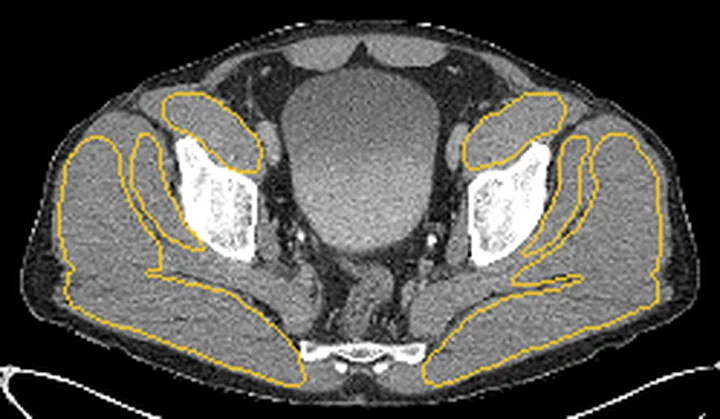
Aynı bölgenin, kaynak veri setinde patoloji içermediği belirtilen bir BT incelemesini kesit kesit kaydırın; organ sınırlarını açarak anatomiyi hasta görüntüsüyle karşılaştırın. Küçük rastlantısal bulgular tümüyle dışlanmamıştır.
Kaynak: TotalSegmentator v2.01 veri seti (Wasserthal ve ark., Radiology: Artificial Intelligence 2023), CC BY 4.0, vaka s0119; organ sınırları veri setinin otomatik segmentasyonundan, birleştirilerek sadeleştirildi. Görüntüler 2,5 mm kesit aralığına yeniden örneklendi.
Ayırıcı tanı
- Seroma
- kontrastsız görüntüde basit sıvı atenüasyonundadır ve pıhtı yoğunluğu ya da hematokrit seviyesi göstermez.
- Apse
- kalın-düzensiz kontrastlanan duvar, çevresel inflamasyon ve bazen koleksiyon içi gaz vardır.
- Psödoanevrizma
- arterle eş zamanlı kontrastlanan düzgün sınırlı kese şeklindedir; serbest ekstravazasyon gibi yayılmaz.
Tuzaklar
- Kontrastsız faz yoksa yüksek dansiteli pıhtı ile kontrastla dolan damar odağı karışabilir; inceleme fazlarını ve aynı odağın sonraki fazlardaki davranışını kontrol et.
- Tek fazdaki küçük yuvarlak kontrast odağı psödoanevrizma da ekstravazasyon da olabilir; arterle bağlantı ve ardışık fazlarda boyut-şekil değişimi ayırıcıdır.
- Rektus hematomu alt karın duvarından prevezikal boşluğa inebilir; yalnız en belirgin aksiyel kesitte kalma, kanın fasya planı boyunca uzanımını takip et.
Kendini dene
Ameliyat sonrası tek taraflı rektus kası büyümüş ve içinde kontrastsız kesitte yoğun pıhtı, arteriyel seride damar dışı düzensiz odak görülüyor. En olası süreç nedir?
Cevabı göster
Aktif hematom kanaması. Rektus içindeki pıhtı koleksiyonu hematomu; damarın dışında kontrast odağı aktif kanamayı destekler. Seroma basit sıvıdır, mesh enfeksiyonu için enfeksiyöz çevre bulguları aranır, hernide fasya defektinden içerik çıkar.
Rektus içi kanama transversalis fasya altına geçip prevezikal alana uzanıyor. Berna sınıflamasında hangi tiptir?
Cevabı göster
Tip III. Tip III hematom peritoneal yüzeye ve prevezikal alana yayılımı tanımlar. Tip I kas içi sınırlı, Tip II kas içi kanla birlikte rektus-transversalis fasya aralığına uzanan hematomdur.
İlgili konular
Kaynaklar
Bu sayfadaki 39 cümle ve 2 quiz sorusu aşağıdaki kaynaklardan alıntılarla otomatik olarak karşılaştırıldı; 10 cümle bu karşılaştırmada düzeltildi (2026-10-09).
- Multidetector CT of expected findings and early postoperative complications after current techniques for ventral hernia repairpmc.ncbi.nlm.nih.gov
- Spontaneous rectus sheath hematoma: The utility of CT angiographypmc.ncbi.nlm.nih.gov
- Comparison of the Different Treatment Strategies for Patients with Rectus Sheath Haematomapmc.ncbi.nlm.nih.gov
- Resection of neurogenic heterotopic ossification (NHO) of the hip.pubmed.ncbi.nlm.nih.gov
- Massive swelling of Surgicel® Fibrillar™ hemostat after spinal surgery. Case report and a review of the literature.pubmed.ncbi.nlm.nih.gov
- An Overview of Recent Advances in Anterior Cervical Decompression and Fusion Surgery.pubmed.ncbi.nlm.nih.gov
- Multilevel Hemilaminotomy Windows for the Surgical Management of Spinal Epidural Lipomatosis Causing Syringomyelia: Technical Note and Literature Review.pubmed.ncbi.nlm.nih.gov
- Systematic review with meta-analysis of prospective randomized trials comparing minimally invasive video-assisted thyroidectomy (MIVAT) and conventional thyroidectomy (CT).pubmed.ncbi.nlm.nih.gov
- Combined Endoscopic and Exoscopic Resection of Intracranial Epidermoid Cysts.pubmed.ncbi.nlm.nih.gov
- Emergency decompressive craniectomy after removal of convexity meningiomas.pubmed.ncbi.nlm.nih.gov
- Safety and efficacy of low-dose rhBMP-2 use for anterior cervical fusion.pubmed.ncbi.nlm.nih.gov
- Surgical Resection of Non-Glial Tumors in the Motor Cortex.pubmed.ncbi.nlm.nih.gov
- Clival chordomas: considerations after 16 years of endoscopic endonasal surgery.pubmed.ncbi.nlm.nih.gov
- Local Control and Analgesic Efficacy of Percutaneous Cryoablation for Desmoid Tumors.pubmed.ncbi.nlm.nih.gov
- The Interest of Enhanced Recovery After Surgery in a New Bariatric Center.pubmed.ncbi.nlm.nih.gov
- [Operative treatment of displaced intra-articular calcaneal fractures].pubmed.ncbi.nlm.nih.gov
- Cone beam CT findings of retromolar canals in a Korean population.pubmed.ncbi.nlm.nih.gov
- Massive rectus sheath hematoma following anticoagulation requiring operative hemorrhage control: a case report.pubmed.ncbi.nlm.nih.gov
- In Search of Ideal Analgesia: Classical and Deep Rectus Sheath Block in Laparoscopic Cholecystectomy.pubmed.ncbi.nlm.nih.gov
- Bilateral rectus sheath hematoma following enoxaparin administration in a patient with extensive lower limb DVT: a rare complication.pubmed.ncbi.nlm.nih.gov
- Spontaneous Massive Intrathoracic Hematoma in a Patient with Marfan Syndrome.pubmed.ncbi.nlm.nih.gov
- Early CTA Diagnosis of Hemodynamically Occult External Iliac Artery Injury After Direct Anterior Total Hip Arthroplasty Treated with Covered Stent-Graft Repair: A Case Report.pubmed.ncbi.nlm.nih.gov
- Extra-Anatomical Aortic Bypass for Infected Aortic Arch Stent Graft: A Case Series.pubmed.ncbi.nlm.nih.gov
- Post-operative complications of cholecystectomy: what the radiologist needs to know.pubmed.ncbi.nlm.nih.gov
- Delayed duodenal obstruction after intramural hematoma in a patient with paroxysmal nocturnal hemoglobinuria: A case report.pubmed.ncbi.nlm.nih.gov
- Long-term safety and effectiveness of the "OptEase" vena cava filter.pubmed.ncbi.nlm.nih.gov
- Stabler Sign Secondary to Postoperative Breast Hematoma: CT Evidence of Extraperitoneal Blood Tracking.pubmed.ncbi.nlm.nih.gov
- Acute and chronic complications of cesarean delivery: An update for the general radiologist.pubmed.ncbi.nlm.nih.gov
- Management of spontaneous abdominal wall hematomas: a narrative review with a focus on CTA-negative endovascular cases.pubmed.ncbi.nlm.nih.gov
- Non-traumatic lower abdominal pain: ultrasonographic and clinical differential diagnosis.pubmed.ncbi.nlm.nih.gov
- Commentary: an eye on PET quantification.pubmed.ncbi.nlm.nih.gov
- Combined Post-traumatic Pseudoaneurysms of the Superior Gluteal and Aberrant Obturator Arteries: A Case Report.pubmed.ncbi.nlm.nih.gov
- Pitfall in necrotizing pancreatitis: Organized hematoma with arteriovenous fistula mimicking a splenic artery pseudoaneurysm.pubmed.ncbi.nlm.nih.gov
- Delayed rupture of right external iliac artery pseudoaneurysm after removal of foreign body from small intestine: a case report.pubmed.ncbi.nlm.nih.gov
- Computed tomography of renal emergencies: A comprehensive diagnostic guide for radiology residents.pubmed.ncbi.nlm.nih.gov
- Subcutaneous hematoma of the lower abdomen and perineum following transperineal prostate biopsy: a case report and literature review.pubmed.ncbi.nlm.nih.gov
- MDCT Findings of Splenic Pathology.pubmed.ncbi.nlm.nih.gov
- Risk factors analysis and the establishment of nomogram prediction model of hidden blood loss exceeding 800 mL after total hip arthroplasty.pubmed.ncbi.nlm.nih.gov
- Rectus Sheath Hematoma as a Complication in Patients With COVID-19: Clinical and Imaging Findings.pubmed.ncbi.nlm.nih.gov
- Endovascular management of rectus abdominis hematoma: A report of two cases.pubmed.ncbi.nlm.nih.gov
- Acellular Fish Skin for Deep Dermal Traumatic Wounds Management: A Case Report.pubmed.ncbi.nlm.nih.gov
- Step-by-Step Guide to Hematoma Prevention After Rhytidectomy: Lessons Learned from 40 Years of Experience.pubmed.ncbi.nlm.nih.gov
- Conservative management of Type B aortic intramural hematoma guided by imaging surveillance.pubmed.ncbi.nlm.nih.gov
- Computed Tomography Imaging of Thoracic Aortic Surgery: Distinguishing Life-Saving Repairs from Life-Threatening Complications.pubmed.ncbi.nlm.nih.gov
- External Validation of Atherosclerotic Neuroimaging Biomarkers in Emergent Large-Vessel Occlusion.pubmed.ncbi.nlm.nih.gov
- Rare Delayed Complications of Laparoscopic Adjustable Gastric Band Erosion: Contained Gastric Perforation and Bleeding Pseudoaneurysm.pubmed.ncbi.nlm.nih.gov
- Infected splenic artery pseudoaneurysm within a complex splenic cystic lesion: CT angiography pitfalls and surgical correlation.pubmed.ncbi.nlm.nih.gov
- Immediate Remote Common Femoral Artery Rupture After Vascular Closure Device Deployment.pubmed.ncbi.nlm.nih.gov
- The space of Retzius: anatomy, imaging features, and patterns of disease spread.pubmed.ncbi.nlm.nih.gov
- Retroperitoneal anatomy with the aid of pathologic fluid: An imaging pictorial review.pubmed.ncbi.nlm.nih.gov
- The subperitoneal space and peritoneal cavity: basic concepts.pubmed.ncbi.nlm.nih.gov
- A case of blunt liver injury with rare hemodynamics: traumatic outflow block.pubmed.ncbi.nlm.nih.gov
- Spontaneous subcapsular hepatic hematoma with hepatic rupture and hemorrhage in the postpartum period: a case report and literature review.pubmed.ncbi.nlm.nih.gov
- Time Is Kidney: A Case Study and Literature Review of Bilateral Renal Compartment Syndrome After Blunt Trauma, a Rare Complication.pubmed.ncbi.nlm.nih.gov
- Multimodal assessment of exercise-induced fatigue: integrating cardiopulmonary, neuromuscular, and biomechanical profiling in high-intensity running.pubmed.ncbi.nlm.nih.gov
- Three-Dimensional Spinal and Pelvic Alignment as Determinants of Anticipatory Core Muscle Activation.pubmed.ncbi.nlm.nih.gov
- Methodological standards for body composition assessment-an expert-endorsed guide for research and clinical applications: bioimpedance, dual-energy X-ray absorptiometry, computerized tomography, and ultrasound methods.pubmed.ncbi.nlm.nih.gov
- Snake Toxins Affecting Blood Vessel Walls: Mode of Action and Biological Significance.pubmed.ncbi.nlm.nih.gov
- Eosinophil Extracellular Traps in Health and Disease: From Host Defense to Chronic Inflammation.pubmed.ncbi.nlm.nih.gov
- Spontaneous Intracranial Vertebral Artery Dissection: A Rare Cause of Ischemic Stroke.pubmed.ncbi.nlm.nih.gov
- Factors predicting need for intervention and mortality in patients with spontaneous rectus sheath hematoma.pubmed.ncbi.nlm.nih.gov
- Rectus sheath hematoma masquerading as acute pancreatitis: a case report.pubmed.ncbi.nlm.nih.gov
- Spontaneous rectus sheath hematoma: Beyond hematoma size, volume, and treatment method - The dominant influence of comorbidity on prognosis and mortality: A single-center retrospective study.pubmed.ncbi.nlm.nih.gov
- Trauma in the elderly: a bilateral rectus sheath haematoma.pubmed.ncbi.nlm.nih.gov
- Spontaneous Rectus Sheath Hematoma: An Uncommon Cause of Acute Abdominal Pain.pubmed.ncbi.nlm.nih.gov
- Ultrasound-Guided Regional Anesthesia-Current Strategies for Enhanced Recovery after Cardiac Surgery.pubmed.ncbi.nlm.nih.gov
- Rectus sheath hematoma in pregnancy: a case report with literature review.pubmed.ncbi.nlm.nih.gov
- Rectus Sheath Hematoma Following Cesarean Section: A Concealed Extrauterine Cause of Postpartum Hemorrhage.pubmed.ncbi.nlm.nih.gov
- Conservative Treatment for Spontaneous Rectus Sheath Hematoma: A Case Report.pubmed.ncbi.nlm.nih.gov
- A Tertiary Center Case Series on Postpartum Rectus Sheath Hematoma: An Unveiled Identity.pubmed.ncbi.nlm.nih.gov
- Spontaneous rectus sheath hematoma associated with apixaban in an elderly gentleman with chronic obstructive airway disease - a case report.pubmed.ncbi.nlm.nih.gov
- Surgical treatment outcomes of elastofibroma dorsi in 16 patients with 22 lesions.pubmed.ncbi.nlm.nih.gov
- Beyond the lung: recognizing incidental breast lesions on chest computed tomography.pubmed.ncbi.nlm.nih.gov
- Third-Generation Cephalosporin Resistance Among Enterobacterales in Percutaneously Drained Pelvic Abscesses: A Single-Center Retrospective Cohort Study.pubmed.ncbi.nlm.nih.gov
- Non-pulmonary postoperative complications of cardiothoracic surgery.pubmed.ncbi.nlm.nih.gov
- Clinical, Radiological, and Endoscopic Features of Pancreatic Pseudocyst and Walled-Off Necrosis: How to Diagnose and How to Drain Them.pubmed.ncbi.nlm.nih.gov
- Imaging in the postpartum period.pubmed.ncbi.nlm.nih.gov
- Discordance between CECT and angiographic findings in severe acute pancreatitis-related hemorrhage: implications for interventional management.pubmed.ncbi.nlm.nih.gov
- Postoperative Pituitary MRI Findings in Acromegaly: A Pictorial Review.pubmed.ncbi.nlm.nih.gov
- Muscle-Sparing Latissimus Dorsi Flap with a Longitudinal Muscle Cuff: A Practical Strategy for Reliable Harvest of Elongated Skin Paddles.pubmed.ncbi.nlm.nih.gov
- Upper- versus lower-extremity synovial sarcoma: distinct surgical pathways and postoperative morbidity in a 24-year cohort.pubmed.ncbi.nlm.nih.gov
- Intraoperative Agents for Hemostasis and Dural Reconstruction in Neurosurgery.pubmed.ncbi.nlm.nih.gov
- A Comprehensive Review of SURGICEL®: Efficacy, Applications, and Radiological Insights in Surgery.pubmed.ncbi.nlm.nih.gov
- Preclinical Performance Evaluation of an Oxidized Regenerated Cellulose Hemostat: Antibacterial Activity and Wound Healing Outcomes.pubmed.ncbi.nlm.nih.gov
- Computed tomography imaging of complications of acute cholecystitis.pubmed.ncbi.nlm.nih.gov
- Noninvasive aortic imaging.pubmed.ncbi.nlm.nih.gov
- Transarterial embolization in musculoskeletal care: an indication-stratified narrative review.pubmed.ncbi.nlm.nih.gov
- Computed tomography of pediatric abdominal trauma: optimizing utilization and enhancing diagnostic interpretation.pubmed.ncbi.nlm.nih.gov
- Guidelines for Enhanced Recovery After Trauma and Intensive Care (ERATIC): Enhanced Recovery After Surgery (ERAS) Society and International Association of Trauma Surgery and Intensive Care (IATSIC) Recommendations: Paper 1: Initial Care-Pre and Intraoperative Care Until ICU, Including Non-Operative Management.pubmed.ncbi.nlm.nih.gov
- Trunk training following stroke.pubmed.ncbi.nlm.nih.gov
- Patterns of injury and violence in Yaoundé Cameroon: an analysis of hospital data.pubmed.ncbi.nlm.nih.gov
- Does laparoscopic surgery decrease the risk of atrial fibrillation after foregut surgery?pubmed.ncbi.nlm.nih.gov
- Chronic Subdural Hematoma: Pathophysiology, Diagnosis, and the Emerging Role of Middle Meningeal Artery Embolization.pubmed.ncbi.nlm.nih.gov
- Radiologic evaluation of the kidney transplant donor and recipient.pubmed.ncbi.nlm.nih.gov
- Interventional Radiology for Primary Postpartum Hemorrhage: Optimal Strategy Based on the Pathogenesis of Bleeding.pubmed.ncbi.nlm.nih.gov
- Median arcuate ligament syndrome presenting as acute mesenteric hemorrhage: A case report.pubmed.ncbi.nlm.nih.gov
- Radiologic Imaging of Traumatic Bowel and Mesenteric Injuries: A Comprehensive Up-to-Date Review.pubmed.ncbi.nlm.nih.gov
- Hepatic Artery Infusion Pumps: A Surgical Toolkit for Intraoperative Decision-Making and Management of Hepatic Artery Infusion-Specific Complications.pubmed.ncbi.nlm.nih.gov
- Network meta-analysis of robotic ventral and incisional hernia repair techniques: intraperitoneal, preperitoneal, retromuscular, and sublay approaches.pubmed.ncbi.nlm.nih.gov
- Use of intraperitoneal fascial traction in robotic eTEP approach for complex ventral hernias: technique and outcomes.pubmed.ncbi.nlm.nih.gov
- Incarcerated Spigelian Hernia: A Case Report.pubmed.ncbi.nlm.nih.gov
- Giant rectus sheath hematoma.pubmed.ncbi.nlm.nih.gov
- Superficial Abdominal Skin Laxity Versus Rectus Diastasis: Distinct Pathophysiological Entities With Different Functional and Reconstructive Implications in Modern Abdominoplasty.pubmed.ncbi.nlm.nih.gov
- Extended-view totally extraperitoneal repair for ventral hernias: a retrospective analysis of perioperative outcomes and the role of ASA score.pubmed.ncbi.nlm.nih.gov
- Comparison of Bilateral Rectus Sheath Block and Thoracic Epidural Analgesia for Postoperative Pain Control After Open Gastrectomy: A Randomized Controlled Trial.pubmed.ncbi.nlm.nih.gov
- The prominent role of percutaneous transarterial embolization in the treatment of anterior abdominal wall hematomas: the results of three high volume tertiary referral centers.pubmed.ncbi.nlm.nih.gov
- A Study on the Spectrum of Imaging Findings of Post-ERCP-Specific Complications: A Retrospective Descriptive Study.pubmed.ncbi.nlm.nih.gov
- Intraperitoneal anatomy with the aid of pathologic fluid and gas: An imaging pictorial review.pubmed.ncbi.nlm.nih.gov
- Case of idiopathic cervical spinal subarachnoid hematoma mimicking an epidural hematoma: A case report.pubmed.ncbi.nlm.nih.gov
- Case Report: Delayed diagnosis of pancreatic solid pseudopapillary neoplasm in a boy initially misdiagnosed as traumatic retroperitoneal hematoma.pubmed.ncbi.nlm.nih.gov
- Multimodal Surgical Strategy with Preoperative Transcatheter Arterial Embolization Facilitates Safe and Controlled Resection of a Giant Intrathoracic Chronic Expanding Hematoma: A Case Report.pubmed.ncbi.nlm.nih.gov
- Collaborative Diagnostic Pathways for Unilateral Orbital Disease: A Clinicopathological Series.pubmed.ncbi.nlm.nih.gov
- Spontaneous Abdominal Wall Hematoma Following Violent Cough: A Rare but Severe Condition-Surgical Challenges and Outcomes Regarding Three Cases and a Literature Review.pubmed.ncbi.nlm.nih.gov
Eğitim amaçlıdır; hasta başında tanı ve tedavi kararının yerine geçmez, tıbbi tavsiye değildir. Metinler yapay zekâ desteğiyle yazıldı ve otomatik bir adımda kaynak alıntılarıyla karşılaştırıldı; bu bir tıbbi doğrulama değildir ve içerik uzman radyolog incelemesinden geçmedi. Klinik kararlarda güncel kılavuzları, kurum protokollerini ve radyoloji raporunu esas alın.