Özet
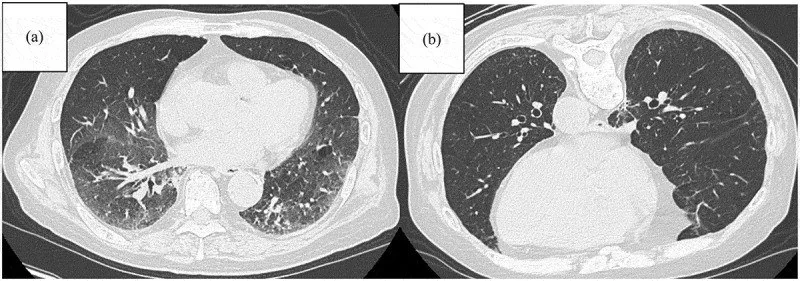
Sırtüstü çekimde yerçekimine bağlı posterior bazal dansite artışı, özellikle inspirasyon yetersizse hafif buzlu cam veya ince retikülasyon görünümü verebilir. Prone HRCT, özellikle supin görüntüde belirsiz posterior subplevral opasitelerin pozisyon etkisini değerlendirmek için hedefli ek inceleme olarak kullanılır; supin seride belirgin traksiyon bronşiektazisi veya bal peteği bulunan fibrotik değişiklikte ek prone seri çoğu kez tanı için gerekli değildir. Bu karşılaştırma, alt toraksı kısmen içeren incelemelerde veya kuşkulu erken interstisyel anormallikte BT yorumunu değiştirebilir. Pozisyonel opasiteyi fibrozis diye adlandırmak hastalık yükünü abartabilir; kalıcı lezyonu pozisyonel sanmak ise gerçek parankim hastalığını gizler.
Faz ve pencere
- HRCT tanısal
- Kontrastsız sırtüstü ince kesitte posterior subplevral alt loblarda bulanık buzlu cam veya ince çizgisel dansite artışı görülebilir; inspirasyon hacmi azsa yerçekimine bağlı atelektazi belirginleşir.
- HRCT tanısal
- Prone seri aynı akciğer bölgelerini ters yerçekimi yönünde gösterir; sırtüstü görüntüdeki posterior opasitenin gerilemesi veya kaybolması pozisyonel bileşeni destekler, sürmesi gerçek parankim anormalliği olasılığını artırır. Fibrotik ILA'larda supin BT tek başına yüksek tanısal doğruluk ve okuyucular arası uyum sağlarken, prone BT'nin ek katkısı nonfibrotik ILA tanısında belirgindir.
Önerilen pencereler: Akciğer (G 1500 / M -600).
BT bulguları
- Bağımlı akciğer alanlarında atenüasyon — supin PET/BT'de bağımlı akciğerler, bağımlı olmayan alanlara göre daha yüksek HU gösterebilir.
- Prone görüntüde gerileme — aynı anatomik bölgedeki opasitenin yüzüstü pozisyonda belirgin azalması pozisyonel bileşeni gösterir.
- Prone pozisyonda da süren retikülasyon, pozisyona bağlı olmayan interstisyel anormallik olasılığını destekler.
- Suboptimal inspirasyon — yaygın damar yakınlaşması ve bazal yoğunlaşma bağımlı atelektaziyi artırabilir.
Normalde
Supin ve prone BT'yi birlikte değerlendirin; prone BT nonfibrotik ILA tanısına katkı sağlarken, supin BT fibrotik ILA tanısı için tek başına yüksek doğruluk ve okuyucular arası uyum gösterebilir.
Normal BT ile kıyasla
Aynı bölgenin, kaynak veri setinde patoloji içermediği belirtilen bir BT incelemesini kesit kesit kaydırın; organ sınırlarını açarak anatomiyi hasta görüntüsüyle karşılaştırın. Küçük rastlantısal bulgular tümüyle dışlanmamıştır.
Kaynak: TotalSegmentator v2.01 veri seti (Wasserthal ve ark., Radiology: Artificial Intelligence 2023), CC BY 4.0, vaka s1278; organ sınırları veri setinin otomatik segmentasyonundan, birleştirilerek sadeleştirildi. Görüntüler 2,5 mm kesit aralığına yeniden örneklendi.
Ayırıcı tanı
- Erken interstisyel akciğer anormalliği
- buzlu cam veya retikülasyon prone görüntüde de devam eder; dağılım başka zonlara uzanabilir.
- İnterstisyel akciğer ödemi
- buzlu cam opasitesi ödemle ilişkili olabilir.
- Alt lob enfeksiyonu
- viral pnömonide buzlu cam opasiteleri ve bağımlı konsolidasyon görülebilir.
- Subsegmental atelektazi
- çizgisel opasiteye hacim kaybı veya bronkovasküler yapıların yakınlaşması eşlik edebilir; küçük alan prone ile açılabilir.
Tuzaklar
- Sırtüstü seride görülen her posterior buzlu camı interstisyel hastalık saymayın; ince kesitte prone karşılaştırma geçici bağımlı bileşeni ortaya çıkarabilir.
- Prone seride opasitenin sürmesi tek başına fibrozis demek değildir; enfeksiyon, ödem ve diğer infiltratif süreçleri eşlikçi morfolojiyle ayırın.
- Pozisyon değişikliğinin akciğer hacmini ve bazal havalanmayı da değiştirdiğini unutmayın; kıyası aynı anatomik bölge ve benzer inspirasyon düzeyinde yapın.
- Supin BT’de retikülasyon, traksiyon bronşiektazisi veya bal peteği belirginse fibrotik interstisyel anormallik prone görüntü olmadan da değerlendirilebilir; ek prone seri en çok belirsiz nonfibrotik opasitede katkı sağlar.
Kendini dene
Sırtüstü görüntüde posterior bazal buzlu cam izleniyor; prone seride aynı alan tamamen açılıyor ve lob hacmi korunuyor. En uygun yorum hangisidir?
Cevabı göster
Pozisyonel bağımlı opasite. Prone pozisyonda opasitenin tamamen kaybolması ve lob hacminin korunması pozisyonel bağımlı opasiteyi destekler. Bu bulgu geçici bağımlı atelektatik bileşenle uyumludur, ancak tek başına kalıcı fibrozis ya da özgül bir patoloji tanısı değildir.
Prone BT'nin interstisyel akciğer anormalliklerini değerlendirmeye katkısı hangi grupta daha belirgindir?
Cevabı göster
Nonfibrotik ILA şüphesinde. Çalışmada prone BT nonfibrotik ILA tanısına katkı sağlarken, fibrotik ILA'larda supin BT tek başına yüksek tanısal doğruluk ve okuyucular arası uyum göstermiştir.
Kaynaklar
Bu sayfadaki 32 cümle ve 2 quiz sorusu aşağıdaki kaynaklardan alıntılarla tek tek karşılaştırıldı; 1 cümle bu karşılaştırmada düzeltildi (2026-10-09).
- Cryptogenic brain abscess: Right-to-left shunt in pulmonary arteriovenous malformation and hepatopulmonary syndrome ☆pmc.ncbi.nlm.nih.gov
- Best practices in shape-sensing robotic bronchoscopy with mobile cone beam computed tomography guidance: how I do itpmc.ncbi.nlm.nih.gov
- Giant Hiatal Hernia Mimicking Acute Coronary Syndrome: A Case Reportpmc.ncbi.nlm.nih.gov
- Position‐Dependent Lung Shadow Movementpmc.ncbi.nlm.nih.gov
- Sex-related differences in lung injury distribution and outcomes in COVID-19 acute respiratory failure: insights from the CT-COVID19 multicenter study grouppmc.ncbi.nlm.nih.gov
- Position-Dependent Lung Shadow Movement.pubmed.ncbi.nlm.nih.gov
- Pulmonary Langerhans cell histiocytosis in children: a spectrum of radiologic findings.pubmed.ncbi.nlm.nih.gov
- Early Prone Positioning and Non-Invasive Ventilation in a Critical COVID-19 Subset. A Single Centre Experience in Southern Italy.pubmed.ncbi.nlm.nih.gov
- Clinically focused multi-cohort benchmarking as a tool for external validation of artificial intelligence algorithm performance in basic chest radiography analysis.pubmed.ncbi.nlm.nih.gov
- Outcomes of a Foldable Capsular Vitreous Body Implantation: A Retrospective Study.pubmed.ncbi.nlm.nih.gov
- Thoracic Computed Tomography to Assess ARDS and COVID-19 Lungs.pubmed.ncbi.nlm.nih.gov
- Multimodality imaging characteristics of tension pyopneumothorax secondary to pulmonary carcinoma in a cat.pubmed.ncbi.nlm.nih.gov
- Focal dependent pleural thickening at MDCT: pleural lesion or functional abnormality?pubmed.ncbi.nlm.nih.gov
- Forensic pathological evaluation of postmortem pulmonary CT high-density areas in serial autopsy cases of sudden cardiac death.pubmed.ncbi.nlm.nih.gov
- [Evaluation and clinical management of interstitial lung abnormalities : Position paper of the Austrian Society of Pneumology (ÖGP) and the Austrian Radiological Society (ÖRG) 2026].pubmed.ncbi.nlm.nih.gov
- Prone position PET/CT is useful in reducing gravity-dependent opacity-related [ 18 F]fluorodeoxyglucose uptake.pubmed.ncbi.nlm.nih.gov
- Effect of position and time held in that position on ground-glass opacity in computed tomography images of dogs.pubmed.ncbi.nlm.nih.gov
- Adult Acute Respiratory Distress Syndrome (ARDS) Caused by Human Rhinovirus During Janus Kinase Inhibitor Therapy for Rheumatoid Arthritis: A Case Report and Literature Review.pubmed.ncbi.nlm.nih.gov
- Lung volume assessment for mean dark-field coefficient calculation using different determination methods.pubmed.ncbi.nlm.nih.gov
- Host, Pathogen, and Pulmonary Anatomy in Pneumonia: An Integrated Imaging and Clinical Perspective.pubmed.ncbi.nlm.nih.gov
- The impact of technical factors on the chest radiographic findings in COVID-19 pneumonia.pubmed.ncbi.nlm.nih.gov
- Pneumothorax and Hemothorax: Practical Approaches for Radiologists.pubmed.ncbi.nlm.nih.gov
- AI-based chest CT quantification of interstitial lung disease in idiopathic inflammatory myopathies: agreement with expert visual assessment in 107 patients.pubmed.ncbi.nlm.nih.gov
- Diagnostic, prognostic, and therapeutic challenges in patients with hypersensitivity pneumonitis.pubmed.ncbi.nlm.nih.gov
- Contemporary 0.55 T MRI to visualize interstitial lung disease - An exploratory study.pubmed.ncbi.nlm.nih.gov
- Thoracic joint abnormalities and impaired thoracic motion in idiopathic pleuroparenchymal fibroelastosis: an exploratory study using inspiratory and expiratory CT.pubmed.ncbi.nlm.nih.gov
- Imaging in animal models: bridging experimental findings and human pathophysiology.pubmed.ncbi.nlm.nih.gov
- Multi-scale Lesion Feature Fusion and Location-Aware for Chest Multi-disease Detection.pubmed.ncbi.nlm.nih.gov
- ESR Essentials: imaging in fibrotic lung diseases-practice recommendations by the European Society of Thoracic Imaging.pubmed.ncbi.nlm.nih.gov
- CT Morphologic Characteristics and Variant Patterns of Interstitial Pulmonary Fibrosis in Systemic Lupus Erythematosus.pubmed.ncbi.nlm.nih.gov
- Emerging 2019 Novel Coronavirus (2019-nCoV) Pneumonia.pubmed.ncbi.nlm.nih.gov
- Consensus statement on thoracic radiology terminology in Portuguese used in Brazil and in Portugal.pubmed.ncbi.nlm.nih.gov
- 2.5-mm articulated endoluminal forceps using a compliant mechanism.pubmed.ncbi.nlm.nih.gov
- Long-term safety and effectiveness of the "OptEase" vena cava filter.pubmed.ncbi.nlm.nih.gov
- A biomarker-guided framework for corticosteroid treatment stratification in acute exacerbation of idiopathic pulmonary fibrosis.pubmed.ncbi.nlm.nih.gov
- Lipoid Pneumonia: HRCT and MRI Spectrum, Diagnostic Pitfalls, and Imaging-Based Diagnostic Workflow.pubmed.ncbi.nlm.nih.gov
- Clinical course, treatment and outcome of severe pneumocystis pneumonia in patients with autoimmune or inflammatory diseases: a prospective study.pubmed.ncbi.nlm.nih.gov
- Lung imaging methods: indications, strengths and limitations.pubmed.ncbi.nlm.nih.gov
- Fleischner Society: Glossary of Terms for Thoracic Imaging.pubmed.ncbi.nlm.nih.gov
- Application of an improved YOLOv5s-based deep learning model for automated detection of pulmonary adenocarcinoma <i>in situ</i> and minimally invasive adenocarcinoma.pubmed.ncbi.nlm.nih.gov
- Dual-channel grouped cross-dimension attention V-Net for pulmonary nodule segmentation.pubmed.ncbi.nlm.nih.gov
- Sex-related differences in lung injury distribution and outcomes in COVID-19 acute respiratory failure: insights from the CT-COVID19 multicenter study group.pubmed.ncbi.nlm.nih.gov
- Automated identification of interstitial lung abnormalities in lung screening using quantitative CT.pubmed.ncbi.nlm.nih.gov
- Case Report: Acute interstitial pneumonia as the initial presentation of Anti-EJ antisynthetase syndrome: a case of severe respiratory failure with rapid response to cyclophosphamide.pubmed.ncbi.nlm.nih.gov
- Current diagnosis, epidemiology, and management of interstitial lung abnormalities.pubmed.ncbi.nlm.nih.gov
- Central airway pathology: clinic features, CT findings with pathologic and virtual endoscopy correlation.pubmed.ncbi.nlm.nih.gov
- Understanding cystic lung lesions in smokers with interstitial lung disease: radiologic-pathological correlation.pubmed.ncbi.nlm.nih.gov
- ARE COVID-19 PNEUMONIA FINDINGS DIFFERENT BETWEEN COMORBID AND NON-COMORBID PATIENTS? THE HIGH RESOLUTION COMPUTED TOMOGRAPHY FEATURES OF THE 108 FOLLOW-UP PATIENTS.pubmed.ncbi.nlm.nih.gov
- Body mass index and thoracic morphology parameters as predictors of pneumothorax in CT-guided lung biopsies.pubmed.ncbi.nlm.nih.gov
- Prone positioning in cone beam CT-guided robotic bronchoscopy case series: a strategy to minimize atelectasis and improve access to posteromedial lower lobe nodules.pubmed.ncbi.nlm.nih.gov
- Quantitative Assessment of Postural Influence on Lung Function Using Deformable Image Registration-Based Breath-Hold CT Ventilation Imaging.pubmed.ncbi.nlm.nih.gov
- Imaging of pediatric pulmonary infections: A pictorial review.pubmed.ncbi.nlm.nih.gov
- Medication-induced lung disease in children.pubmed.ncbi.nlm.nih.gov
- Platypnea-orthodeoxia syndrome associated with COVID-19 pneumonia: a case report.pubmed.ncbi.nlm.nih.gov
- Computer-aided COVID-19 diagnosis and a comparison of deep learners using augmented CXRs.pubmed.ncbi.nlm.nih.gov
- Incidental pulmonary findings on CT in daily practice: the nodule and the interstitial lung abnormalities - what's old, what's new.pubmed.ncbi.nlm.nih.gov
- Interstitial Lung Abnormalities: State of the Art.pubmed.ncbi.nlm.nih.gov
- Deep-learning based quantitative evaluation of postoperative atelectasis following right upper lobectomy.pubmed.ncbi.nlm.nih.gov
- AI-Based Quantitative HRCT for In-Hospital Adverse Outcomes and Exploratory Assessment of Reinfection in COVID-19.pubmed.ncbi.nlm.nih.gov
- Comprehensive review of pulmonary embolism imaging: past, present and future innovations in computed tomography (CT) and other diagnostic techniques.pubmed.ncbi.nlm.nih.gov
- Shape-Sensing Robotic Bronchoscopy with Integrated Mobile Cone-Beam CT Guidance for Intraoperative Localization of Lung Tumors Using Indocyanine Green.pubmed.ncbi.nlm.nih.gov
- Characterizing heterogeneity and subphenotyping acute respiratory distress syndrome with computed tomography.pubmed.ncbi.nlm.nih.gov
- A case report of bevacizumab-induced subcapsular renal hemorrhage in a patient with lung adenocarcinoma.pubmed.ncbi.nlm.nih.gov
- Respiratory Emergencies in Disasters: A Narrative Review.pubmed.ncbi.nlm.nih.gov
- Lung Imaging in Acute Hypoxemic Respiratory Failure: From Physics to Bedside Applications.pubmed.ncbi.nlm.nih.gov
- Hypotension and pulmonary atelectasis during general anaesthesia: a randomised crossover laboratory study.pubmed.ncbi.nlm.nih.gov
- Rheumatoid arthritis associated interstitial lung disease: diagnostic accuracy of lung ultrasound compared to chest high resolution computed tomography.pubmed.ncbi.nlm.nih.gov
- Case Report: Delayed appearance of the ablation margin after CT-guided microwave ablation of a solid pulmonary nodule.pubmed.ncbi.nlm.nih.gov
- Awake Prone Positioning in Moderate ARDS: A Case Report.pubmed.ncbi.nlm.nih.gov
- Long-term chest CT abnormalities up to 4.5 years after COVID-19 hospitalization and their association with dyspnea and fatigue: a prospective cohort study.pubmed.ncbi.nlm.nih.gov
- Optimizing prone CT use for suspected interstitial lung abnormalities.pubmed.ncbi.nlm.nih.gov
- Clinical and radiological characteristics of Mpox pneumonia in immunosuppressed HIV-infected patients: a multicenter study from China.pubmed.ncbi.nlm.nih.gov
- CT quantification of interstitial lung abnormalities: a prospective comparison between supine and prone positions.pubmed.ncbi.nlm.nih.gov
- Giant Hiatal Hernia Mimicking Acute Coronary Syndrome: A Case Report.pubmed.ncbi.nlm.nih.gov
- Cryptogenic brain abscess: Right-to-left shunt in pulmonary arteriovenous malformation and hepatopulmonary syndrome.pubmed.ncbi.nlm.nih.gov
- Phase-resolved functional lung magnetic resonance imaging for evaluation of lung perfusion and ventilation in fibrosing interstitial lung diseases.pubmed.ncbi.nlm.nih.gov
- Guidance for clinical practice using emergency and point-of-care ultrasonography.pubmed.ncbi.nlm.nih.gov
- Imaging the Injured Lung: Mechanisms of Action and Clinical Use.pubmed.ncbi.nlm.nih.gov
- Difference in Local Lung Movement During Tidal Breathing Between COPD Patients and Asthma Patients Assessed by Four-dimensional Dynamic-ventilation CT Scan.pubmed.ncbi.nlm.nih.gov
- Correlation of Lung Texture Analysis by Computer-Aided Lung Informatics for Pathology Evaluation and Rating (CALIPER) With High-Resolution Computed Tomography and Lung Function in Fibrosing Interstitial Lung Diseases.pubmed.ncbi.nlm.nih.gov
- Artificial intelligence and the evolution of the electrocardiogram: from cardiovascular diagnostic tool to digital biomarker.pubmed.ncbi.nlm.nih.gov
- Imaging in chronic thromboembolic pulmonary hypertension: review of the current literature.pubmed.ncbi.nlm.nih.gov
- Different chest HRCT scan protocols change the extent of ground glass opacities.pubmed.ncbi.nlm.nih.gov
- Lung ultrasound in a nutshell. Lines, signs, some applications, and misconceptions from a radiologist's point of view.pubmed.ncbi.nlm.nih.gov
- Case Report: Novel compound heterozygous mutations in <i>SLC34A2</i> gene: a case of pulmonary alveolar microlithiasis in a child.pubmed.ncbi.nlm.nih.gov
- Unsupervised Anomaly Detection in Medical Imaging: A Survey of Methods, Challenges, and Future Directions.pubmed.ncbi.nlm.nih.gov
- International Society of Paediatric Surgical Oncology (IPSO) Minimally Invasive Surgery (MIS) Guidelines.pubmed.ncbi.nlm.nih.gov
- Current and Emerging Therapeutic Strategies for the Treatment of Duchenne Muscular Dystrophy.pubmed.ncbi.nlm.nih.gov
- SPOT THE BOT: A comparative quality assessment of AI-generated written instructions for lung ultrasound training.pubmed.ncbi.nlm.nih.gov
- Breathe easy, baby, breathe. Lung ultrasound in neonatal critical care.pubmed.ncbi.nlm.nih.gov
- Postoperative Pulmonary Complications: Clinical and Imaging Insightspubmed.ncbi.nlm.nih.gov
- The Impact of Genetics on Pediatric Interstitial Lung Diseases: A Narrative Literature Review and Clinical Implications.pubmed.ncbi.nlm.nih.gov
- Clinically Suspected Whipple Disease Presenting with Acute Kidney Injury as the Initial Manifestation and Complicated by Severe Pneumonia Requiring Veno-Venous Extracorporeal Membrane Oxygenation.pubmed.ncbi.nlm.nih.gov
- COVID-19 ARDS: a review of imaging features and overview of mechanical ventilation and its complications.pubmed.ncbi.nlm.nih.gov
- Pathophysiology of light phenotype SARS-CoV-2 interstitial pneumonia: from histopathological features to clinical presentations.pubmed.ncbi.nlm.nih.gov
- Pathophysiology of Acute Respiratory Distress Syndrome and COVID-19 Lung Injury.pubmed.ncbi.nlm.nih.gov
- Immune checkpoint inhibitor-related intestinal pseudo-obstruction and multisystem immune-related adverse events in a post-gastrectomy patient: a case report and literature review.pubmed.ncbi.nlm.nih.gov
- Lipemic anterior chamber mimicking uveitis in severe hypertriglyceridemia: a case report and literature review.pubmed.ncbi.nlm.nih.gov
- The effects of different prone ventilation strategies on mechanical power and respiratory mechanics in acute respiratory distress syndrome patients: a prospective, single-center observational study.pubmed.ncbi.nlm.nih.gov
- Diagnostic Performance of 3.0-Tesla Magnetic Resonance Imaging for Pulmonary Nodules and Masses: A Comparative Cross-Sectional Study With Multidetector Computed Tomography.pubmed.ncbi.nlm.nih.gov
- Automated CT-Based Quantification of Pulmonary Fibrosis Using Deep Learning-Based Lung Segmentation.pubmed.ncbi.nlm.nih.gov
- Transoesophageal Ultrasound Assessment of Lung Aeration in Patients With Acute Respiratory Distress Syndrome.pubmed.ncbi.nlm.nih.gov
- Different Methods to Improve the Monitoring of Noninvasive Respiratory Support of Patients with Severe Pneumonia/ARDS Due to COVID-19: An Update.pubmed.ncbi.nlm.nih.gov
- The Diagnostic Value of Lung Ultrasound in Bronchopulmonary Dysplasia Among Preterm Infants with Gestational Age ≤ 28 Weeks.pubmed.ncbi.nlm.nih.gov
- Pulmonary Veno-Occlusive Disease: A Focused Clinicopathologic Series.pubmed.ncbi.nlm.nih.gov
- Usefulness of Bedside Point-of-care Ultrasounds in Intensive Care Unit for Septic Patients: A Consensus Statement of the Italian Society of Echocardiography and Cardiovascular Imaging.pubmed.ncbi.nlm.nih.gov
- Deep learning-based quantitative CT assessment of interstitial lung abnormalities: prognostic risk thresholds in a health screening population.pubmed.ncbi.nlm.nih.gov
- Tips and Tricks in Thoracic Radiology for Beginners: A Findings-Based Approach.pubmed.ncbi.nlm.nih.gov
- [Update in Diagnosis of Idiopathic Pulmonary Fibrosis and Interstitial Lung Abnormality].pubmed.ncbi.nlm.nih.gov
- Semi-quantitative assessment of paraspinal muscle fat infiltration in single-level C5-6 cervical spondylosis using gray-level thresholding on conventional MRI: associations with disc degeneration and posture-related segmental angular change.pubmed.ncbi.nlm.nih.gov
- Understanding the Facet Joint Fusion Process: A Narrative Review for Clinicians and Surgeons Addressing the Who, Why, What, When, Where, Which, and How.pubmed.ncbi.nlm.nih.gov
- Uniportal non-coaxial endoscopic posterior cervical discectomy with annular suture repair for C6/C7 disc herniation: a case report.pubmed.ncbi.nlm.nih.gov
- Non-Resolving Repair in Idiopathic Pulmonary Fibrosis: From Failed Cellular Transitions to Architectural Lock-In.pubmed.ncbi.nlm.nih.gov
- Beyond Acute Infection: A Conceptual Framework Linking Zoonotic Bacterial Pathogens to Pulmonary Fibrosis and Lung Carcinogenesis.pubmed.ncbi.nlm.nih.gov
- Intermediate-Phenotype ABCA3 Deficiency Caused by Compound Heterozygous Variants Presenting as Persistent Respiratory Failure and Systemic Hypertension Since Birth in a Term Infant: A Case Report.pubmed.ncbi.nlm.nih.gov
Eğitim amaçlıdır; hasta başında tanı ve tedavi kararının yerine geçmez. İçerik yapay zekâ destekli bir süreçle güncel literatüre göre cümle cümle kaynaklarla karşılaştırıldı, ancak uzman radyolog incelemesinden geçmedi. Klinik kararlarda güncel kılavuzları, kurum protokollerini ve radyoloji raporunu esas alın.