Özet
Dev hücreli interstisyel pnömoni (GIP), çoğunlukla tungsten karbür veya kobalt içeren sert metal maruziyetiyle ilişkili nadir bir histolojik akciğer hasarı paternidir. Kontrastsız HRCT'de buzlu cam, sentrilobüler nodüller ve değişen derecede fibrotik yeniden yapılanma saptanabilir; görüntü tek başına GIP tanısı koydurmaz. İş öyküsünün sorgulanması radyolojik paternin anlamını değiştirir ve klinik, maruziyet, bronkoalveoler örnekleme veya doku bulguları ile birlikte yorumlanmalıdır. Mesleki maruziyet bağlantısını kaçırmak ilerleyici akciğer hasarının nedenini belirsiz bırakabilir; buzlu camı tek başına GIP saymak ise enfeksiyon ve diğer hipersensitivite benzeri süreçleri dışlamadan yanlış özgüllük yaratır.
Faz ve pencere
- HRCT tanısal
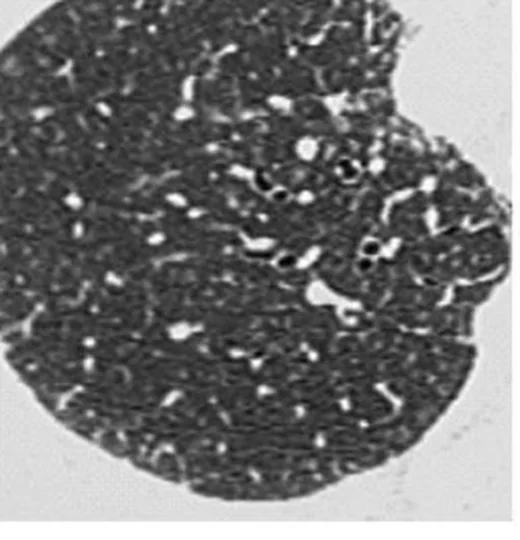
- İnce kesit inspiratuvar görüntülerde yaygın veya yamalı buzlu cam, belirsiz sınırlı sentrilobüler nodüller ve bronşiolosentrik dağılım görülebilir; kronik olguda retikülasyon, mimari distorsiyon, traksiyon bronşektazisi ve seyrek bal peteği gelişebilir. Küçük hava yolu tutulumuna işaret eden mozaik atenüasyon veya hava hapsi nadiren görülür. GIP'de HRCT parankim paterni sentrilobüler küçük nodüller, buzlu cam opasiteleri, düzensiz çizgisel opasiteler ve/veya bal peteği görünümü üzerinden değerlendirilir.
Önerilen pencereler G genişlik, M merkez; değerler Hounsfield birimi (HU)
- AkciğerG 1500 / M −600
- MediastenG 350 / M +50
BT bulguları
- Buzlu cam opasiteleri — yamalı veya yaygın artmış atenüasyonda damar sınırları seçilmeyi sürdürür; akut/subakut görünümde belirgin olabilir.
- Sentrilobüler nodüller — küçük, belirsiz sınırlı ve bronşiol merkezli nodüller hipersensitivite benzeri dağılım oluşturabilir.
- Mozaik atenüasyon ve hava hapsi gibi küçük hava yolu tutulum bulguları nadiren gözlenir.
- Retikülasyon ve yapısal bozulma — kronikleşmede interlobüler/intralobüler çizgiler, hacim kaybı ve traksiyon bronşektazisi fibrotik bileşeni gösterir.
- Konsolidasyon veya kistik değişiklik — daha az sık olarak alveoler opasiteye ya da ileri fibrotik yeniden yapılanmaya eşlik edebilir.
- Mesleki maruziyet bağlamı — kesme, bileme veya taşlama gibi sert metal tozu oluşturabilen işlerde kobalt/tungsten karbür öyküsü görüntü paterninin yorumunu yönlendirir.
- Sert metal akciğer hastalığında HRCT bulguları özgül değildir; sentrilobüler nodüller, buzlu cam, retikülasyon, konsolidasyon ve fibrozis farklı kombinasyonlarda görülebilir.
Normalde
Sert metal akciğer hastalığında sentrilobüler nodül ve buzlu cam gibi HRCT bulguları özgül değildir; GİP tanısı maruziyet öyküsü ve uygun sitolojik veya histolojik bulgularla birlikte değerlendirilmelidir. Aynı üst ve alt lob düzeylerinde bronşiol merkezli nodülleri, yamalı parankim yoğunluğunu ve traksiyonla genişlemiş bronşları araştırın; bunların dağılımını hastanın sert metal tozuyla çalışma öyküsüyle eşleştirin.
Normal BT ile kıyasla
Aynı bölgenin, kaynak veri setinde patoloji içermediği belirtilen bir BT incelemesini kesit kesit kaydırın; organ sınırlarını açarak anatomiyi hasta görüntüsüyle karşılaştırın. Küçük rastlantısal bulgular tümüyle dışlanmamıştır.
Kaynak: TotalSegmentator v2.01 veri seti (Wasserthal ve ark., Radiology: Artificial Intelligence 2023), CC BY 4.0, vaka s1278; organ sınırları veri setinin otomatik segmentasyonundan, birleştirilerek sadeleştirildi. Görüntüler 2,5 mm kesit aralığına yeniden örneklendi.
Ayırıcı tanı
- Hipersensitivite pnömonisi
- sentrilobüler buzlu cam nodülleri, mozaik atenüasyon ve hava hapsi örtüşür; antijen maruziyeti ve lobüler dağılım klinik/radyolojik ayrımda önemlidir.
- Respiratuvar bronşiolit ilişkili interstisyel akciğer hastalığı
- sentrilobüler nodüller ve yamalı buzlu cam görülebilir; sigara öyküsü ve eşlik eden sentrilobüler amfizem yardımcıdır.
- Deskuamatif interstisyel pnömoni, sert metal akciğer hastalığında bildirilen alternatif histolojik paternlerden biridir; HRCT bulguları özgül değildir.
- Nonspesifik interstisyel pnömoni
- bilateral simetrik buzlu cam ve ince retikülasyon yapabilir; subplevral korunma görülebilir, ancak sert metal maruziyeti tek başına tanı değildir.
- İdiyopatik pulmoner fibrozis/UIP
- bazal subplevral retikülasyon, traksiyon bronşektazisi ve bal peteği ile ayrışır; belirgin sentrilobüler nodül farklı bir patern düşündürür.
Tuzaklar
- GIP adı histolojik örüntüyü ifade eder; HRCT'de buzlu cam veya nodül görülmesi tek başına bu doku tanısını doğrulamaz.
- Hipersensitivite pnömonisiyle örtüşen bronşiolosentrik patern mesleki maruziyet sorgulanmadan idiyopatik etiketlenebilir; iş alanı ve metal bileşenlerini özellikle sorun.
- Kronik retikülasyon ve traksiyon bronşektazisi yalnız UIP anlamına gelmez; nodüller, hava hapsi ve maruziyet örüntüsüyle beraber değerlendirin.
- GIP, sert metal akciğer hastalığıyla ilişkili klasik histolojik örüntüdür; sert metal maruziyetinde başka interstisyel akciğer hastalığı örüntüleri de görülebilir.
Kendini dene
Tungsten karbür taşlayan işçide bronşiolosentrik akciğer hastalığı görülüyor. Bu maruziyetle ilişkili histolojik örüntü hangisidir?
Cevabı göster
Dev hücreli interstisyel pnömoni. Sert metal, özellikle tungsten karbür ve kobalt maruziyeti dev hücreli interstisyel pnömoniyle ilişkilidir. BT bronşiolosentrik veya fibrotik akciğer örüntüsünü gösterebilir; histolojik GIP tanısını tek başına koydurmaz. Hard metal maruziyeti ile en karakteristik ilişki dev hücreli interstisyel pnömoni olmakla birlikte nadiren desquamatif interstisyel pnömoni veya hipersensitivite pnömonisi paternleri de görülebilir.
Sentrilobüler nodül, buzlu cam ve hava hapsi hangi önemli taklitçiyle belirgin biçimde örtüşür?
Cevabı göster
Hipersensitivite pnömonisi. Hipersensitivite pnömonisi bronşiolosentrik nodül, mozaik atenüasyon ve ekspiratuvar hava hapsi yapabilir; öyküde antijen ve iş maruziyeti ayrımı destekler. UIP paterni kayda değer olarak periferal ve asiner yerleşimli fibrozis ile tanımlanırken, GIP genellikle sentrilobüler alanlarda yoğunlaşır.
İlgili konular
Kaynaklar
Bu sayfadaki 39 cümle ve 2 quiz sorusu aşağıdaki kaynaklardan alıntılarla otomatik olarak karşılaştırıldı; 7 cümle bu karşılaştırmada düzeltildi (2026-10-09).
- Recurrent nitrofurantoin-induced giant cell interstitial pneumonia: Case report and literature reviewpmc.ncbi.nlm.nih.gov
- A case series describing common radiographic and pathologic patterns of hard metal pneumoconiosispmc.ncbi.nlm.nih.gov
- Unusual pneumoconiosis in two patients with heavy print toner, and paper dust exposurepmc.ncbi.nlm.nih.gov
- An observational study of giant cell interstitial pneumonia and lung fibrosis in hard metal lung diseasepmc.ncbi.nlm.nih.gov
- Hard metal lung disease: a case seriespmc.ncbi.nlm.nih.gov
- Cobalt related interstitial lung disease.pubmed.ncbi.nlm.nih.gov
- Interstitial lung abnormality (ILA) and nonspecific interstitial pneumonia (NSIP).pubmed.ncbi.nlm.nih.gov
- Elemental analysis of occupational and environmental lung diseases by electron probe microanalyzer with wavelength dispersive spectrometer.pubmed.ncbi.nlm.nih.gov
- [Clinical analysis of hard metal lung disease].pubmed.ncbi.nlm.nih.gov
- Hard metal lung disease: a case series.pubmed.ncbi.nlm.nih.gov
- Cobalt-related interstitial lung disease or hard metal lung disease: A case series of Chinese workers.pubmed.ncbi.nlm.nih.gov
- Unusual pneumoconiosis in two patients with heavy print toner, and paper dust exposure.pubmed.ncbi.nlm.nih.gov
- Upper lobe-dominant pulmonary fibrosis showing deposits of hard metal component in the fibrotic lesions.pubmed.ncbi.nlm.nih.gov
- [Analysis of 2 patients with occupational hard mental lung disease].pubmed.ncbi.nlm.nih.gov
- [A systemic review on clinical characteristics, diagnosis and treatment of hard metal lung disease].pubmed.ncbi.nlm.nih.gov
- Hypersensitivity pneumonitis: new concepts and classifications.pubmed.ncbi.nlm.nih.gov
- Vaping-induced diffuse alveolar hemorrhage.pubmed.ncbi.nlm.nih.gov
- [Clinicopathological diagnosis of hypersensitivity pneumonitis].pubmed.ncbi.nlm.nih.gov
- Beyond the Graft: Recurrence of Interstitial Lung Diseases Post Transplant.pubmed.ncbi.nlm.nih.gov
- The role of pathologists in the diagnosis of occupational lung diseases: an expert opinion of the European Society of Pathology Pulmonary Pathology Working Group.pubmed.ncbi.nlm.nih.gov
- Occupational lung disease: when should I think of it and why is it important?pubmed.ncbi.nlm.nih.gov
- Imatinib-Associated Interstitial Lung Disease with a Fibrotic NSIP Pattern on Transbronchial Lung Cryobiopsy: A Case Report and Review of the Literature.pubmed.ncbi.nlm.nih.gov
- Mycobacterium avium complex pulmonary disease in rheumatoid arthritis-associated interstitial lung disease under non-biologic immunomodulatory therapy: A case report.pubmed.ncbi.nlm.nih.gov
- Lipoid Pneumonia: HRCT and MRI Spectrum, Diagnostic Pitfalls, and Imaging-Based Diagnostic Workflow.pubmed.ncbi.nlm.nih.gov
- AWMF S2k Guideline: Diagnosis and Assessment of Lung Disease Caused by Occupational Silica Dust Exposure (Silicosis) - Disease No. 4101 as per Occupational Diseases Ordinance (BKV) Annex 1.pubmed.ncbi.nlm.nih.gov
- Atmospheric Aerosol Neurotoxicity and Parkinson's Disease: Mechanisms and Perspectives.pubmed.ncbi.nlm.nih.gov
- Immunotherapy related organizing pneumonia mimicking metastatic progression in a patient with endometrial cancer: A case report.pubmed.ncbi.nlm.nih.gov
- Diffuse cystic lung diseases-a primer for radiologists.pubmed.ncbi.nlm.nih.gov
- Reversed halo sign: from a clinico-radiologic-pathologic point of view.pubmed.ncbi.nlm.nih.gov
- Current concepts in the diagnosis and treatment of hypersensitivity pneumonitis: a narrative review.pubmed.ncbi.nlm.nih.gov
- Rare interstitial lung diseases: a narrative review.pubmed.ncbi.nlm.nih.gov
- Diagnosis and Treatment of Hypersensitivity Pneumonitis: S2k Guideline of the German Respiratory Society and the German Society for Allergology and Clinical Immunology.pubmed.ncbi.nlm.nih.gov
- An Uncommon Cause of Cystic Lung Disease.pubmed.ncbi.nlm.nih.gov
- Emphysema in an 11-month-old boy with alpha-1 antitrypsin deficiency.pubmed.ncbi.nlm.nih.gov
- Pulmonary Vasculitides: A Radiological Review Emphasizing Parenchymal HRCT Features.pubmed.ncbi.nlm.nih.gov
- Consensus statement on thoracic radiology terminology in Portuguese used in Brazil and in Portugal.pubmed.ncbi.nlm.nih.gov
- Fulminant lung fibrosis in non-resolvable COVID-19 requiring transplantation.pubmed.ncbi.nlm.nih.gov
- Humidifier lung and summer-type hypersensitivity pneumonitis in Japan: a nationwide retrospective observational study of clinical, radiological and pathological features.pubmed.ncbi.nlm.nih.gov
- Computed Tomography of Contemporary Occupational Lung Disease: A Pictorial Review.pubmed.ncbi.nlm.nih.gov
- Hypersensitivity Pneumonitis: A Pictorial Review Based on the New ATS/JRS/ALAT Clinical Practice Guideline for Radiologists and Pulmonologists.pubmed.ncbi.nlm.nih.gov
- Case Report: Flavoring-Related Lung Disease in a Coffee Roasting and Packaging Facility Worker With Unique Lung Histopathology Compared With Previously Described Cases of Obliterative Bronchiolitis.pubmed.ncbi.nlm.nih.gov
- Delayed progressive fibrotic lung disease associated with bilateral silicone breast implant rupture: A case report.pubmed.ncbi.nlm.nih.gov
- Primary Biliary Cholangitis-Associated Granulomatous Interstitial Lung Disease: Pulmonary Epithelial-Interface Injury Supporting the Concept of Generalized Autoimmune Epithelitis.pubmed.ncbi.nlm.nih.gov
- Lipoid pneumonia mimicking lung cancer: a retrospective case series and literature review.pubmed.ncbi.nlm.nih.gov
- Review of Health Hazards in High-Entropy Alloy Processing Under Laboratory Conditions and Risk Assessment Using a Simple Risk Scoring Model.pubmed.ncbi.nlm.nih.gov
- The Combined Role of Silanols and Oxidative Stress in Determining Engineered Stone Dust Toxicity.pubmed.ncbi.nlm.nih.gov
- The Cytotoxicity of Tungsten Ions Derived from Nanoparticles Correlates with Pulmonary Toxicity.pubmed.ncbi.nlm.nih.gov
- Host, Pathogen, and Pulmonary Anatomy in Pneumonia: An Integrated Imaging and Clinical Perspective.pubmed.ncbi.nlm.nih.gov
- Rasmussen aneurysm: A rare complication of pulmonary tuberculosis case report.pubmed.ncbi.nlm.nih.gov
- CT Findings and Patterns of e-Cigarette or Vaping Product Use-Associated Lung Injury: A Multicenter Cohort of 160 Cases.pubmed.ncbi.nlm.nih.gov
- Diagnostic, prognostic, and therapeutic challenges in patients with hypersensitivity pneumonitis.pubmed.ncbi.nlm.nih.gov
- CT findings in biomass smoke-associated interstitial lung disease: A retrospective analysis.pubmed.ncbi.nlm.nih.gov
- Radiologic patterns of interstitial lung disease: a pictorial review based on the 2025 European Respiratory Society/American Thoracic Society Classification.pubmed.ncbi.nlm.nih.gov
- Frequency of Radiologic Bronchiolocentric Interstitial Pneumonia Patterns and Associated Factors in Welders.pubmed.ncbi.nlm.nih.gov
- Not So Crystal Clear: Pulmonary Crystal-Storing Histiocytosis Without Haematological Disease: A Unique Radiological Manifestation and Review of the Literature.pubmed.ncbi.nlm.nih.gov
- Quantitative assessment of thoracic morphometry in interstitial lung diseases: a CT-based comparison of nonspecific interstitial pneumonia, usual interstitial pneumonia, and healthy control.pubmed.ncbi.nlm.nih.gov
- A Young Man With Apical Fibrotic Changes on Chest Imaging and History of Pneumothorax.pubmed.ncbi.nlm.nih.gov
- Drug-Induced Pulmonary Toxicity in the Era of Immunotherapy and Biologics: A Narrative Review of Mechanism, Diagnosis, and Management.pubmed.ncbi.nlm.nih.gov
- Nintedanib-Associated Generalized Body Swelling in a Patient With Idiopathic Pulmonary Fibrosis: A Case Report.pubmed.ncbi.nlm.nih.gov
- Clinical practice guideline for the diagnosis of granulomatous-lymphocytic interstitial lung disease in patients with common variable immunodeficiency disorders: an ERS Clinical Research Collaboration.pubmed.ncbi.nlm.nih.gov
- Artificial Intelligence and Machine Learning in Rheumatology and Systemic Inflammatory Diseases: From Pattern Recognition to Signal Analysis and Clinical Decision Support.pubmed.ncbi.nlm.nih.gov
- Differential diagnosis of pulmonary sarcoidosis: a review.pubmed.ncbi.nlm.nih.gov
- Radiological diversity in rheumatoid arthritis associated with usual interstitial pneumonia (RA-UIP) and its therapeutic implications: towards a generalizable framework of interstitial lung disease treatment.pubmed.ncbi.nlm.nih.gov
- Correlation of Lung Texture Analysis by Computer-Aided Lung Informatics for Pathology Evaluation and Rating (CALIPER) With High-Resolution Computed Tomography and Lung Function in Fibrosing Interstitial Lung Diseases.pubmed.ncbi.nlm.nih.gov
- Fleischner Society: Glossary of Terms for Thoracic Imaging.pubmed.ncbi.nlm.nih.gov
- Artificial intelligence in COPD CT images: identification, staging, and quantitation.pubmed.ncbi.nlm.nih.gov
- Development of a Radiologic Nomogram to Predict Invasiveness in Pulmonary Pure Ground-Glass Opacities: Analysis of the GORDON Cohort.pubmed.ncbi.nlm.nih.gov
- Assessment of Comorbidities in Chronic Obstructive Pulmonary Disease Patients by Chest High Resolution Computed Tomography (HRCT).pubmed.ncbi.nlm.nih.gov
- CT Features of Granulomatous-Lymphocytic Interstitial Lung Disease (GLILD): The "Kebab Sign" as a Marker to Support Differential Diagnosis.pubmed.ncbi.nlm.nih.gov
- Childhood Interstitial Lung Disease (chILD) Associated With Toxic Chemical Inhalation Exposures: A State-of-the-Art Review.pubmed.ncbi.nlm.nih.gov
- The role of vascularity and the fibrovascular interface in interstitial lung diseases.pubmed.ncbi.nlm.nih.gov
- A case series describing common radiographic and pathologic patterns of hard metal pneumoconiosis.pubmed.ncbi.nlm.nih.gov
- The 2025 ATS/ERS update of the international multidisciplinary classification of the interstitial pneumonias: implications for the pathologist.pubmed.ncbi.nlm.nih.gov
- Contemporary Concise Review 2025: Interstitial Lung Disease.pubmed.ncbi.nlm.nih.gov
- Systemic Autoimmune Rheumatic Disease-Associated Interstitial Lung Disease: A Pulmonary Perspective on Recent Guidelines.pubmed.ncbi.nlm.nih.gov
- Association of Serum KL-6 with Functional Impairment in Patients with Immune-Mediated Interstitial Lung Disease.pubmed.ncbi.nlm.nih.gov
- Ultrasound Evaluation of Interstitial Lung Disease in Rheumatoid Arthritis and Autoimmune Diseases.pubmed.ncbi.nlm.nih.gov
- The right ventricle under pressure: Anatomy and imaging in sickness and health.pubmed.ncbi.nlm.nih.gov
- Pneumoconiosis with a Sarcoid-Like Reaction Other than Beryllium Exposure: A Case Report and Literature Review.pubmed.ncbi.nlm.nih.gov
- Role of chest computed tomography in prevention of occupational respiratory disease: review of recent literature.pubmed.ncbi.nlm.nih.gov
- A 30-year-old male with innumerable millimetric pulmonary nodules: tunnelling thoughts.pubmed.ncbi.nlm.nih.gov
- Advances in diagnosis of lung fibrosis: focus on present and future approaches.pubmed.ncbi.nlm.nih.gov
- Impact of coal mine dust exposure and cigarette smoking on lung disease in Appalachian coalminers.pubmed.ncbi.nlm.nih.gov
- Molecular Imaging of Fibrosis in Benign Diseases: An Overview of the State of the Art.pubmed.ncbi.nlm.nih.gov
- Case Report: Chronic eosinophilic pneumonia with acute-like presentation and diagnostic challenges.pubmed.ncbi.nlm.nih.gov
- Understanding cystic lung lesions in smokers with interstitial lung disease: radiologic-pathological correlation.pubmed.ncbi.nlm.nih.gov
- Smoking-related interstitial fibrosis- a case series.pubmed.ncbi.nlm.nih.gov
- Potential association of bronchoalveolar lavage lipid-laden macrophages with disease severity and corticosteroid response in interstitial lung disease: a pilot study.pubmed.ncbi.nlm.nih.gov
- DIP-like Adenocarcinoma Presenting as a Part-Solid Nodule: A Case Report.pubmed.ncbi.nlm.nih.gov
- Leveraging Artificial Intelligence for the Diagnosis of Systemic Sclerosis Associated Pulmonary Arterial Hypertension: Opportunities, Challenges, and Future Perspectives.pubmed.ncbi.nlm.nih.gov
- Single-Cell RNA Sequencing Unravels Distinct Tumor Microenvironment of Different Components of Lung Adenocarcinoma Featured as Mixed Ground-Glass Opacity.pubmed.ncbi.nlm.nih.gov
- Sarcoidosis: Pitfalls and Challenging Mimickers.pubmed.ncbi.nlm.nih.gov
- Clinical and Radiological Outcomes of Organising Pneumonia Secondary to COVID-19: A 2-Year Longitudinal Cohort Study.pubmed.ncbi.nlm.nih.gov
- Korean Guidelines for Diagnosis and Management of Interstitial Lung Diseases.pubmed.ncbi.nlm.nih.gov
- Case of pulmonary Langerhans cell histiocytosis presenting as ground-glass opacity in the lower lung.pubmed.ncbi.nlm.nih.gov
- The diagnostic journey of a young adult with recurrent infections and progressive dyspnoea.pubmed.ncbi.nlm.nih.gov
- Multidisciplinary Approach to the Diagnosis of Idiopathic Interstitial Pneumonias: Focus on the Pathologist's Key Role.pubmed.ncbi.nlm.nih.gov
- Uncommon Causes of Interlobular Septal Thickening on CT Images and Their Distinguishing Features.pubmed.ncbi.nlm.nih.gov
- Coexistence of Autoantibodies against the Golgi Complex and Ro52 Antigen in a Patient with Nonspecific Interstitial Pneumonia.pubmed.ncbi.nlm.nih.gov
- Amiodarone-induced granulomatous lung injury mimicking organizing pneumonia: a case report.pubmed.ncbi.nlm.nih.gov
- Pediatric Diffuse Lung Disease in Infants: Imaging Findings and Histopathologic Correlation.pubmed.ncbi.nlm.nih.gov
- Barking up the wrong tree: Vascular tree-in-bud due to intravascular lymphoma.pubmed.ncbi.nlm.nih.gov
- Clinical Characteristics and Interstitial Findings on High-Resolution Computed Tomography in Patients with Coal Workers' Pneumoconiosis.pubmed.ncbi.nlm.nih.gov
- Overlap syndrome of systemic sclerosis with antineutrophil cytoplasmic antibody-associated vasculitis according to 2022 ACR/EULAR criteria.pubmed.ncbi.nlm.nih.gov
- Connective tissue disease-related interstitial lung disease (CTD-ILD) and interstitial lung abnormality (ILA): Evolving concept of CT findings, pathology and management.pubmed.ncbi.nlm.nih.gov
- Understanding COVID-19 Pandemic: Molecular Mechanisms and Potential Therapeutic Strategies. An Evidence-Based Review.pubmed.ncbi.nlm.nih.gov
- Symptomatic diffuse pulmonary meningotheliomatosis with persistent diffusing-capacity impairment.pubmed.ncbi.nlm.nih.gov
- Hot Tub Lung: Misdiagnosed Hypersensitivity Pneumonitis Revealing a Mycobacterial Aetiology-A Case Report and Literature Review.pubmed.ncbi.nlm.nih.gov
- Lung biopsy strategies for childhood interstitial lung disease: Indications and techniques.pubmed.ncbi.nlm.nih.gov
- Interstitial Lung Disease and Cardiotoxicity Associated with Trastuzumab Deruxtecan, Sacituzumab Govitecan, and Trastuzumab Emtansine: A Narrative Review.pubmed.ncbi.nlm.nih.gov
- Acute exacerbation in fibrotic interstitial lung disease: an international working group report.pubmed.ncbi.nlm.nih.gov
- A Framework for Standardising Toxicity Management Guidelines in Oncology Clinical Trials.pubmed.ncbi.nlm.nih.gov
- Diagnosis of interstitial lung diseases: from Averill A. Liebow to artificial intelligence.pubmed.ncbi.nlm.nih.gov
Eğitim amaçlıdır; hasta başında tanı ve tedavi kararının yerine geçmez, tıbbi tavsiye değildir. Metinler yapay zekâ desteğiyle yazıldı ve otomatik bir adımda kaynak alıntılarıyla karşılaştırıldı; bu bir tıbbi doğrulama değildir ve içerik uzman radyolog incelemesinden geçmedi. Klinik kararlarda güncel kılavuzları, kurum protokollerini ve radyoloji raporunu esas alın.