Özet
TLICS, torakolomber travmada morfolojik yaralanmayı, posterior ligamentöz kompleksin (PLC) bütünlüğünü ve hastanın nörolojik durumunu birbirinden ayrı kaydeden bir sınıflama-iletişim aracıdır. BT kırık morfolojisi, hizalanma ve kemik fragmanları için temel görüntüleme bilgisini sağlar; PLC şüphesi MR ile, nörolojik kategori ise klinik muayene ile tamamlanır. Her bileşenin ayrı tutulması, aynı vertebra kırığının yalnız kompresyon görünümüne indirgenmesini önler. Tek bir toplam puanı bağımsız tedavi emri gibi sunmak, sınıflamanın klinik bağlam ve ekip değerlendirmesi gerektiren niteliğini aşar.
Faz ve pencere
- Kemik algoritması tanısal
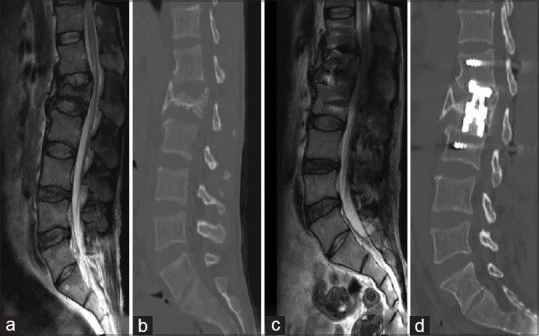
- Torakolomber vertebraların kontrastsız BT kemik algoritmasında korpus yükseklik kaybı, posterior duvar kırığı, retropulsiyon, pedikül/lamina hasarı, faset hizası ve vertebra translasyonu incelenerek morfoloji tanımlanır. PLC'nin lif bütünlüğü BT'de kesin olarak gösterilemez; interspinöz genişleme veya faset ayrışması şüphe uyandırırsa MR korelasyonu klinik soruya göre değerlendirilir. Spinal kırığın morfolojik TLICS bileşeni için kontrastlı faz gerekmez.
Önerilen pencereler: Kemik (G 1800 / M 400), Yumuşak doku (G 400 / M 40).
BT bulguları
- Korpus ön yükseklik kaybı ve üst/alt son plak çökmesi kompresyon morfolojisini düşündürür; posterior vertebra duvarının sağlamlığı ayrıca izlenir.
- Posterior korpus duvarının bütünlüğünün bozulması, yaralanmanın orta kolonu da içerdiğini ve bu nedenle burst morfolojisinde olduğunu gösterir.
- Vertebra gövdesinde öne/arkaya translasyon, rotasyon veya faset eklemlerde uyumsuzluk translasyon-rotasyon paternini destekler.
- Disk aralığında açılma veya faset eklem ayrışması gibi bulgular, BT'de dolaylı olarak distraksiyon paternini düşündürebilir; ancak ligamentöz bütünlüğün kesin değerlendirilmesi için MR gereklidir.
- Spinöz çıkıntılar arası mesafe artışı, faset eklem ayrışması veya posterior eleman kırığı PLC yaralanması kuşkusunu artırır; BT tek başına ligament yırtığını doğrulamaz.
- Nörolojik durum; sağlam, sinir kökü bulgusu, tam/inkomplet kord yaralanması veya kauda ekuina bulgusu olarak klinik kayıtla belirlenir.
- Birden fazla morfolojik özellik varsa TLICS tablosunun puanlama kuralına göre en yüksek morfoloji puanlı desen kullanılır; görüntü raporu yine tüm yapısal bulguları tarif eder.
Ölçütler ve sınıflamalar
- TLICS — yaralanma morfolojisi
- TLICS'te yaralanma morfolojisi, PLC bütünlüğü ve nörolojik durum için ayrı sayısal puan hesaplanır. Bu kategori radyolojik morfolojiyle belirlenir.
- TLICS — posterior ligamentöz kompleks
- PLC bütünlüğü, MRI'nin altın standart olduğu direkt yumuşak doku değerlendirmesi ve BT'deki dolaylı bulgularla birlikte skorun üç ana bileşeninden birini oluşturur. BT bulguları kuşku oluşturabilir; ligament değerlendirmesinde MR ve klinik bağlam ayrı ele alınır.
- TLICS — nörolojik durum
- Nörolojik durum, TLICS'in ayrı puanlanan bileşenlerinden biridir; daha ağır yaralanmalara daha yüksek puan verilir. Kategori klinik nörolojik değerlendirmeye dayanır.
Normalde
Yaralı vertebra gövdesinin yüksekliği, posterior duvarı ve faset hizalaması komşu sağlıklı seviyelerle kıyaslanarak yükseklik kaybı, basamak veya translasyon varlığı değerlendirilir. Yaralı vertebrenin komşu seviyelerle karşılaştırılmasında elde edilen yükseklik kaybı, faset genişlemesi veya vertebral translasyon gibi bulgular, PLC yaralanması kuşkusu oluşturabilir; ancak kesin tanı için MR korelasyonu gerekir. BT’de kemik korteksinin normal görünmesi PLC bütünlüğünü kanıtlamaz.
Normal BT ile kıyasla
Aynı bölgenin, kaynak veri setinde patoloji içermediği belirtilen bir BT incelemesini kesit kesit kaydırın; organ sınırlarını açarak anatomiyi hasta görüntüsüyle karşılaştırın. Küçük rastlantısal bulgular tümüyle dışlanmamıştır.
Kaynak: TotalSegmentator v2.01 veri seti (Wasserthal ve ark., Radiology: Artificial Intelligence 2023), CC BY 4.0, vaka s1338; organ sınırları veri setinin otomatik segmentasyonundan, birleştirilerek sadeleştirildi. Görüntüler 2,5 mm kesit aralığına yeniden örneklendi.
Ayırıcı tanı
- AO Spine torakolomber sınıflaması
- morfolojik A/B/C türleri ve nörolojik düzeyleri (N0-N4) ile PLC belirsizliği için M1 gibi klinik değiştiricileri kullanır; TLICS ile benzer bileşenleri değerlendirmekle birlikte kategori ve değiştirici odaklı bir çerçeve sunar.
- Denis üç kolon kavramı
- ön, orta ve arka kolon tutulumunu tarif eder; TLICS morfoloji, PLC ve nörolojiyi ayrı puan bileşenleri olarak kullanır.
- Osteoporotik vertebra kompresyonu
- akut travmatik kırık morfolojisini taklit edebilir; korteks/son plak bulguları, kemik kalitesi ve eski görüntüler ile birlikte tanımlanmalıdır.
- Litik veya sklerotik lezyonlar, kortikal destrüksiyon veya ilişkili yumuşak doku kitlesi, travmatik kırık yerine patolojik bir etkenin varlığını düşündürür ve ayırıcı tanıda göz önüne alınmalıdır.
Tuzaklar
- PLC'yi yalnızca BT'deki kemik yapıların normal olması nedeniyle sağlam kabul etmek yanıltıcı olabilir; ligamentöz bütünlüğün kesin değerlendirilmesi için MR gereklidir.
- Görüntüden nörolojik puan çıkarmaya çalışma; kök, kord ve kauda ekuina durumu muayeneden alınır ve BT'deki bası bulgusu ayrıca yazılır.
- Burst kırığını basit kompresyon olarak bırakma; posterior korpus duvarı ve spinal kanala retropulsiyon morfoloji puanını etkiler.
- Toplam TLICS puanını kendi başına tedavi kararı gibi raporlama; skor tanımlayıcı bir iletişim çerçevesidir ve hasta bağlamından kopuk yorumlanmamalıdır.
Kendini dene
T12 düzeyinde korpus son plakları çökmüş, posterior korpus duvarı kırılmış ve kemik fragmanı spinal kanala geri itilmiş olarak izlenen travmada, TLICS sınıflamasına göre bu kırığın morfolojik tipi nedir?
Cevabı göster
Burst: 2. Posterior korpus duvarının bütünlüğünün bozulması ve spinal kanala retropulsiyon yapan kemik fragmanı, orta kolonun tutulduğunu ve kırığın burst morfolojisinde olduğunu gösterir. TLICS'te morfoloji, PLC bütünlüğü ve nörolojik durum ayrı puanlanan bağımsız değişkenlerdir.
BT'de spinöz çıkıntılar arası açılma var, fakat ligament lifleri seçilemiyor. PLC bileşeni nasıl ele alınmalı?
Cevabı göster
Şüpheli/belirsiz. İnterspinöz açılma PLC yaralanmasını düşündürür ancak BT ligament lif bütünlüğünü kesinleştirmeyebilir; belirsiz kategorisi, gerekli klinik durumda MR ile tamamlanır. BT'deki interspinöz açılma PLC yaralanmasını düşündürebilir; nörolojik durum klinik değerlendirmeyle belirlenir.
Kaynaklar
Bu sayfadaki 46 cümle ve 2 quiz sorusu aşağıdaki kaynaklardan alıntılarla tek tek karşılaştırıldı; 13 cümle bu karşılaştırmada düzeltildi (2026-10-08).
- Analysis of the Classification Systems for Thoracolumbar Fractures in Adults and Their Evolution and Impact on Clinical Managementpmc.ncbi.nlm.nih.gov
- Posterior Ligamentous Complex Injuries of the Thoracolumbar Spine: Importance and Surgical Implicationspmc.ncbi.nlm.nih.gov
- Traumatic thoracolumbar spine injuries: what the spine surgeon wants to know.pubmed.ncbi.nlm.nih.gov
- Comparative analysis of two modified TLICS systems in guiding surgical decision-making for thoracolumbar fractures.pubmed.ncbi.nlm.nih.gov
- Agreement and discordance between the modified thoracolumbar injury classification and severity score and the thoracolumbar AOSpine injury score in guiding surgical decision-making for thoracolumbar fractures: a comparative study.pubmed.ncbi.nlm.nih.gov
- The Integrated Nerve, Discoligamentous Complex, and Vertebra Scoring System for Thoracolumbar Junction (TLJ) Injury.pubmed.ncbi.nlm.nih.gov
- Reliability and reproducibility of the modified thoracolumbar injury classification and severity score and the thoracolumbar AO spine injury score for guiding surgical decision-making in thoracolumbar fractures.pubmed.ncbi.nlm.nih.gov
- Spine Trauma Classifications: Historical, Current, and Emerging Perspectives for Radiologists.pubmed.ncbi.nlm.nih.gov
- Diagnostic accuracy and clinical utility of mTLICS versus TLICS and TL AOSIS in stratifying three-tier treatment for thoracolumbar injuries: focus on intermediate score range.pubmed.ncbi.nlm.nih.gov
- Emergency MRI in Spine Trauma of Children and Adolescents-A Pictorial Review.pubmed.ncbi.nlm.nih.gov
- Radiographic Predictors of Spinal Column Instability After Gunshot Wounds: A Pragmatic Score.pubmed.ncbi.nlm.nih.gov
- Anatomical and biological reconstruction of traumatic complete burst fractures of the thoracolumbar vertebrae using pedicle fixation combined with stent-armed kyphoplasty and intracorporeal bone grafting: technique rationale, 7-year experience and clinical, imaging, and histological outcomes.pubmed.ncbi.nlm.nih.gov
- Diagnostic decision-making, vertebral augmentation, and osteoporosis therapy in vertebral compression fractures: a narrative review.pubmed.ncbi.nlm.nih.gov
- Radiomics in spinal research: a narrative review.pubmed.ncbi.nlm.nih.gov
- Machine Learning Algorithm to Predict Change in the Decision-Making for Thoracolumbar Fractures Without Neurological Deficit After MRI: A Multicenter Study.pubmed.ncbi.nlm.nih.gov
- A Rigid Spine at Risk: Chalk-Stick Fracture With Dural Sac Entrapment After Ground-Level Fall.pubmed.ncbi.nlm.nih.gov
- Application of the pivot forward combined leveraging technique in the treatment of thoracolumbar fractures: a finite element analysis and clinical study.pubmed.ncbi.nlm.nih.gov
- The role of intracorporeal cancellous bone grafting in the biological augmentation of vertebral body fractures: a literature review, historical perspective, and update on imaging and bone healing outcomes.pubmed.ncbi.nlm.nih.gov
- The value of magnetic resonance imaging and computed tomography in the study of spinal disorders.pubmed.ncbi.nlm.nih.gov
- Traumatic coronal spondyloptosis of the spine: case report and review of the literature.pubmed.ncbi.nlm.nih.gov
- Thoracolumbar Fractures: Historical Systems and Advancements With the AO Spine Classification.pubmed.ncbi.nlm.nih.gov
- Intact Posterior Tension Band in Spinal Fractures in Patients With Spinal Ankylosing Disorders - Is it a Myth or a Reality? A Systematic Review.pubmed.ncbi.nlm.nih.gov
- Radiographic and Clinical Adjacent Segment Disease After Posterior Instrumented Fusion for Traumatic Thoracolumbar and Lumbar Vertebral Fractures.pubmed.ncbi.nlm.nih.gov
- Modified Spinous Process-Splitting Approach for Thoracolumbar Burst Fractures With Neurological Deficits: Technical Description and Preliminary Clinical Outcomes.pubmed.ncbi.nlm.nih.gov
- Posterior debridement and corpectomy via removal of the spinal canal's lateral wall approach for infection after vertebral augmentation: a technique note and early outcome.pubmed.ncbi.nlm.nih.gov
- Chance fracture: A case report and review of the literature.pubmed.ncbi.nlm.nih.gov
- A predictive scoring system for proximal junctional kyphosis after posterior internal fixation in elderly patients with chronic osteoporotic vertebral fracture: A single-center diagnostic study.pubmed.ncbi.nlm.nih.gov
- Single-Position Minimally Invasive Retropleural Asymmetric Vertebral Column Resection and Percutaneous Pedicle Screw Fixation in the Lateral Position for Congenital Kyphoscoliosis.pubmed.ncbi.nlm.nih.gov
- 4 pedicle screw mono-segment versus 6 pedicle screw short-segment fixation in the treatment of thoracolumbar endplate fractures: finite element analysis and clinical follow-up.pubmed.ncbi.nlm.nih.gov
- Delayed diagnosis of spinal tuberculosis mimicking spondyloarthritis: a case report.pubmed.ncbi.nlm.nih.gov
- Biomaterials for vertebral body repair: interior augmentation and total replacement-a literature review of bone fusion outcomes in clinical studies.pubmed.ncbi.nlm.nih.gov
- Conservative Treatment of Pediatric Fractures-Narrative Review of Acceptable Deformity and Remodeling Potential.pubmed.ncbi.nlm.nih.gov
- The Effect of Thoracolumbar Injury Classification in the Clinical Outcome of Operative and Non-Operative Treatments.pubmed.ncbi.nlm.nih.gov
- Predicting neurological recovery after thoracolumbar spine trauma: The role of injury morphology and admission American Spinal Injury Association Impairment Scale grade.pubmed.ncbi.nlm.nih.gov
- Mechanical Instability After Civilian Thoracolumbar Gunshot Injuries: A Systematic Review to Support Classification Development.pubmed.ncbi.nlm.nih.gov
- Oral Food Supplement with Bio-Activated Silicium and Vitamins D3 and K2 in the Conservative Management of Osteoporotic Vertebral Compression Fractures.pubmed.ncbi.nlm.nih.gov
- Multidisciplinary Exploration of Computed-Tomographic and Ancient-DNA Data of an Iron Age Skull From Latvia With Multiple Lytic Bone Lesions: Differential Diagnosis Between Metastatic Carcinoma, Multiple Myeloma and Skeletal Tuberculosis.pubmed.ncbi.nlm.nih.gov
- Beyond Chordoma: A Comprehensive Review of Sacral Lesions.pubmed.ncbi.nlm.nih.gov
- A pictorial essay of thoracic wall diseases: multiple pathologies in the same anatomical site.pubmed.ncbi.nlm.nih.gov
- Accuracy of CT Scan for Detecting Posterior Ligamentous Complex Injury in Traumatic Thoracolumbar Fractures: A Systematic Review and Meta-Analysis.pubmed.ncbi.nlm.nih.gov
- Consensus practice guidelines on sacroiliac joint complex pain from a multispecialty, international working group.pubmed.ncbi.nlm.nih.gov
- Feasibility and diagnostic accuracy of fast whole-body MRI in slightly to moderately injured trauma patients.pubmed.ncbi.nlm.nih.gov
- Non-osteoporotic L4 vertebral compression fracture after low-voltage electrical injury without secondary trauma: A rare case report.pubmed.ncbi.nlm.nih.gov
- Application of AUSS-TLIF for the treatment of a lumbar burst fracture: A case report.pubmed.ncbi.nlm.nih.gov
- The AO Spine TL Injury Classification System Drives Clinical Decision Making in Acute Thoracolumbar Fractures: A Retrospective Evaluation of Clinical Implementation.pubmed.ncbi.nlm.nih.gov
- Towards a standardized reporting of the impact of magnetic resonance imaging on the decision-making of thoracolumbar fractures without neurological deficit: Conceptual framework and proposed methodology.pubmed.ncbi.nlm.nih.gov
- Preoperative CT-Based Planning for Unilateral Pedicle Approach PVP Reduces Cement Leakage and Improves Radiological Outcomes in Osteoporotic Vertebral Compression Fractures: A Retrospective Cohort Study.pubmed.ncbi.nlm.nih.gov
- Morphological characteristics of lumbar vertebral bodies and regional distribution patterns of bone mineral density: a CT study.pubmed.ncbi.nlm.nih.gov
- Pathogenic mechanisms of adult degenerative scoliosis.pubmed.ncbi.nlm.nih.gov
- Pseudomyogenic hemangioendothelioma of the thoracolumbar spine: A case-based review of a rare cause of vertebral collapse and neurological deficit.pubmed.ncbi.nlm.nih.gov
- The evolution of cervical spine trauma classification: a paradigm shift from morphological description to clinical decision-making.pubmed.ncbi.nlm.nih.gov
- Inter-observational analysis of computed tomography parameters to predict nonobvious posterior ligament complex injury in neurologically intact patients with thoracolumbar trauma.pubmed.ncbi.nlm.nih.gov
- Magnetic Resonance Imaging for Spine Emergencies.pubmed.ncbi.nlm.nih.gov
- Outcomes of Hybrid Cement-Augmented Pedicle Screw Fixation in Complicated Osteoporotic Thoracolumbar Fractures: A Single-Centre Experience.pubmed.ncbi.nlm.nih.gov
- Does Size Matter? Evaluating the Impact of Intermediate Screw Length in Short-Segment Fixation of Thoracolumbar A3-A4 Fractures.pubmed.ncbi.nlm.nih.gov
- Effects of thoracolumbar fracture combined with muscle injury on long-term outcome and prognosis: a retrospective study.pubmed.ncbi.nlm.nih.gov
- Posterior Ligamentous Complex Injuries of the Thoracolumbar Spine: Importance and Surgical Implications.pubmed.ncbi.nlm.nih.gov
- The neurologically intact patient with TLICS 4 or 5 burst fracture should be given a trial of nonoperative management.pubmed.ncbi.nlm.nih.gov
- Validation of the TLICS and AOSpine injury score for surgical management of paediatric traumatic spinal injuries.pubmed.ncbi.nlm.nih.gov
- Analysis of the Classification Systems for Thoracolumbar Fractures in Adults and Their Evolution and Impact on Clinical Management.pubmed.ncbi.nlm.nih.gov
- Imaging of Multiple Myeloma: Present and Future.pubmed.ncbi.nlm.nih.gov
- Multilevel spinal fractures in ankylosing spondylitis: illustrative case.pubmed.ncbi.nlm.nih.gov
- Extrapedicular approach for basivertebral nerve radiofrequency ablation: a conceptual review.pubmed.ncbi.nlm.nih.gov
- Comparative Clinical Efficacy and Safety of Multi-Segment Thoracolumbar Tuberculosis Treated Through the Posterior "Detour Method" Versus the Combined Anterior-Posterior Approach: A Technique Note and Preliminary Retrospective Study.pubmed.ncbi.nlm.nih.gov
- Ultrasonography in Canine Carpal Disorders.pubmed.ncbi.nlm.nih.gov
- Atlantoaxial rotatory subluxation in a pediatric patient with osteopetrosis following minor trauma: illustrative case.pubmed.ncbi.nlm.nih.gov
- Imaging of pediatric musculoskeletal trauma: Age-specific considerations and challenges.pubmed.ncbi.nlm.nih.gov
- Unveiling Primary Bone Tumors of the Spine: A Review of Essential Imaging Clues.pubmed.ncbi.nlm.nih.gov
- Skeletal manifestations in lymphatic diseases: nonenhanced magnetic resonance lymphography.pubmed.ncbi.nlm.nih.gov
- Moth-Eaten Osteolysis of Multiple Foot Bones After a Conservatively Treated "Stable" Ankle Fracture: A Case Report and Literature Review.pubmed.ncbi.nlm.nih.gov
- Differentiating Tuberculous and Pyogenic Spondylodiscitis: Part II: MRI/CT Features, Prediction Models, and the Role of PET/CT-A Narrative Review.pubmed.ncbi.nlm.nih.gov
- Beyond Palmer: a topographic classification of non-Palmer triangular fibrocartilage complex injuries.pubmed.ncbi.nlm.nih.gov
- Radiological Diagnosis and Advances in Imaging of Vertebral Compression Fractures.pubmed.ncbi.nlm.nih.gov
Eğitim amaçlıdır; hasta başında tanı ve tedavi kararının yerine geçmez. İçerik yapay zekâ destekli bir süreçle güncel literatüre göre cümle cümle kaynaklarla karşılaştırıldı, ancak uzman radyolog incelemesinden geçmedi. Klinik kararlarda güncel kılavuzları, kurum protokollerini ve radyoloji raporunu esas alın.