Özet
Transvers çıkıntı kırıkları izole olabilir veya başka spinal kırıklarla birlikte görülebilir; bazı transvers çıkıntı kırıkları kas avulsiyonuyla oluşabilir. İnce kesit BT kemik rekonstrüksiyonları transvers çıkıntı kırığının kemik morfolojisini ve seviyeler arasındaki dağılımını gösterir; eşlik eden abdominal yaralanmalar travma BT'sinin uygun kontrastlı serileri ve yumuşak doku pencerelerinde ayrıca araştırılır. İzole torakolomber transvers çıkıntı kırıkları genellikle minör ve stabil yaralanmalar olarak kabul edilir; eşlik eden spinal yaralanmalar ayrıca değerlendirilmelidir. Transvers çıkıntı kırıkları ile abdominal yaralanmalar arasında ilişki bildirilmiştir, ancak kırık tek başına organ yaralanmasını kanıtlamaz.
Faz ve pencere
- BT kemik algoritması tanısal
- İnce kesit aksiyel ve koronal BT kemik rekonstrüksiyonlarında transvers çıkıntıda kortikal kesinti, fragman ve seviyeler arasındaki kırık dağılımı değerlendirilir. Travma BT'sinde abdominal ve retroperitoneal yaralanmaları değerlendirmek için abdominal BT görüntüleri ve yumuşak doku pencereleri incelenir.
Önerilen pencereler G genişlik, M merkez; değerler Hounsfield birimi (HU)
- KemikG 1800 / M +400
- BatınG 400 / M +50
- Yumuşak dokuG 400 / M +40
BT bulguları
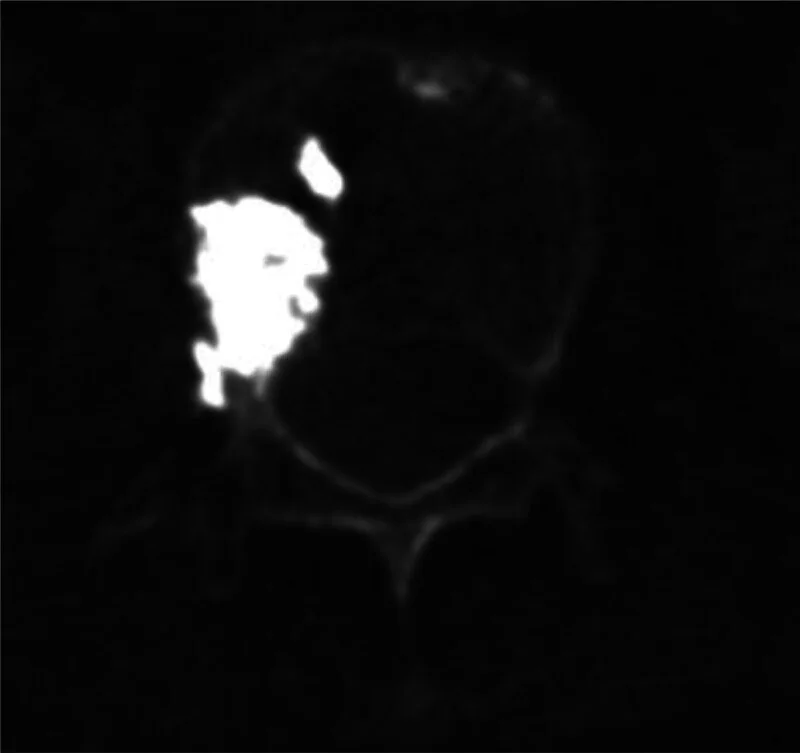
- Transvers çıkıntı korteksinde çizgisel kırık hattı veya kırık fragmanı görülebilir.
- Transvers çıkıntı kırığı izole olabilir ya da başka spinal kırıklarla birlikte bulunabilir; eşlik eden spinal yaralanmalar ayrıca değerlendirilir.
- Birden fazla seviyedeki transvers çıkıntı kırıkları aynı veya farklı tarafta bulunabilir.
- BT veya MR'da transvers çıkıntı kırıklarının çevresindeki fasya ve kaslarda deformasyon ya da ödem görülebilir.
- Transvers çıkıntı kırığı eşlik eden abdominal yaralanma olasılığını akla getirir; böbrek, dalak, karaciğer ve diğer karın içi yapılar travma BT'sinde ayrıca değerlendirilir.
- Transvers çıkıntı kırıklarına başka spinal yaralanmalar eşlik edebilir.
- İzole transvers çıkıntı kırığı A0 olarak sınıflanabilir; diğer yapısal spinal yaralanma bulguları bu tanımlamayı değiştirir.
Ölçütler ve sınıflamalar
- AO Spine torakolomber sınıflaması
- İzole transvers çıkıntı kırığı AO Spine A0, minör ve yapısal olmayan kırık olarak sınıflanır. Eşlik eden korpus, faset veya posterior ligamentöz kompleks yaralanması varsa AO Spine değerlendirmesinde morfoloji, faset yaralanması ve M1 belirteci ayrıca ele alınır.
Normalde
Transvers çıkıntılar servikal, torakal ve lomber omurların yanlarına uzanan kemik çıkıntılarıdır; paraspinal kaslar ve bağlar için tutunma alanı sağlar. Kırık şüphesinde kemik rekonstrüksiyonlarında kortikal hattı ve komşu seviyeleri izleyin, karşı tarafla karşılaştırın.
Normal BT ile kıyasla
Aynı bölgenin, kaynak veri setinde patoloji içermediği belirtilen bir BT incelemesini kesit kesit kaydırın; organ sınırlarını açarak anatomiyi hasta görüntüsüyle karşılaştırın. Küçük rastlantısal bulgular tümüyle dışlanmamıştır.
Kaynak: TotalSegmentator v2.01 veri seti (Wasserthal ve ark., Radiology: Artificial Intelligence 2023), CC BY 4.0, vaka s0119; organ sınırları veri setinin otomatik segmentasyonundan, birleştirilerek sadeleştirildi. Görüntüler 2,5 mm kesit aralığına yeniden örneklendi.
Ayırıcı tanı
- Avulsiyon tipi transvers çıkıntı kırıkları kas avulsiyon mekanizmasıyla oluşabilir.
- Aksesuar ossifikasyon merkezi
- kortikal sınırları yeterince gösterilmeli; bu sınırlar akut kırıkla ayırıcı tanıda kullanılır.
- İzole transvers çıkıntı kırığı tanımında pedikül, lamina veya fasete uzanım olmamalıdır.
- Torakolomber bileşkede hipoplastik veya süpernümerer kaburga varyasyonları görülebilir; vertebra seviyesini belirlerken en kaudal kaburgalarla ilişkili morfolojiyi aksiyel BT ve CPR görüntülerinde değerlendirin.
- Litik kemik lezyonu
- lezyonun kortikal yıkımı ve yumuşak doku kitlesi gibi morfolojik özellikleri travmatik kırık hattından farklılaşmasına yardım eder.
Tuzaklar
- Transvers çıkıntı kırığı abdominal yaralanmayla ilişkili olabilir, ancak tek başına organ hasarının kanıtı değildir; organ bulguları görüntülerde ayrıca doğrulanmalıdır.
- Küçük kemik parçası aksesuar ossifikasyon merkezi veya kırık fragmanı olabilir; kortikal sınırları ve eşlik eden yumuşak doku değişikliklerini birlikte değerlendirin.
- Çok seviyeli transvers çıkıntı kırıklarına başka yaralanmalar eşlik edebilir; bu nedenle eşlik eden patolojiler ayrıca gözden geçirilmelidir.
- Transvers çıkıntı kırıklarına başka akut spinal kırık veya çıkıklar eşlik edebilir; bu spinal yaralanmalar ayrıca değerlendirilmelidir.
- Çok seviyeli transvers çıkıntı kırıklarında eşlik eden yaralanmalar daha sık görülebilir; eşlik eden organ yaralanmaları ayrıca değerlendirilmelidir.
Kendini dene
BT'de L2-L4 transvers çıkıntılarında kırıklar görülüyor; vertebra korpusu, pedikül, faset veya posterior gerilme bandında ek yaralanma yok. Bu izole kırık örüntüsünün AO tanımı hangisidir?
Cevabı göster
AO Spine A0. İzole transvers çıkıntı kırıkları AO A0 minör, yapısal olmayan kırıklar içinde tanımlanır. B1 posterior gerilme bandının osseöz ayrışmasını, A1 tek son plak kama kompresyonunu, C translasyon veya çıkığı tanımlar.
BT'de L2 pedikülünün lateralindeki transvers çıkıntı korteksini kesen çizgisel kırık hattı görülüyor. En olası kemik yaralanması hangisidir?
Cevabı göster
Transvers çıkıntı kırığı. Transvers çıkıntıda kortikal süreksizlik veya ayrılabilir fragman transvers çıkıntı kırığı olarak tanımlanır; hat bu yerleşimdedir.
İlgili konular
Kaynaklar
Bu sayfadaki 40 cümle ve 2 quiz sorusu aşağıdaki kaynaklardan alıntılarla otomatik olarak karşılaştırıldı; 24 cümle bu karşılaştırmada düzeltildi (2026-10-10).
- Frequency and Importance of Transverse Process Fractures in the Lumbar Vertebrae at Helical Abdominal CT in Patients with Traumapubs.rsna.org
- A0 Minor, nonstructural fracturessurgeryreference.aofoundation.org
- AO Spine Thoracolumbar Injury Classification Systemmedia.aofoundation.org
- Clinical analysis of transverse process fractures: A comprehensive study on patient characteristics, management, and outcomes in trauma carejag.journalagent.com
- The middle layer of lumbar fascia and attachments to lumbar transverse processes: implications for segmental control and fracturepmc.ncbi.nlm.nih.gov
- WSES guidelines on blunt and penetrating bowel injury: diagnosis, investigations, and treatmentwjes.biomedcentral.com
- Accessory ossification centres at the thoracolumbar junctionlink.springer.com
- Radiographic Evaluation of Bone Tumorspubs.rsna.org
- Association between pedicle screw dimensions and pedicle morphometry in computed tomography scanspmc.ncbi.nlm.nih.gov
- Evaluation of AI developed for rib fracture detection in identifying vertebral fractures on abdominal CTpmc.ncbi.nlm.nih.gov
- Application of the pivot forward combined leveraging technique in the treatment of thoracolumbar fractures: a finite element analysis and clinical studypmc.ncbi.nlm.nih.gov
- Application of AUSS-TLIF for the treatment of a lumbar burst fracture: A case reportpmc.ncbi.nlm.nih.gov
- An Emergency Medicine Disposition Challenge: A Scoping Review of Isolated Transverse Process Fractures of the Cervical Spinepmc.ncbi.nlm.nih.gov
- Turning the backbone into an ankylosed concrete-like structure: Case report.pubmed.ncbi.nlm.nih.gov
- Isolated multiple lumbar transverse process fractures with spinal instability: an uncommon yet serious association.pubmed.ncbi.nlm.nih.gov
- Computed tomographic study of the optimal safe implantation corridors in feline thoraco-lumbar vertebrae.pubmed.ncbi.nlm.nih.gov
- Clinical examination is insufficient to rule out thoracolumbar spine injuries.pubmed.ncbi.nlm.nih.gov
- Transverse Process Fractures: A Clinical Series and Coronal Injury of the Spine.pubmed.ncbi.nlm.nih.gov
- Imaging of the thoracic and lumbar spine in a high volume level 1 trauma center: are reformatted images of the spine essential for screening in blunt trauma?pubmed.ncbi.nlm.nih.gov
- Optimal thoracic and lumbar spine imaging for trauma: are thoracic and lumbar spine reformats always indicated?pubmed.ncbi.nlm.nih.gov
- Far Posterior Approach for Rib Fracture Fixation: Surgical Technique and Tips.pubmed.ncbi.nlm.nih.gov
- Isolated thoracic and lumbar transverse process fractures: Do they need spine surgeon evaluation? a high volume level I trauma center experience with cost analysis.pubmed.ncbi.nlm.nih.gov
- Lumbar artery rupture causing hemorrhagic shock after vertebroplasty in a nonagenarian: A case report.pubmed.ncbi.nlm.nih.gov
- Is focused magnetic resonance imaging adequate for treatment decision making in acute traumatic thoracic and lumbar spine fractures seen on whole spine computed tomography?pubmed.ncbi.nlm.nih.gov
- Retroperitoneal glass foreign body with renal parenchymal involvement after 25 years of silent retention: a case report.pubmed.ncbi.nlm.nih.gov
- Treatment of kyphotic deformity in Kümmell's disease through vertebral body screw fixation and intertransverse process grafting: A case report.pubmed.ncbi.nlm.nih.gov
- Evaluation of AI developed for rib fracture detection in identifying vertebral fractures on abdominal CT.pubmed.ncbi.nlm.nih.gov
- Dural tears from traumatic spinal fractures: an illustrative case and systematic review of its incidence, diagnosis, risk factors, and management.pubmed.ncbi.nlm.nih.gov
- Isolated Transverse Process Fractures: Should We Offer Lumbar Corset or Not?pubmed.ncbi.nlm.nih.gov
- Sacral and Pelvic Fractures: Historical Systems and Advancements with the AO Spine Classification.pubmed.ncbi.nlm.nih.gov
- Spine Trauma Classifications: Historical, Current, and Emerging Perspectives for Radiologists.pubmed.ncbi.nlm.nih.gov
- Diagnostic Clinical Tool in Trauma Patients to Rule out Thoracolumbar Fracture.pubmed.ncbi.nlm.nih.gov
- Magnetic Resonance Imaging for Spine Emergencies.pubmed.ncbi.nlm.nih.gov
- Traumatic Unilateral Pedicle Fracture Treated With a Partially Threaded Screw: A Case Report.pubmed.ncbi.nlm.nih.gov
- Paper template-based intraoperative rod bending for percutaneous stabilization of thoracic extension-distraction fracture: illustrative case.pubmed.ncbi.nlm.nih.gov
- Extrapedicular approach for basivertebral nerve radiofrequency ablation: a conceptual review.pubmed.ncbi.nlm.nih.gov
- Transverse Process Fractures in Athletes: Mechanisms, Management and Return-to-Play Considerations.pubmed.ncbi.nlm.nih.gov
- Radiographic and Ultrasonographic Study of the Etiology of High-Rise Syndrome in Cats: A Retrospective Analysis.pubmed.ncbi.nlm.nih.gov
- Localisation and outcome of presumed thoracolumbar vertebral stress fracture in 35 UK Thoroughbred racehorses using nuclear scintigraphy.pubmed.ncbi.nlm.nih.gov
- Application of the pivot forward combined leveraging technique in the treatment of thoracolumbar fractures: a finite element analysis and clinical study.pubmed.ncbi.nlm.nih.gov
- Application of AUSS-TLIF for the treatment of a lumbar burst fracture: A case report.pubmed.ncbi.nlm.nih.gov
- Clinical analysis of transverse process fractures: A comprehensive study on patient characteristics, management, and outcomes in trauma care.pubmed.ncbi.nlm.nih.gov
- Preoperative Surgical Planning and Intraoperative Considerations for the Treatment of Adult Spinal Deformity Surgery.pubmed.ncbi.nlm.nih.gov
- Association between pedicle screw dimensions and pedicle morphometry in computed tomography scans.pubmed.ncbi.nlm.nih.gov
- Agreement and discordance between the modified thoracolumbar injury classification and severity score and the thoracolumbar AOSpine injury score in guiding surgical decision-making for thoracolumbar fractures: a comparative study.pubmed.ncbi.nlm.nih.gov
- Reliability and reproducibility of the modified thoracolumbar injury classification and severity score and the thoracolumbar AO spine injury score for guiding surgical decision-making in thoracolumbar fractures.pubmed.ncbi.nlm.nih.gov
- Machine Learning Algorithm to Predict Change in the Decision-Making for Thoracolumbar Fractures Without Neurological Deficit After MRI: A Multicenter Study.pubmed.ncbi.nlm.nih.gov
- Treatment of Fractures of the Thoracolumbar Spine: Recommendations of the Spine Section of the German Society for Orthopaedics and Trauma (DGOU).pubmed.ncbi.nlm.nih.gov
- A Stable C7 Fracture in a High School Quarterback: A Case of Clay Shoveler's Fracture.pubmed.ncbi.nlm.nih.gov
- Complications and Revision Patterns After 3D-Printed Vertebral Body Replacement for Spinal Tumors: A Systematic Review and Critical Appraisal.pubmed.ncbi.nlm.nih.gov
- MDCT Morphometry of the Thoracolumbar Junction in a Turkish Cohort: Surgical, Radiological, and Forensic Implications.pubmed.ncbi.nlm.nih.gov
- Iliosacral Screw Fixation for Treating Sacral Fractures: A Modified Pedicle-Guided Fixation Technique in Prone Position.pubmed.ncbi.nlm.nih.gov
- An Emergency Medicine Disposition Challenge: A Scoping Review of Isolated Transverse Process Fractures of the Cervical Spine.pubmed.ncbi.nlm.nih.gov
- Epidemiology of spinal fractures in polytrauma patients.pubmed.ncbi.nlm.nih.gov
- Custom Triflange Acetabular and Femoral Components for Primary Hip Arthroplasty in a Patient With Severe Bone Defect: A Case Report.pubmed.ncbi.nlm.nih.gov
- Transpedicular lower vertebral space osteotomy for thoracolumbar kyphosis secondary to old osteoporotic vertebral compression fractures.pubmed.ncbi.nlm.nih.gov
- Peritonitis following duodenal injury due to seatbelt trauma: A case manifesting immediately post-surgery for thoracolumbar fracture-dislocation.pubmed.ncbi.nlm.nih.gov
- Severe old lumbar fracture and dislocation with cauda equina nerve transection: A case report.pubmed.ncbi.nlm.nih.gov
- Fatal Injuries Caused by Falling Trees: Correlation Between Postmortem Computed Tomography and Forensic Autopsy Findings in Eight Cases.pubmed.ncbi.nlm.nih.gov
- Severe celiac trunk stenosis following blunt trauma in a patient with diabetic ketoacidosis: a diagnostic dilemma of traumatic injury versus median arcuate ligament syndrome.pubmed.ncbi.nlm.nih.gov
- Minimally invasive treatment for critical multiple trauma with traumatic diaphragmatic hernia combined with pelvic and acetabular fractures: a rare case report.pubmed.ncbi.nlm.nih.gov
- Traumatic Posterior Atlantoaxial Dislocation with Intact Odontoid Treated by C2 Laminar Screw Fixation: A Case Report.pubmed.ncbi.nlm.nih.gov
- Delayed Diagnosis of Pyogenic Spondylitis After Impalement by Steel Rods: Case Report.pubmed.ncbi.nlm.nih.gov
- Fascial plane blocks in pediatric patients.pubmed.ncbi.nlm.nih.gov
- The Utilization of Ultrasound-Guided Regional Nerve Blocks in Anesthetic Management for Fracture Surgery.pubmed.ncbi.nlm.nih.gov
- The Application of Erector Spinae Plane Block in Chronic Pain Management: From Anatomical Mechanisms to Clinical Innovations.pubmed.ncbi.nlm.nih.gov
- Exploring skeletal disorders in cattle and sheep: a WGS-based framework for diagnosis and classification.pubmed.ncbi.nlm.nih.gov
- Thoracolumbar junction: morphologic characteristics, various variants and significance.pubmed.ncbi.nlm.nih.gov
- Abusive spinal injury: imaging and updates.pubmed.ncbi.nlm.nih.gov
- Radiologic Insights: Diagnosing Lumbosacral Transitional Vertebrae. Systematic Review of the Literature.pubmed.ncbi.nlm.nih.gov
- A primer on skeletal dysplasias.pubmed.ncbi.nlm.nih.gov
- The role of radiography in the study of spinal disorders.pubmed.ncbi.nlm.nih.gov
- Congenital and Breed-Associated Vertebral Anomalies in Dogs and Cats: Developmental Anatomy, Genetic Determinants, and Biological Significance.pubmed.ncbi.nlm.nih.gov
- Malformed vertebrae: a clinical and imaging review.pubmed.ncbi.nlm.nih.gov
- An unusual case of childhood osteoarticular tuberculosis from the Árpádian Age cemetery of Győrszentiván-Révhegyi tag (Győr-Moson-Sopron county, Hungary).pubmed.ncbi.nlm.nih.gov
- Conservative Treatment of Pediatric Fractures-Narrative Review of Acceptable Deformity and Remodeling Potential.pubmed.ncbi.nlm.nih.gov
- Anatomy of the intraosseous arterial microvasculature of the adult lumbar vertebral body and its role in fracture healing: a literature review and historical perspective.pubmed.ncbi.nlm.nih.gov
- Experimentally Validated Finite Element Analysis of Thoracic Spine Compression Fractures in a Porcine Model.pubmed.ncbi.nlm.nih.gov
- Spectrum of neuropathic skeletal injuries in children: a pictorial essay.pubmed.ncbi.nlm.nih.gov
- Traumatic Spinal Cord Infarction Associated With Elevated Intracranial and Intraspinal Pressure in a Pediatric Patient: A Case Report and Review of the Literature.pubmed.ncbi.nlm.nih.gov
- Pseudomyogenic hemangioendothelioma of the thoracolumbar spine: A case-based review of a rare cause of vertebral collapse and neurological deficit.pubmed.ncbi.nlm.nih.gov
- Effects of thoracolumbar fracture combined with muscle injury on long-term outcome and prognosis: a retrospective study.pubmed.ncbi.nlm.nih.gov
- Risk factors of residual back pain after vertebral augmentation in osteoporotic vertebral compression fracture patients: a systematic review and meta-analysis.pubmed.ncbi.nlm.nih.gov
- Is the pelvis "organ protective" in pelvic and spine trauma? A database study of spine and pelvic combination injuries.pubmed.ncbi.nlm.nih.gov
- Morphological and postoperative functional comparison of patellar dislocation with or without avulsion fracture of the medial inferior border of the patella.pubmed.ncbi.nlm.nih.gov
- Safety and Stability of a Combined C2 Screw Placement Strategy With Vertebral Artery Mobilization.pubmed.ncbi.nlm.nih.gov
- Anatomical Variants of the Cervical Spine and Sports-Related Injury in Athletes: A Narrative Review.pubmed.ncbi.nlm.nih.gov
- Head and neck squamous cell carcinoma with femoral metastasis: a case report and systematic review of current literature.pubmed.ncbi.nlm.nih.gov
- An Ultrasound Image-and-Intervention Paradigm for a Neglected Lumbar Transverse Process Fracture: A Case Report of Diagnosis and Hydrodissection Treatment.pubmed.ncbi.nlm.nih.gov
- Specimen-level phylogenetic analysis and taxonomic revision of North American metoposaurids: a case for monospecific genera in vertebrate paleontology.pubmed.ncbi.nlm.nih.gov
- A pictorial essay of thoracic wall diseases: multiple pathologies in the same anatomical site.pubmed.ncbi.nlm.nih.gov
- Prevalence and characteristics of lumbar ribs: a meta-analysis with anatomical and clinical considerations.pubmed.ncbi.nlm.nih.gov
- Preoperative 3D-Planned S1 Corridors Transferred into 2D Fluoroscopy Allow for Safe Intraoperative Large-Diameter Implant Placement: Description of a Novel Sacroiliac Fixation Technique and Proof of Concept in 137 Implantations.pubmed.ncbi.nlm.nih.gov
- CT and MR imaging of odontoid abnormalities: A pictorial review.pubmed.ncbi.nlm.nih.gov
- Clinical efficacy of ultrasound-guided ultra-micro needle knife combined with PVP in elderly patients with OVCF: a retrospective study.pubmed.ncbi.nlm.nih.gov
- Uni-portal non-coaxial spinal endoscopic surgery on percutaneous hollow screw fixation for atypical hangman's fracture: a novel minimally invasive technique case report.pubmed.ncbi.nlm.nih.gov
- S1-pedicle-based triangle fixation for U-type sacral fracture: a technical note.pubmed.ncbi.nlm.nih.gov
- Concurrent Acute Fracture and Dysplasia-Related Fragmentation of the Medial Coronoid Process of the Ulna in a Dog-A Case Report.pubmed.ncbi.nlm.nih.gov
- Pediatric physeal fractures and growth disturbance: current concepts and surgical approaches.pubmed.ncbi.nlm.nih.gov
- Sequential stress fractures of the ulna and radius in a patient with neurofibromatosis type 1: A case report.pubmed.ncbi.nlm.nih.gov
- Mastoid emissary vein, mastoid emissary foramen, and mastoid emissary canal: anatomy, variability, imaging, and clinical implications.pubmed.ncbi.nlm.nih.gov
- Neuroimaging for neurovascular complications of traumatic brain injury.pubmed.ncbi.nlm.nih.gov
- Pediatric endocrine disorders: a review of intra-abdominal findings and appropriate imaging.pubmed.ncbi.nlm.nih.gov
- The value of magnetic resonance imaging and computed tomography in the study of spinal disorders.pubmed.ncbi.nlm.nih.gov
- Biomechanics in the onset and severity of spondyloarthritis: a force to be reckoned with.pubmed.ncbi.nlm.nih.gov
- Axial Spondyloarthritis: Mimics and Pitfalls of Imaging Assessment.pubmed.ncbi.nlm.nih.gov
- Glossary of terms for musculoskeletal radiology.pubmed.ncbi.nlm.nih.gov
- Mechanical Instability After Civilian Thoracolumbar Gunshot Injuries: A Systematic Review to Support Classification Development.pubmed.ncbi.nlm.nih.gov
Eğitim amaçlıdır; hasta başında tanı ve tedavi kararının yerine geçmez, tıbbi tavsiye değildir. Metinler yapay zekâ desteğiyle yazıldı ve otomatik bir adımda kaynak alıntılarıyla karşılaştırıldı; bu bir tıbbi doğrulama değildir ve içerik uzman radyolog incelemesinden geçmedi. Klinik kararlarda güncel kılavuzları, kurum protokollerini ve radyoloji raporunu esas alın.