Özet
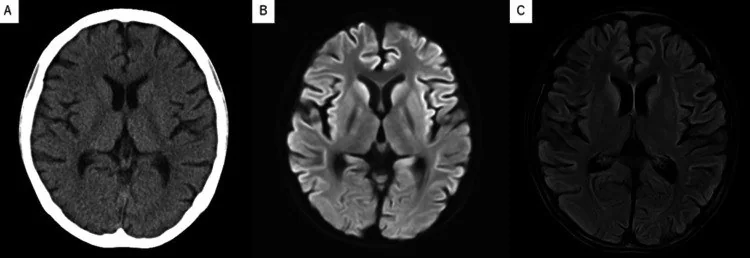
Yaygın serebral atrofi, kortikal ve/veya derin gri cevher hacim kaybının görüntüleme tarifidir; tek başına bir etiyolojik tanı değildir ve yaşla birlikte görülebilir. Kontrastsız beyin BT'sinde kortikal atrofi ve sulkal genişleme görülebilir. Ventrikül genişlemesinin, komşu kortikal BOS boşluklarının daralmış veya genişlemiş olmasıyla birlikte değerlendirilmesi, hidrosefali ile ex-vacuo genişlemeyi ayırt etmeye yardımcı olur. Ventrikül genişlemesi atrofiye bağlanmadan önce hidrosefali olasılığı da ayırıcı tanıda değerlendirilmelidir.
Faz ve pencere
- Kontrastsız tanısal
- Aksiyel kesitlerde kortikal sulkuslar ve Sylvian fissürler yaygın genişler; lateral ve üçüncü ventrikül, çevre kortikal BOS aralıklarıyla uyumlu biçimde geniş olabilir. BT'de kortikal atrofi ve sulkal genişleme gibi morfolojik bulgular değerlendirilebilir.
Önerilen pencereler G genişlik, M merkez; değerler Hounsfield birimi (HU)
- BeyinG 80 / M +40
- SubduralG 200 / M +75
BT bulguları
- Konveksite sulkuslarında yaygın belirginleşme — frontal, parietal ve oksipital yüzeylerde kortikal aralıklar açılır.
- Ventrikül hacminde artış — lateral ventrikül gövdeleri ve temporal boynuzlar parankim hacim kaybına eşlik eder.
- Ventrikül genişlemesi serebral atrofiye ikincil olabilir.
- Giruslarda incelme — aynı hemisferdeki komşu sulkusların genişliğiyle beraber yorumlanır.
- Asimetri — sağ ve sol hemisfer sulkusları veya ventrikül boyutları arasındaki fark bölgesel hastalık ya da eski hasarı düşündürür.
- Seri incelemede hacim değişikliği — aynı anatomik düzey ve benzer rekonstrüksiyonla kıyaslanınca ilerleme daha güvenilir değerlendirilir.
- İdiyopatik normal basınçlı hidrosefali değerlendirmesinde DESH örüntüsü ve Evans indeksi kullanılan radyolojik belirteçler arasındadır.
Normalde
Yaşla ilişkili gri madde hacim azalması ve ventrikül genişlemesi görülebilir; bu nedenle beyin morfometrisi yaşla birlikte değerlendirilir. Kıyaslamada lateral ventrikül gövdeleri ve temporal boynuzların genişliğini, sulkusların açılmasıyla paralel olup olmadığına bakarak değerlendirin.
Normal BT ile kıyasla
Aynı bölgenin, kaynak veri setinde patoloji içermediği belirtilen bir BT incelemesini kesit kesit kaydırın; organ sınırlarını açarak anatomiyi hasta görüntüsüyle karşılaştırın. Küçük rastlantısal bulgular tümüyle dışlanmamıştır.
Kaynak: TotalSegmentator v2.01 veri seti (Wasserthal ve ark., Radiology: Artificial Intelligence 2023), CC BY 4.0, vaka s0103; organ sınırları veri setinin otomatik segmentasyonundan, birleştirilerek sadeleştirildi. Görüntüler 2,5 mm kesit aralığına yeniden örneklendi.
Ayırıcı tanı
- Normal yaşlanma
- sulkus ve ventrikül genişlemesi hafif olabilir; yaş, klinik ve önceki görüntülerle orantılılık aranır.
- Normal basınçlı hidrosefalide ventrikül genişlemesi, konveksite sulkuslarının sıkışmış veya kapalı olmasıyla karakterize edilir; bu durum beyin atrofindeki yaygın sulkal açılmadan farklıdır.
- Eski enfarkt
- atrofi yaygın değil, damar alanına uyan kama biçimli doku kaybı ve fokal sulkal genişleme şeklindedir.
- Periventriküler beyaz cevher değişiklikleri küçük damar hastalığı veya serebrovasküler patolojiyle ilişkili olabilir.
- Ventrikülomegali değerlendirilirken DESH örüntüsü de araştırılmalıdır; bu örüntü iNPH için radyolojik belirteçlerden biridir.
Tuzaklar
- Ventrikül genişlemesi yalnızca izlendiğinde, hidrosefali ile ex-vacuo ventrikülopatinin ayırımı zorlaşır; konveksite BOS boşluklarının daralmış veya genişlemiş olması birlikte değerlendirilmelidir.
- Sulkal genişleme kortikal atrofi bulgularından biri olarak değerlendirilebilir.
- Bölgesel atrofi örüntüleri nörodejeneratif hastalıkların ayırıcı tanısına yardımcı olabilir; erken evrelerde nörogörüntüleme bulguları özgül olmayabilir.
Kendini dene
Yaygın serebral hacim kaybında hangi görüntüleme örüntüsü beklenebilir?
Cevabı göster
Beyin hacminde azalma ve BOS/ventrikül alanında artış. Yaygın serebral hacim kaybı, toplam beyin hacminde azalma ve BOS ile ventrikül alanlarında artışla birlikte görülebilir.
Yaşlı hastanın BT'sinde hafif sulkal belirginleşme görülüyor; önceki inceleme yok. Hangi sonuç daha savunulabilir?
Cevabı göster
Hacim kaybı yaşla karşılaştırılmalı. Serebral atrofi yaşlı bireylerde daha sık görülebilir; görüntüleme bulgusu yaşla birlikte değerlendirilmelidir. Demansla seyreden nörodejeneratif hastalıkların erken evrelerinde nörogörüntüleme bulguları özgül olmayabilir; BT'de atrofi görülmesi tek başına Alzheimer tanısı koydurmaz.
İlgili konular
Kaynaklar
Bu sayfadaki 35 cümle ve 2 quiz sorusu aşağıdaki kaynaklardan alıntılarla otomatik olarak karşılaştırıldı; 22 cümle bu karşılaştırmada düzeltildi (2026-10-09).
- Is there evidence for neurodegenerative change following traumatic brain injury in children and youth? A scoping reviewpmc.ncbi.nlm.nih.gov
- Beta-ketothiolase deficiency with progressive basal ganglia and extra basal ganglia involvement: CT–MRI correlation in a pediatric metabolic encephalopathy: A case reportpmc.ncbi.nlm.nih.gov
- A previously unreported ELOVL4 frameshift variant in a patient with early severe cognitive decline, parkinsonism, and cerebellar ataxiapmc.ncbi.nlm.nih.gov
- FXTAS and the Spectrum of FMR1 Premutation‐Associated Phenotypes in Latin America: A Scoping Reviewpmc.ncbi.nlm.nih.gov
- Comparison of accidental findings of brain magnetic resonance imaging of patients with obsessive-compulsive disorder and healthy controlspmc.ncbi.nlm.nih.gov
- Is there evidence for neurodegenerative change following traumatic brain injury in children and youth? A scoping review.pubmed.ncbi.nlm.nih.gov
- A recurrent de novo missense mutation in UBTF causes developmental neuroregression.pubmed.ncbi.nlm.nih.gov
- JPH3 repeat expansions cause a progressive akinetic-rigid syndrome with severe dementia and putaminal rim in a five-generation African-American family.pubmed.ncbi.nlm.nih.gov
- Genomic analysis, immunomodulation and deep phenotyping of patients with nodding syndrome.pubmed.ncbi.nlm.nih.gov
- Pontocerebellar hypoplasia type 6: A British case with PEHO-like features.pubmed.ncbi.nlm.nih.gov
- Comparison of accidental findings of brain magnetic resonance imaging of patients with obsessive-compulsive disorder and healthy controls.pubmed.ncbi.nlm.nih.gov
- Changes in Cerebral Gray and White Matter in Patients with Pantothenate Kinase-Associated Neurodegeneration: A Long-Term Magnetic Resonance Imaging Follow-Up Study.pubmed.ncbi.nlm.nih.gov
- Evolution of Cerebral Atrophy in a Patient with Super Refractory Status Epilepticus Treated with Barbiturate Coma.pubmed.ncbi.nlm.nih.gov
- Autoimmune Encephalopathy Associated With Anti-thyroid Antibodies: A Case Report.pubmed.ncbi.nlm.nih.gov
- Generalized cerebral atrophy seen on MRI in a naturally exposed animal model for Creutzfeldt-Jakob disease.pubmed.ncbi.nlm.nih.gov
- Behavioral variant frontotemporal dementia in a 23-year-old man.pubmed.ncbi.nlm.nih.gov
- The sound of music: A rare case of auditory Charles Bonnet syndrome in an elderly male.pubmed.ncbi.nlm.nih.gov
- Clinical Reasoning: A 17-Year-Old Girl With Progressive Cognitive Impairment.pubmed.ncbi.nlm.nih.gov
- Transplantation of marrow stromal cells restores cerebral blood flow and reduces cerebral atrophy in rats with traumatic brain injury: in vivo MRI study.pubmed.ncbi.nlm.nih.gov
- Progressive Neurodegeneration From Anoxic Injury Following Perioperative Cardiac Arrest.pubmed.ncbi.nlm.nih.gov
- Apparent Cerebellar Volumetric Stabilization and Emergent Cortical Hyperexcitability During Long-Acting Injectable Aripiprazole Maintenance in Adolescent Bipolar Disorder.pubmed.ncbi.nlm.nih.gov
- Spatiotemporal Associations Between Cortical Microinfarcts and Cortical Superficial Siderosis in Cerebral Amyloid Angiopathy.pubmed.ncbi.nlm.nih.gov
- Continuum of Irreversible and Potentially Reversible Traumatic Brain Injury Sequelae: Axonal Injury and Hydrocephalus.pubmed.ncbi.nlm.nih.gov
- Characteristics of brain computed tomography in dementia with cardiovascular disease and psychological and behavioral symptoms.pubmed.ncbi.nlm.nih.gov
- Alzheimer's disease and related dementia: evaluation, diagnosis and acute care management.pubmed.ncbi.nlm.nih.gov
- Navigating Diagnostic Ambiguity in Palliative Pediatric Neuro-Oncology: A Conceptual Framework for Suspected Shunt Malfunction and Refractory Hyponatremia.pubmed.ncbi.nlm.nih.gov
- Redefining Idiopathic Normal Pressure Hydrocephalus Using AI-Driven Brain Volumetry.pubmed.ncbi.nlm.nih.gov
- Plasma p-Tau217 and SPECT-Based eZIS in Mild Cognitive Impairment: Concordance Analysis with Validation in an Amyloid PET Sub-Cohort.pubmed.ncbi.nlm.nih.gov
- Longitudinal Patterns of Brain Parenchymal Damage Associated With the ALPS Index in a Community-Based Cohort.pubmed.ncbi.nlm.nih.gov
- Posterior cortical atrophy with initial psychiatric presentation: a case report.pubmed.ncbi.nlm.nih.gov
- Comparative CT Ventricular Morphometrics in Hydrocephalus, Stroke, and Traumatic Brain Injury: A Distortion-Controlled Analysis.pubmed.ncbi.nlm.nih.gov
- Postoperative Density of Residual Hematoma Is a Predictor of Chronic Subdural Hematoma Recurrence-A Single-Center Retrospective Study.pubmed.ncbi.nlm.nih.gov
- Electroencephalographic Aspects in a Sheep with Coenurosis.pubmed.ncbi.nlm.nih.gov
- Multimodal imaging in neuro-ophthalmology.pubmed.ncbi.nlm.nih.gov
- The Hemispheric Imbalance: A Double Encounter with Dyke-Davidoff-Masson Syndrome.pubmed.ncbi.nlm.nih.gov
- Structural neuroimaging markers of normal pressure hydrocephalus versus Alzheimer's dementia and Parkinson's disease, and hydrocephalus versus atrophy in chronic TBI-a narrative review.pubmed.ncbi.nlm.nih.gov
- Focal leptomeningeal vascular anomalies on brain MRI: A mimic of leptomeningeal metastatic disease.pubmed.ncbi.nlm.nih.gov
- Prenatal Ultrasound and Magnetic Resonance Findings of Glutaric Acidemia Type 1 and Its Challenges in Prenatal Diagnosis.pubmed.ncbi.nlm.nih.gov
- 소아 신경영상에서 보이는 비선천성 원인의 영상 소견: 임상 화보.pubmed.ncbi.nlm.nih.gov
- Clinical and imaging findings of neurosyphilis.pubmed.ncbi.nlm.nih.gov
- Imaging features of a frontal neuroglial cyst in an adult patient: A rare case report.pubmed.ncbi.nlm.nih.gov
- Embolization of a pediatric choroid plexus papilloma as a stand-alone treatment strategy: illustrative case.pubmed.ncbi.nlm.nih.gov
- Clinical and literature insights into the frontotemporal dementia and motor neuron disease spectrum.pubmed.ncbi.nlm.nih.gov
- Paediatric cranial ultrasound: abnormalities of the brain in term neonates and young infants.pubmed.ncbi.nlm.nih.gov
- Prenatal assessment of brain malformations on neuroimaging: an expert panel review.pubmed.ncbi.nlm.nih.gov
- A comparative assessment of age- and gender-related variations in brain morphometry using linear and volumetric MRI analysis.pubmed.ncbi.nlm.nih.gov
- Prevalence and clinical associations of cerebral atrophy in systemic lupus erythematosus.pubmed.ncbi.nlm.nih.gov
- Age-dependent associations of peripheral inflammatory biomarkers with cognition and brain structural abnormalities in patients with Alzheimer's disease and Alzheimer's disease-related mild cognitive impairment.pubmed.ncbi.nlm.nih.gov
- Alternating Hemispheric Episodes in Bilateral Rasmussen Encephalitis: The Crucial Role of Sequential Multimodal Neuroimaging.pubmed.ncbi.nlm.nih.gov
- Hemispheric asymmetries in rodent models of neurological diseases: a systematic review.pubmed.ncbi.nlm.nih.gov
- Serial Changes in CSF Volume Proportion on Brain CT and 6-Month Neurologic Outcomes After Cardiac Arrest: A 72-96-h Landmark Cohort Study.pubmed.ncbi.nlm.nih.gov
- Long-term cerebral atrophy and cognitive function in patients recovering from progressive multifocal leukoencephalopathy: two case reports.pubmed.ncbi.nlm.nih.gov
- Cortical folding and thickness characteristics of gray matter in fetuses with non-severe ventriculomegaly.pubmed.ncbi.nlm.nih.gov
- Disproportionately elevated sulcal index (DESI): An automatically driven index representing disproportionate subarachnoid space enlargement in brain MRI scans.pubmed.ncbi.nlm.nih.gov
- Association Between Frontotemporal Atrophy and Cognitive Impairment in Patients with Schizophrenia Based on Computed Tomography Imaging.pubmed.ncbi.nlm.nih.gov
- Baseline radiological parameters associated with good neurological outcome following ventriculoperitoneal shunt in normal pressure hydrocephalus: A single-center study on 82 patients.pubmed.ncbi.nlm.nih.gov
- Identification of MRI-Derived Structural Biomarkers in Female Alzheimer's Disease Subjects Using CAT12 and Mimics: Effects of Voxel Geometry on Biomarker Estimation.pubmed.ncbi.nlm.nih.gov
- A Coronal Hydrocephalic Index (Eo Index) for Predicting Shunt Responsiveness in Idiopathic Normal Pressure Hydrocephalus.pubmed.ncbi.nlm.nih.gov
- Beyond Ventricular Enlargement: Multimodal MRI Assessment Improves Surgical Decision-Making in Normal Pressure Hydrocephalus.pubmed.ncbi.nlm.nih.gov
- Immunomodulation for stroke-associated pneumonia: a systematic review of mechanistic insight and emerging therapeutic strategies in animal models.pubmed.ncbi.nlm.nih.gov
- Pathophysiology-driven neuroimaging: decoding brain injury in sepsis.pubmed.ncbi.nlm.nih.gov
- Beta-ketothiolase deficiency with progressive basal ganglia and extra basal ganglia involvement: CT-MRI correlation in a pediatric metabolic encephalopathy: A case report.pubmed.ncbi.nlm.nih.gov
- Neurological involvement in localized scleroderma: a systematic review of clinical manifestations and neuroimaging findings.pubmed.ncbi.nlm.nih.gov
- Neonatal herpes simplex virus encephalitis: a single-center retrospective study of 14 cases.pubmed.ncbi.nlm.nih.gov
- When Stroke Leads to Hydrocephalus: A Case of Unilateral Ventricular Enlargement.pubmed.ncbi.nlm.nih.gov
- Neurotechnological Approaches to Cognitive Rehabilitation in Mild Cognitive Impairment: A Systematic Review of Neuromodulation, EEG, Virtual Reality, and Emerging AI Applications.pubmed.ncbi.nlm.nih.gov
- The human cerebral cortex flattens during adolescence.pubmed.ncbi.nlm.nih.gov
- New high-resolution computed tomography data of the Taung partial cranium and endocast and their bearing on metopism and hominin brain evolution.pubmed.ncbi.nlm.nih.gov
- Othello syndrome as an early manifestation of Alzheimer's disease: an anatomoclinical case study.pubmed.ncbi.nlm.nih.gov
- Depression as an early symptom and risk factor of dementia - a narrative review.pubmed.ncbi.nlm.nih.gov
- Canine Cognitive Dysfunction and Alzheimer's Disease: Pathophysiological Relationships and the Impact of Glymphatic System Impairment on Neurodegeneration.pubmed.ncbi.nlm.nih.gov
- Subarachnoid Hemorrhage Causing Hydrocephalus: Narrative Review of a Neurosurgical Emergency.pubmed.ncbi.nlm.nih.gov
- Extensive Cerebral Venous Sinus Thrombosis With Obstructive Hydrocephalus in a Young Female With Underlying Essential Thrombocythemia: A Case Report.pubmed.ncbi.nlm.nih.gov
- Endoscopic third ventriculostomy for diencephalosynapsis-related hydrocephalus in MPDZ gene syndrome: a case report and review of the literature.pubmed.ncbi.nlm.nih.gov
- Spontaneous and Drug-Induced Amyloid-Related Imaging Abnormalities: Overlaps, Divergences, and Clinical Implications Across a Continuum Between Alzheimer's Disease and Cerebral Amyloid Angiopathy.pubmed.ncbi.nlm.nih.gov
- Imaging and Clinical Outcomes Six Months After Middle Meningeal Artery Embolization with Squid for Chronic Subdural Hematoma: A Prospective Study.pubmed.ncbi.nlm.nih.gov
- The Role of Genetic, Environmental, and Dietary Factors in Alzheimer's Disease: A Narrative Review.pubmed.ncbi.nlm.nih.gov
- The role of brain MR and FDG-PET in the diagnosis of neurodegenerative disease.pubmed.ncbi.nlm.nih.gov
- Amyloid-related imaging abnormalities (ARIA) in anti-amyloid therapies for Alzheimer's disease: An update from the Alzheimer's Association ARIA workgroup.pubmed.ncbi.nlm.nih.gov
- Anti-KLHL11 antibody encephalitis without detectable malignancy: a case report and literature review.pubmed.ncbi.nlm.nih.gov
- Early identification of vascular cognitive impairment from a multimodal perspective: a combined diagnosis from targeted cognitive assessments, imaging biomarkers, and molecular fluid biomarkers to ecological behavioral characteristics.pubmed.ncbi.nlm.nih.gov
- Hypertensive Disorders of Pregnancy Associated With Cerebral Small Vessel Disease Decades Later.pubmed.ncbi.nlm.nih.gov
- Morphometric features enhance phenotype discrimination in frontotemporal lobar degeneration.pubmed.ncbi.nlm.nih.gov
- AI-driven multimodal retinal imaging for early detection and risk stratification of vascular and neurodegenerative diseases.pubmed.ncbi.nlm.nih.gov
- The Eye as a Window to Neurodegeneration: Oxidative Stress, Optic Nerve Vulnerability, and Retinal Biomarkers-A Scoping Review.pubmed.ncbi.nlm.nih.gov
- Increased 1-year mortality rates after hip fracture surgery in geriatric patients with skeletal muscle atrophy: a propensity score-matched study.pubmed.ncbi.nlm.nih.gov
- Sarcopenia in pediatric gastroenterology and hepatology: an updated review.pubmed.ncbi.nlm.nih.gov
- Comparative assessment of the spot sign and leakage sign as predictive factors for spontaneous intracranial hematoma expansion.pubmed.ncbi.nlm.nih.gov
- Linking changes in sulcal morphometry to cognitive development from childhood to adolescence.pubmed.ncbi.nlm.nih.gov
- Systematic review and meta-analysis of MRI-based sex differences in the human fetal brain.pubmed.ncbi.nlm.nih.gov
- Cinematic Rendering of Brain Magnetic Resonance Imaging: Photorealistic Visualization of Normal Neuroanatomy and Primary Brain Tumors.pubmed.ncbi.nlm.nih.gov
- Clinicoradiologic Criteria for the Diagnosis of Stroke-like Episodes in MELAS.pubmed.ncbi.nlm.nih.gov
- Differential diagnoses of cerebral hemiatrophy in childhood: a review of literature with illustrative report of two cases.pubmed.ncbi.nlm.nih.gov
- Acute psychogenic mutism following total hip arthroplasty under general anesthesia in an elderly patient: a case report.pubmed.ncbi.nlm.nih.gov
- Diagnostic redirection in dementia-first spinocerebellar ataxia type 17: a family-based case report and focused literature review.pubmed.ncbi.nlm.nih.gov
- Parkinson's disease as a somato-cognitive action network disorder.pubmed.ncbi.nlm.nih.gov
- Advances in human intracranial electroencephalography research, guidelines and good practices.pubmed.ncbi.nlm.nih.gov
- Development of a Routinely Applicable Imaging Protocol for Fast and Precise Middle Cerebral Artery Occlusion Assessment and Perfusion Deficit Measure in an Ovine Stroke Model: A Case Study.pubmed.ncbi.nlm.nih.gov
- Feasibility, image quality, and analytic usability of mobile 64 mT ultra-low-field MRI for infant brain imaging at 3 and 12 months in southern Malawi.pubmed.ncbi.nlm.nih.gov
- Health system learning enables generalist neuroimaging models.pubmed.ncbi.nlm.nih.gov
- Point-of-care brain magnetic resonance imaging in children with head trauma (BRAINCHILD): Protocol for a prospective observational cohort study.pubmed.ncbi.nlm.nih.gov
- Segmentation and morphometry of intracranial internal carotid artery calcification in relation to brain atrophy.pubmed.ncbi.nlm.nih.gov
- Low-Density Lipoprotein Cholesterol Is Independently Associated with White Matter Injury Beyond Coronary Artery Calcium: Insights into Brain Aging.pubmed.ncbi.nlm.nih.gov
- Methodological standards for body composition assessment-an expert-endorsed guide for research and clinical applications: bioimpedance, dual-energy X-ray absorptiometry, computerized tomography, and ultrasound methods.pubmed.ncbi.nlm.nih.gov
- An ABC for decision making.pubmed.ncbi.nlm.nih.gov
- Spectrum of neurologic & neuroimaging manifestation in COVID-19.pubmed.ncbi.nlm.nih.gov
- Role of neuroimaging in multidisciplinary approach towards Non-Alzheimer's dementia.pubmed.ncbi.nlm.nih.gov
- Clinical and neurophysiology study of 17 children with epileptic negative myoclonus.pubmed.ncbi.nlm.nih.gov
- Neuropsychiatric Systemic Lupus Erythematosus in Children: A Scoping Review.pubmed.ncbi.nlm.nih.gov
- Radiological assessment of dementia: the Italian inter-society consensus for a practical and clinically oriented guide to image acquisition, evaluation, and reporting.pubmed.ncbi.nlm.nih.gov
- Biofield therapies: helpful or full of hype? A best evidence synthesis.pubmed.ncbi.nlm.nih.gov
- Cranial ultrasound for beginners.pubmed.ncbi.nlm.nih.gov
- Clinical Characteristics, Molecular Profile, and Outcomes in Indian Patients with Glutaric Aciduria Type 1.pubmed.ncbi.nlm.nih.gov
- A review of applications of automated ventricular parcellation from magnetic resonance imaging of the brain.pubmed.ncbi.nlm.nih.gov
- Factors determining hydrocephalus after decompressive craniectomy: the role of interhemispheric hygroma.pubmed.ncbi.nlm.nih.gov
Eğitim amaçlıdır; hasta başında tanı ve tedavi kararının yerine geçmez, tıbbi tavsiye değildir. Metinler yapay zekâ desteğiyle yazıldı ve otomatik bir adımda kaynak alıntılarıyla karşılaştırıldı; bu bir tıbbi doğrulama değildir ve içerik uzman radyolog incelemesinden geçmedi. Klinik kararlarda güncel kılavuzları, kurum protokollerini ve radyoloji raporunu esas alın.