Özet
Sturge–Weber sendromu, leptomeningeal vasküler malformasyonla ilişkili nörokutanöz bir hastalıktır; etkilenen hemisferde kortikal-subkortikal kalsifikasyon ve hacim kaybı gelişebilir. Kontrastsız beyin BT'si mevcut kortikal-subkortikal giriform kalsifikasyonu iyi gösterir; erken bebeklikte kalsifikasyon görülmemesi beyin tutulumunu dışlamaz. İpsilateral koroid pleksus büyümesi/asimetrisi ve hemisferik atrofi kalsifikasyonla birlikte görülebilen dolaylı görüntüleme bulgularıdır. Konvansiyonel BT'de akut kanama ve kalsifikasyon hiperdens görünebilir ve ayırıcı tanıda karışabilir; erken negatif BT de beyin tutulumunu dışlamaz.
Faz ve pencere
- Kontrastsız tanısal
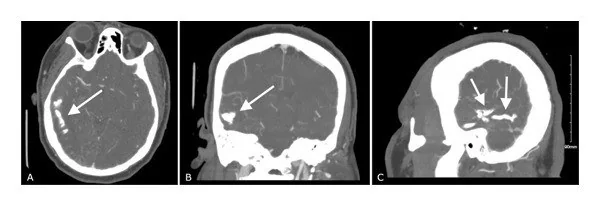
- Etkilenen hemisferin korteksinde ve komşu subkortikal beyaz cevherde, girus kıvrımlarını izleyen yüksek atenüasyonlu kıvrımlı çift çizgi/tram-track (tramvay rayı) biçimli kalsifikasyonlar görülebilir. Etkilenen hemisferde parankimal atrofi eşlik edebilir.
Önerilen pencereler G genişlik, M merkez; değerler Hounsfield birimi (HU)
- BeyinG 80 / M +40
- KemikG 1800 / M +400
BT bulguları
- Girus konturunu izleyen tram-track (tramvay rayı) biçimli kortikal-subkortikal kalsifikasyon
- Etkilenen hemisferde kortikal-subkortikal kalsifikasyon dağılımı; kalsiyum kortikal girusları ve komşu subkortikal beyaz cevheri izleyebilir.
- Etkilenen hemisferde kortikal-subkortikal atrofi görülebilir.
- Atrofiye eşlik eden ipsilateral ventrikül genişlemesi görülebilir.
- İpsilateral koroid pleksusta göreceli büyüme veya belirgin asimetri
Normalde
Normal BT'de giruslar iki hemisferde benzer görünür ve girusları izleyen kesintisiz çift kalsifiye çizgiler beklenmez. Sturge–Weber sendromunda koroid pleksus büyümesi ve parankimal atrofi etkilenen hemisferde görülebilir.
Normal BT ile kıyasla
Aynı bölgenin, kaynak veri setinde patoloji içermediği belirtilen bir BT incelemesini kesit kesit kaydırın; organ sınırlarını açarak anatomiyi hasta görüntüsüyle karşılaştırın. Küçük rastlantısal bulgular tümüyle dışlanmamıştır.
Kaynak: TotalSegmentator v2.01 veri seti (Wasserthal ve ark., Radiology: Artificial Intelligence 2023), CC BY 4.0, vaka s0103; organ sınırları veri setinin otomatik segmentasyonundan, birleştirilerek sadeleştirildi. Görüntüler 2,5 mm kesit aralığına yeniden örneklendi.
Ayırıcı tanı
- Konjenital CMV enfeksiyonu intrakraniyal kalsifikasyonlarla ilişkili olabilir. Konjenital toksoplazmoz, konjenital enfeksiyonlara bağlı intrakraniyal kalsifikasyonların ayırıcı tanısında düşünülebilir.
- Akut intrakraniyal kanama
- kan ve kalsiyum konvansiyonel BT'de hiperdens görünebilir; belirsiz küçük odaklarda çift enerjili BT ayırımı destekleyebilir.
Tuzaklar
- Kalsifikasyon görülmeyen küçük bebekte Sturge–Weber beyin tutulumu dışlanmış olmaz; intrakraniyal kalsifikasyon ilk yıl BT'de görünmeyebilir.
- Konvansiyonel BT'de kan ve kalsiyum yoğunlukları örtüşebilir; tipik giriform dağılımı, karşı hemisferi ve eşlik eden kronik hacim kaybını birlikte değerlendirin.
- Kontrastsız BT leptomeningeal anjiyomatozisin yokluğunu kanıtlamaz; leptomeningeal tutulum kontrastlı MR'da daha iyi gösterilir.
- Giriform kalsifikasyon ve ipsilateral atrofi Sturge–Weber sendromunda görülebilir; leptomeningeal anjiyomatozis ise kontrast sonrası T1 ağırlıklı MR'da leptomeningeal kontrastlanma şeklinde gösterilebilir.
Kendini dene
Yüzünde port-wine doğum lekesi ve nöbetleri olan hastada BT'de tek hemisferde giriform tram-track kortikal-subkortikal kalsifikasyon ve ipsilateral atrofi görülüyor. En olası örüntü nedir?
Cevabı göster
Sturge–Weber sendromu. Port-wine doğum lekesiyle birlikte tek hemisferde giriform tram-track kortikal-subkortikal kalsifikasyon ve ipsilateral atrofi Sturge–Weber sendromuyla uyumludur.
Yüzünde port-wine lekesi olan 2 aylık bir bebekte kontrastsız BT normal saptanıyor. En doğru yorum nedir?
Cevabı göster
Erken negatif BT beyin tutulumunu dışlamaz. Giriform kalsifikasyonlar yaşla birlikte gelişebilir ve erken BT'de görünmeyebilir; erken negatif BT beyin tutulumunu dışlamaz.
Kaynaklar
Bu sayfadaki 32 cümle ve 2 quiz sorusu aşağıdaki kaynaklardan alıntılarla otomatik olarak karşılaştırıldı; 20 cümle bu karşılaştırmada düzeltildi (2026-10-10).
- Intracranial calcifications on CT: an updated reviewpmc.ncbi.nlm.nih.gov
- Sturge-Weber Syndrome: A Review of Pathophysiology, Genetics, Clinical Features, and Current Management Approachpmc.ncbi.nlm.nih.gov
- Presentation, diagnosis, pathophysiology, and treatment of the neurological features of Sturge-Weber syndromepmc.ncbi.nlm.nih.gov
- Dual-energy CT for differentiating acute intracranial hemorrhage from contrast staining or calcification: a meta-analysispubmed.ncbi.nlm.nih.gov
- Beyond the leptomeningeal angioma: a comprehensive review of MR imaging features of Sturge-Weber Syndrome, from early vascular responses to tissue necrosispubmed.ncbi.nlm.nih.gov
- Erratum: Sturge-Weber Syndrome review title correction [Corrigendum]pubmed.ncbi.nlm.nih.gov
- Longitudinal Neuroimaging of a Pediatric Patient With Sturge–Weber Syndrome: From Birth to Adolescencepmc.ncbi.nlm.nih.gov
- Leptomeningeal metastasis with sturge-weber syndrome-like gyriform calcification on imaging: a case reportpmc.ncbi.nlm.nih.gov
- Accidental finding of Sturge-Weber syndrome presented to the emergency department with persistent seizures: an unusual case report from Somaliapmc.ncbi.nlm.nih.gov
- Multiple extra-axial calcified lesions and tortuous vessels in a patient with meningioangiomatosis and executive dysfunctionpmc.ncbi.nlm.nih.gov
- Neuro-schistosomiasis with palm tree contrast enhancement pattern, a report of three cases, and review of literature.pubmed.ncbi.nlm.nih.gov
- Leptomeningeal metastasis with sturge-weber syndrome-like gyriform calcification on imaging: a case report.pubmed.ncbi.nlm.nih.gov
- Dyke-Davidoff-Masson syndrome in a young adult: Lifelong hemiparesis and characteristic MRI findings.pubmed.ncbi.nlm.nih.gov
- Adult-onset generalized seizures in undiagnosed cerebral hemiatrophy: A case of Dyke-Davidoff-Masson syndrome.pubmed.ncbi.nlm.nih.gov
- Focal leptomeningeal vascular anomalies on brain MRI: A mimic of leptomeningeal metastatic disease.pubmed.ncbi.nlm.nih.gov
- Case Report of Rasmussen's Encephalitis With a Decade of Refractory Epilepsy and Hemispheric Atrophy.pubmed.ncbi.nlm.nih.gov
- The Hemispheric Imbalance: A Double Encounter with Dyke-Davidoff-Masson Syndrome.pubmed.ncbi.nlm.nih.gov
- Adult Presentation of Dyke-Davidoff-Masson Syndrome, a Radiological Enigma: A Case Report.pubmed.ncbi.nlm.nih.gov
- Cognitive impairment patterns and associated clinical and imaging characteristics in young patients with Sturge-Weber syndrome.pubmed.ncbi.nlm.nih.gov
- New Onset of Seizures Leading to the Delayed Diagnosis of Sturge-Weber Syndrome in Adulthood: A Case Report.pubmed.ncbi.nlm.nih.gov
- Hippocampal sclerosis in association with Sturge-weber syndrome: An intertwining of 2 epileptogenic lesions.pubmed.ncbi.nlm.nih.gov
- Differential diagnoses of cerebral hemiatrophy in childhood: a review of literature with illustrative report of two cases.pubmed.ncbi.nlm.nih.gov
- Alternative Venous Pathways: A Potential Key Imaging Feature for Early Diagnosis of Sturge-Weber Syndrome Type 1.pubmed.ncbi.nlm.nih.gov
- A rare case of Dyke-Davidoff-Masson syndrome with concurrent metabolic syndrome.pubmed.ncbi.nlm.nih.gov
- A systematic approach to detection of epileptogenic foci on imaging: protocols, entities, search pattern, and reporting tools.pubmed.ncbi.nlm.nih.gov
- Longitudinal Neuroimaging of a Pediatric Patient With Sturge-Weber Syndrome: From Birth to Adolescence.pubmed.ncbi.nlm.nih.gov
- Accidental finding of Sturge-Weber syndrome presented to the emergency department with persistent seizures: an unusual case report from Somalia.pubmed.ncbi.nlm.nih.gov
- Comparative Evaluation of CT and MRI in Detecting Intracranial and Extracranial Manifestations of Tuberous Sclerosis Complex.pubmed.ncbi.nlm.nih.gov
- Delayed TSC Diagnosis Presenting as End-Stage Renal Disease With Renal and Hepatic Angiomyolipoma: Case Report and Review.pubmed.ncbi.nlm.nih.gov
- Coexistence of Fahr-Type Intracranial Calcification and a Presumed Cerebellar Pilocytic Astrocytoma With Obstructive Hydrocephalus: A Rare Case Report.pubmed.ncbi.nlm.nih.gov
- Late-onset atypical pseudohypoparathyroidism type 1A with intracranial calcification and epilepsy associated with a novel <i>GNAS</i> variant: a case report.pubmed.ncbi.nlm.nih.gov
- Adult-recognized 22q11.2 deletion syndrome in adult neurology practice: a brief report of two diagnostic pitfalls.pubmed.ncbi.nlm.nih.gov
- Diffuse bilateral cerebral calcification caused by Vein of Galen aneurysmal malformation in a two-year-old child: A rare presentation.pubmed.ncbi.nlm.nih.gov
- Neonatal Aicardi-Goutières syndrome presenting with macrophage activation syndrome-like hyperinflammation and severe congenital glaucoma: a case report.pubmed.ncbi.nlm.nih.gov
- Clinical, Neuroimaging and Video Electroencephalography Findings in Children With Congenital Zika Syndrome: An Analysis From a Neurorehabilitation Centre.pubmed.ncbi.nlm.nih.gov
- Foetal disruptive brain injuries: Diagnosing the underlying pathogenetic mechanisms with cranial ultrasonography.pubmed.ncbi.nlm.nih.gov
- Paediatric cranial ultrasound: abnormalities of the brain in term neonates and young infants.pubmed.ncbi.nlm.nih.gov
- Treatment outcomes for gestational toxoplasmosis in India with an emphasis on periconceptional infection in a prospective study.pubmed.ncbi.nlm.nih.gov
- Fatal Congenital Toxoplasmosis with Progressive Liver Failure and Genomic Characterization of a Novel Isolate from the United States.pubmed.ncbi.nlm.nih.gov
- Not Just a Birthmark: A Case Report of a Subtle Port-Wine Stain Heralding Sturge-Weber Syndrome.pubmed.ncbi.nlm.nih.gov
- Absence of Deep and Basal Veins Is Common and Clinically Relevant in Sturge-Weber Syndrome.pubmed.ncbi.nlm.nih.gov
- Multiple extra-axial calcified lesions and tortuous vessels in a patient with meningioangiomatosis and executive dysfunction.pubmed.ncbi.nlm.nih.gov
- Introduction of a Brain MRI Scoring System with Clinical Relevance for Sturge-Weber Syndrome.pubmed.ncbi.nlm.nih.gov
- Clinical Validation of a Fast MRI Method to Evaluate Brain Vascular and Parenchymal Abnormalities in Sturge-Weber Syndrome.pubmed.ncbi.nlm.nih.gov
- Diagnostic challenges in an adult patient with Fanconi Anemia: Neuroinflammatory Syndrome (FANS) intertwined with infectious processes.pubmed.ncbi.nlm.nih.gov
- Role of Ultrasound and Fetal MRI in the Prenatal Assessment of Congenital Cytomegalovirus Infection: A Systematic Review.pubmed.ncbi.nlm.nih.gov
- The Management of Congenital Cytomegalovirus Infection in an Era of Universal Newborn CMV Screening.pubmed.ncbi.nlm.nih.gov
- Review of Toxoplasmosis: What We Still Need to Do.pubmed.ncbi.nlm.nih.gov
- Zika Virus: A Review of Biology, Clinical Impacts, and Coinfections.pubmed.ncbi.nlm.nih.gov
- Beyond Latency: Chronic <i>Toxoplasma</i> Infection and Its Unveiled Behavioral and Clinical Manifestations-A 30-Year Research Perspective.pubmed.ncbi.nlm.nih.gov
- Leptomeningeal Masses or Masquerades: A Spectrum of Diseases with Leptomeningeal Enhancement and their Mimics.pubmed.ncbi.nlm.nih.gov
- Multiple midline brain anomalies in a CMV-exposed fetus with successful surgical management: a case report and literature review.pubmed.ncbi.nlm.nih.gov
- Neuroimaging in inborn errors of immunity: More than infections.pubmed.ncbi.nlm.nih.gov
- Toxoplasmosis in the Era of Targeted Immunotherapy: A Systematic Review of Emerging Cases Linked to Biologics and Small Molecules in Autoimmune Diseases, Oncology and Transplantation.pubmed.ncbi.nlm.nih.gov
- A double threat: CNS toxoplasmosis and CMV encephalitis in a heart transplant recipientpubmed.ncbi.nlm.nih.gov
- Congenital Toxoplasmosis With Atypical Neuroimaging: Hydrocephalus and Bilateral Chorioretinitis Without Intracranial Calcifications.pubmed.ncbi.nlm.nih.gov
- Prevalence and Risk Factors for Congenital Toxoplasmosis in Newborns in the Public Health System in the Eastern Region of the Brazilian Amazon, Northern Tocantins State, Brazil: Retrospective Cohort Study.pubmed.ncbi.nlm.nih.gov
- Associations between Fetal Symptoms during Pregnancy and Neonatal Clinical Complications with Toxoplasmosis.pubmed.ncbi.nlm.nih.gov
- Rare pediatric retinal diseases: A review.pubmed.ncbi.nlm.nih.gov
- Neonatal Cholestasis Progressing to a Multisystem Syndrome With Liver Cirrhosis in Two Siblings With FARSA Deficiency: An Evolving Hepatological Phenotype.pubmed.ncbi.nlm.nih.gov
- From Fetal to Neonatal Neuroimaging in TORCH Infections: A Pictorial Review.pubmed.ncbi.nlm.nih.gov
- Undiagnosed Epileptic Case Since Childhood of Sturge-Weber Syndrome: First Case Report from Somalia.pubmed.ncbi.nlm.nih.gov
- Tuberous sclerosis complex: a case report and literature review.pubmed.ncbi.nlm.nih.gov
- Virtual non-calcium dual-energy CT: clinical applications.pubmed.ncbi.nlm.nih.gov
- Prosthodontic rehabilitation in Fahr's syndrome: clinical challenges and oral manifestations.pubmed.ncbi.nlm.nih.gov
- Comparative IgG-IgM Western Blot in the Diagnosis of Congenital Toxoplasmosis: A Valid Diagnostic Tool.pubmed.ncbi.nlm.nih.gov
- Diagnostic imaging and emerging image-guided neurointervention in brain tumors: a narrative review.pubmed.ncbi.nlm.nih.gov
- Dual-energy computed tomography in children: Technique and clinical applications.pubmed.ncbi.nlm.nih.gov
- Development and validation of a machine learning-based radiomics model using 45-keV virtual monoenergetic images for differentiating fat-poor angiomyolipoma from clear cell renal cell carcinoma.pubmed.ncbi.nlm.nih.gov
- Dual-Energy Computed Tomography Virtual Noncalcium Imaging of Intracranial Arteries in Acute Ischemic Stroke: Differentiation Between Acute Thrombus and Calcification.pubmed.ncbi.nlm.nih.gov
- What to Expect (and What Not) from Dual-Energy CT Imaging Now and in the Future?pubmed.ncbi.nlm.nih.gov
- Sturge-Weber syndrome type III in pediatrics: a case report.pubmed.ncbi.nlm.nih.gov
- Cutaneous laser treatment of port-wine stains and its impact on ocular manifestations in Sturge-Weber syndrome.pubmed.ncbi.nlm.nih.gov
- A Rare Case of Coexistence: Discoid Lupus Erythematosus and Sturge-Weber Syndrome.pubmed.ncbi.nlm.nih.gov
- Epilepsy, Cognitive, and Behavioral Outcomes in Neurocutaneous Syndromes: A Comparative Review of NF1, TSC, and Sturge-Weber Syndrome.pubmed.ncbi.nlm.nih.gov
- A Case of Previously Undiagnosed Sturge-Weber Syndrome in an African American Patient due to a Missed Port-Wine Stain.pubmed.ncbi.nlm.nih.gov
- Bloom Syndrome Presenting With Early-Onset Myelodysplastic Syndrome and Triple Overlapping Vascular Neurocutaneous Phenotypes: A Case Report.pubmed.ncbi.nlm.nih.gov
- Ophthalmic screening in phakomatoses.pubmed.ncbi.nlm.nih.gov
- Sturge-Weber Syndrome: A Narrative Review of Clinical Presentation and Updates on Management.pubmed.ncbi.nlm.nih.gov
Eğitim amaçlıdır; hasta başında tanı ve tedavi kararının yerine geçmez, tıbbi tavsiye değildir. Metinler yapay zekâ desteğiyle yazıldı ve otomatik bir adımda kaynak alıntılarıyla karşılaştırıldı; bu bir tıbbi doğrulama değildir ve içerik uzman radyolog incelemesinden geçmedi. Klinik kararlarda güncel kılavuzları, kurum protokollerini ve radyoloji raporunu esas alın.