Özet
iRECIST, immünoterapi çalışmalarında tümör yanıtını RECIST 1.1’e uyarlayarak ilk görüntüleme progresyonunu doğrulama incelemesinden ayırır. İmmün hücre infiltrasyonu veya inflamatuvar yanıt geçici boyut artışı ya da yeni odak görünümü oluşturabildiğinden, görüntüleme progresyonu klinik durumdan kopuk biçimde kesin ilerleme sayılmamalıdır. İlk progresyon iUPD olarak kaydedilir; klinik olarak stabil hastada protokolün öngördüğü doğrulama BT’si iCPD kararını belirler. Bu ara dönemde iUPD’yi kesin progresyon kabul etmek psödoprogresyonu kaçırabilir; tersine semptomatik klinik kötüleşmeyi yalnız olası psödoprogresyon diye açıklamak gerçek ilerlemeyi geciktirebilir.
Faz ve pencere
- Portal tanısal
- Hedef lezyonlar ve yeni odaklar, tutarlı BT protokolleri ve kontrast fazları kullanılarak ölçülür; seri incelemeler arasında karşılaştırma yapılırken tarama kapsamı ve protokol standartları korunur. Toraks-abdomen-pelvis BT'lerinde portal venöz faz sıklıkla tercih edilir, ancak primer tümörün değerlendirilmesinde öngörülen özel protokol esas alınır.
Önerilen pencereler: Mediasten (G 350 / M 50), Akciğer (G 1500 / M -600), Batın (G 400 / M 50), Karaciğer (G 150 / M 30), Yumuşak doku (G 400 / M 40), Kemik (G 1800 / M 400).
BT bulguları
- İlk hedef toplam artışı — RECIST 1.1 progresyon ölçütünü karşılayan artış ilk kez ortaya çıktığında iUPD olarak kodlanır; tek başına iCPD değildir.
- Yeni lezyon — önceki seride olmayan odak ayrı yeni lezyon grubunda ölçülür ve başlangıçtaki hedef lezyonlar toplamına karıştırılmaz.
- iUPD sonrası iCPD doğrulaması için hedef yükünde %20’den fazla ek artış, hedef dışı hastalıkta belirgin kötüleşme veya yeni lezyon gelişimi gerekir.
- Başlangıç hedeflerinde ek büyüme — iUPD’den sonraki incelemede önceki iUPD kategorisine ait hedef toplamı artış ölçütü karşılanırsa iCPD atanabilir; eşik ve diğer bileşenler iRECIST tablosuna göre değerlendirilir.
- Hedef dışı hastalıkta belirgin kötüleşme — doğrulama incelemesinde gözlenen bu ilerleme, iUPD'nin iCPD olarak kesinleşmesine katkı sağlayan kriterlerden biridir.
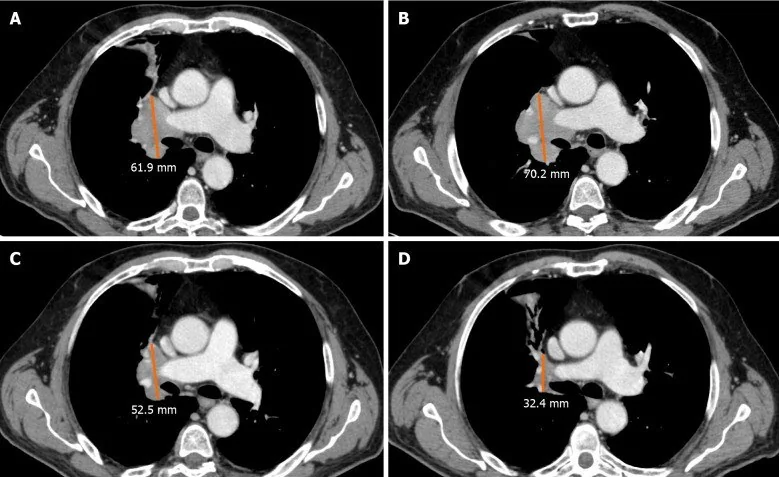
- Psödoprogresyon olasılığı — lezyon çevresinde inflamatuvar değişiklik veya geçici büyüme görülebilir; BT görünümü tek başına immün infiltrasyonu kanıtlamaz.
- Klinik stabilite — iUPD sonrasında tedaviye devamın değerlendirilmesinde hastanın klinik olarak stabil olması ve tedaviyi tolere etmesi dikkate alınır.
Ölçütler ve sınıflamalar
- İlk RECIST progresyonu sonrası iCPD için doğrulama görüntüleme aralığı
- 4–8 hafta
- Hedef lezyonlara dayalı iUPD sonrası ek büyüme
- Önceki iUPD değerlendirmesine göre hedef yükünde %20’den fazla ek artış gerekir.
- Yeni hedef lezyonların kaydı
- Yeni lezyonlar progresyon değerlendirmesinde ayrı kaydedilir.
- iRECIST yanıt kategorileri
- iCR: tam yanıt; iPR: kısmi yanıt; iSD: stabil hastalık; iUPD: RECIST 1.1 progresyonunun ilk görüldüğü, henüz doğrulanmamış değerlendirme; iCPD: sonraki incelemede kategoriye özgü progresyonun doğrulanması. iUPD sonraki incelemede iCPD olarak doğrulanmayabilir; yanıt kategorisi iRECIST tablosunda hedef, hedef dışı ve yeni lezyonlardaki değişime göre belirlenir ve iUPD sürebilir ya da iCR/iPR/iSD ölçütleri karşılanabilir.
Normalde
Normal parankimde yeni solid odak veya patolojik lenf nodu büyümesi bulunmaz; iRECIST değerlendirmesinde başlangıç hedeflerinin yanı sıra iUPD döneminde saptanan yeni odaklar da ilerleme kayıtlarında ayrı gruplarda izlenir. İmmün inflamatuar reaksiyonlar veya tedaviye bağlı doku değişiklikleri yapay yeni odaklar gibi görünebileceğinden, lezyonların gerçek malignite olup olmadığı önceki incelemelerle karşılaştırılarak doğrulanmalıdır.
Normal BT ile kıyasla
Aynı bölgenin, kaynak veri setinde patoloji içermediği belirtilen bir BT incelemesini kesit kesit kaydırın; organ sınırlarını açarak anatomiyi hasta görüntüsüyle karşılaştırın. Küçük rastlantısal bulgular tümüyle dışlanmamıştır.
Kaynak: TotalSegmentator v2.01 veri seti (Wasserthal ve ark., Radiology: Artificial Intelligence 2023), CC BY 4.0, vaka s0546; organ sınırları veri setinin otomatik segmentasyonundan, birleştirilerek sadeleştirildi. Görüntüler 2,5 mm kesit aralığına yeniden örneklendi.
Ayırıcı tanı
- Psödoprogresyon
- immünoterapi sırasında geçici büyüme veya yeni odak; sonraki kontrolde küçülme ya da progresyonun doğrulanmamasıyla desteklenebilir.
- Gerçek tümör progresyonu
- seri incelemede hedef toplam artışının sürmesi, yeni odak yükünün büyümesi veya organ işlevini bozan yayılım.
- İmmün ilişkili pnömonit
- akciğerde organiz pnömoni, NSIP benzeri desenler veya hiperprotifatif pnömonit şeklinde radyolojik paternler oluşturabilir ve metastazlardan ayırıcı tanı açısından dikkate alınmalıdır.
- Akciğer enfeksiyonları
- özellikle immünoterapi devam ederken veya durdurulduğunda gelişenler — bronkoskopi ve BAL gibi invaziv yöntemlerle değerlendirilerek tümör progresyonundan ayrıştırılmalıdır.
- İmmün ilişkili kolit
- segmental veya diffüz duvar kalınlaşması ve mukozal hiperemi, peritoneal metastazdan farklı bir bağırsak duvarı paterni oluşturur.
Tuzaklar
- iUPD raporunu doğrulanmış iCPD gibi yazmayın; değerlendirme zaman noktasını ve doğrulama gereğini açıkça belirtin.
- Yeni lezyon çaplarını başlangıç hedeflerinin toplamına eklemek iRECIST hesaplamasını bozar; yeni hedef grubunu ayrı tutun.
- Psödoprogresyon, her yeni lezyonun beklenerek izleneceği anlamına gelmez; klinik kötüleşme ve acil komplikasyonlar görüntü yanıt kodundan bağımsız ele alınmalıdır.
- Mevcut kanıtlar çoğunlukla retrospektif çalışmalara dayanmaktadır ve dış geçerlilik sınırlılıkları taşımaktadır; iRECIST bulguları tedavi kararlarında klinik bağlamla birlikte değerlendirilmelidir.
Kendini dene
İmmünoterapi alan hastada hedef toplamı ilk kez PD ölçütünü karşılıyor; hasta klinik olarak stabil. iRECIST zaman noktası nasıl kaydedilir?
Cevabı göster
iUPD. İlk progresyon iUPD olarak kaydedilir ve uygun protokolde görüntülemeyle doğrulanır. iCPD doğrulanmış progresyondur; iPR ve iCR ise sırasıyla kısmi ve tam yanıttır.
iUPD’den 5 hafta sonraki BT’de yeni hedef lezyonların ölçüm toplamı, önceki iUPD’ye göre 4 mm artmış; ek yeni odak ve başka kategoride ek progresyon yok. iCPD doğrulanmış mıdır?
Cevabı göster
Hayır; iUPD sürer. Kaynaklara göre iCPD doğrulaması için önceki iUPD değerlendirmesine göre hedef yükünde %20’den fazla ek artış, hedef dışı kötüleşme veya yeni lezyon gerekir; sabit milimetrik eşik yoktur.
Bu konunun yer aldığı turlar
İlgili konular
Kaynaklar
Bu sayfadaki 38 cümle ve 2 quiz sorusu aşağıdaki kaynaklardan alıntılarla tek tek karşılaştırıldı; 16 cümle bu karşılaştırmada düzeltildi (2026-10-08).
- Incidence and impact of pseudoprogression and mixed responses in metastatic renal cell carcinoma patients treated with ipilimumab/nivolumab: a retrospective analysispmc.ncbi.nlm.nih.gov
- Medical imaging in immunotherapy response evaluation: from RECIST to AI-driven longitudinal models, and the distinction between risk prediction and kinetic diagnosispmc.ncbi.nlm.nih.gov
- Pseudoprogression During Enfortumab Vedotin Plus Pembrolizumab Therapy in Muscle‐Invasive Bladder Cancer Achieving Pathological Complete Response: A Case Reportpmc.ncbi.nlm.nih.gov
- Utility of iRECIST for evaluating treatment efficacy in patients receiving immune checkpoint inhibitorspmc.ncbi.nlm.nih.gov
- A Critical Review of PET/CT Assessment After CAR-T Cell Therapy in Large B-Cell Lymphoma, Limitations of Current Criteria, Emerging Biomarkers, and a Framework for Standardised Evaluationpmc.ncbi.nlm.nih.gov
- The lung cancers: staging and response, CT, 18 F-FDG PET/CT, MRI, DWI: review and new perspectives.pubmed.ncbi.nlm.nih.gov
- Immunotherapy Monitoring with Immune Checkpoint Inhibitors Based on [ 18 F]FDG PET/CT in Metastatic Melanomas and Lung Cancer.pubmed.ncbi.nlm.nih.gov
- Tumor response assessment on imaging following immunotherapy.pubmed.ncbi.nlm.nih.gov
- Response Evaluation and Survival Prediction After PD-1 Immunotherapy in Patients with Non-Small Cell Lung Cancer: Comparison of Assessment Methods.pubmed.ncbi.nlm.nih.gov
- RECIST and iRECIST criteria for the evaluation of nivolumab plus ipilimumab in patients with microsatellite instability-high/mismatch repair-deficient metastatic colorectal cancer: the GERCOR NIPICOL phase II study.pubmed.ncbi.nlm.nih.gov
- [18F]FDG PET/CT Integration in Evaluating Immunotherapy for Lung Cancer: A Clinician's Practical Approach.pubmed.ncbi.nlm.nih.gov
- Radiological patterns of tumour progression in patients treated with a combination of immune checkpoint blockers and antiangiogenic drugs.pubmed.ncbi.nlm.nih.gov
- Comparison of Radiological Tumor Response Based on iRECIST and RECIST 1.1 in Metastatic Clear-Cell Renal Cell Carcinoma Patients Treated with Programmed Cell Death-1 Inhibitor Therapy.pubmed.ncbi.nlm.nih.gov
- Monitoring of patients with metastatic melanoma treated with immune checkpoint inhibitors using PET-CT.pubmed.ncbi.nlm.nih.gov
- Comparison of RECIST, iRECIST, and PERCIST for the Evaluation of Response to PD-1/PD-L1 Blockade Therapy in Patients With Non-Small Cell Lung Cancer.pubmed.ncbi.nlm.nih.gov
- Response evaluation for immunotherapy through semi-automatic software based on RECIST 1.1, irRC, and iRECIST criteria: comparison with subjective assessment.pubmed.ncbi.nlm.nih.gov
- Advances in Multimodal Imaging Techniques for Evaluating and Predicting the Efficacy of Immunotherapy for NSCLC.pubmed.ncbi.nlm.nih.gov
- Radiologic Pseudoprogression during Anti-PD-1 Therapy for Advanced Non-Small Cell Lung Cancer.pubmed.ncbi.nlm.nih.gov
- Innovative applications and future trends of multiparametric PET in the assessment of immunotherapy efficacy.pubmed.ncbi.nlm.nih.gov
- Medical imaging in immunotherapy response evaluation: from RECIST to AI-driven longitudinal models, and the distinction between risk prediction and kinetic diagnosis.pubmed.ncbi.nlm.nih.gov
- Clinical and Biological Factors Associated with Pseudoprogression Under Immune Checkpoint Inhibitors: A Retrospective Pan-Tumor Cohort Study.pubmed.ncbi.nlm.nih.gov
- [iRECIST: assessment of immunotherapy response].pubmed.ncbi.nlm.nih.gov
- Pseudoprogression in neoadjuvant immunotherapy for resectable NSCLC: a PET-CT-based study.pubmed.ncbi.nlm.nih.gov
- Post-therapy imaging of adult brain tumours: patterns, pitfalls, and practical framework.pubmed.ncbi.nlm.nih.gov
- Utility of iRECIST for evaluating treatment efficacy in patients receiving immune checkpoint inhibitors.pubmed.ncbi.nlm.nih.gov
- Dissociated skeletal response to first-line immunotherapy in synchronous bone metastatic non-small cell lung cancer patients: Clinical profiles and survival benefit of denosumab adjunction.pubmed.ncbi.nlm.nih.gov
- Integrating Immunotherapy Into Head and Neck Surgery: Bridging Tumor Biology to Perioperative Decision-Making, a Review.pubmed.ncbi.nlm.nih.gov
- Application of an improved YOLOv5s-based deep learning model for automated detection of pulmonary adenocarcinoma <i>in situ</i> and minimally invasive adenocarcinoma.pubmed.ncbi.nlm.nih.gov
- Case Report: Treatment of an unresectable mucoepidermoid carcinoma with osimertinib.pubmed.ncbi.nlm.nih.gov
- Hepatocellular Carcinoma Segmentation on MRI: Five-Fold ATLAS Benchmarking, Phase-Wise External Stress Testing, and Multiphasic OpenSwissHCC Ablation.pubmed.ncbi.nlm.nih.gov
- Hepatobiliary phase imaging in HCC: revisiting diagnostic algorithms and clinical utility of gadoxetic acid-enhanced MRI across international guidelines.pubmed.ncbi.nlm.nih.gov
- Explainable machine learning-based multiphase contrast-enhanced CT radiomics for noninvasively predicting GPC3 expression in hepatocellular carcinoma: a bicentric study.pubmed.ncbi.nlm.nih.gov
- The Role of 18F-FDG PET/CT in Monitoring Immunotherapy Response in Non-Small Cell Lung Cancer: Current Evidence and Challenges: A Narrative Review.pubmed.ncbi.nlm.nih.gov
- CT-based deep learning predicts immunotherapy response in esophageal squamous cell cancer patients.pubmed.ncbi.nlm.nih.gov
- A partial response to atezolizumab in alveolar soft part sarcoma with near-complete resolution of extensive pulmonary metastases: a case report.pubmed.ncbi.nlm.nih.gov
- Rethinking Immunotherapy Resistance in Melanoma: A Narrative Review of Clinical Patterns, Resistance Mechanisms, and Future Strategies.pubmed.ncbi.nlm.nih.gov
- Endobronchial Intratumoral Immuno- and Gene Therapies in Lung Cancer: Mechanisms of Local Delivery, Systemic Immune Effects, and Global Feasibility.pubmed.ncbi.nlm.nih.gov
- Setting the standard: empirical benchmarks for case-level site-central discordance in radiographic endpoints in oncology clinical trials.pubmed.ncbi.nlm.nih.gov
- Safety and efficacy of fecal microbiota transplantation in solid cancers resistant to immune checkpoint inhibitors: results of the MITRIC trial.pubmed.ncbi.nlm.nih.gov
- Real-world experience with ipilimumab in combination with nivolumab in advanced sarcoma: a retrospective analysis including ultra-rare sarcomas.pubmed.ncbi.nlm.nih.gov
- Serum COPA for the diagnosis and immunotherapeutic monitoring of hepatocellular carcinoma: a retrospective study.pubmed.ncbi.nlm.nih.gov
- Pseudoprogression During Enfortumab Vedotin Plus Pembrolizumab Therapy in Muscle-Invasive Bladder Cancer Achieving Pathological Complete Response: A Case Report.pubmed.ncbi.nlm.nih.gov
- Case Report: Triple-negative metaplastic breast carcinoma with primary resistance to neoadjuvant chemoimmunotherapy, refractory tumor necrosis-related fever, and rapid postoperative disease progression.pubmed.ncbi.nlm.nih.gov
- Response evaluation of neoadjuvant therapy in MIBC: clinical trial-derived evidence to guide practice.pubmed.ncbi.nlm.nih.gov
- CT radiomics showed no improvement beyond volume dynamics for early lesion-level size response to immunotherapy in metastatic melanoma.pubmed.ncbi.nlm.nih.gov
- Assessing the reliability of Response Evaluation Criteria In Solid Tumors (RECIST): a systematic review of the factors contributing to inter-observer variability.pubmed.ncbi.nlm.nih.gov
- Defining the abscopal effect in non-small cell lung cancer in the era of immunotherapy and lung ablation treatment: a narrative review.pubmed.ncbi.nlm.nih.gov
- CAR T-cell therapy induced pseudoprogression.pubmed.ncbi.nlm.nih.gov
- Evolution from KRAS G12C-mutant to ALK fusion-positive stage IV lung adenocarcinoma following immune checkpoint inhibitor therapy: a case report.pubmed.ncbi.nlm.nih.gov
- PD-L1-targeted PET imaging for non-invasive assessment of immunotherapy response in lung cancer.pubmed.ncbi.nlm.nih.gov
- Non-Small-Cell Lung Cancer: From Histopathological Classification to Precision Oncology-A Narrative Review.pubmed.ncbi.nlm.nih.gov
- Synchronous low-grade myofibroblastic sarcoma and small cell lung cancer in a patient with situs inversus totalis: a case report and literature review.pubmed.ncbi.nlm.nih.gov
- Rapid and aggressive recurrence of pulmonary sarcomatoid carcinoma after curative resection: a case report.pubmed.ncbi.nlm.nih.gov
- Early radiological response pattern predicts long-term response in patients with non-small cell lung cancer treated with immune-checkpoint inhibitors.pubmed.ncbi.nlm.nih.gov
- A Critical Review of PET/CT Assessment After CAR-T Cell Therapy in Large B-Cell Lymphoma, Limitations of Current Criteria, Emerging Biomarkers, and a Framework for Standardised Evaluation.pubmed.ncbi.nlm.nih.gov
- Delayed Tumor Shrinkage Beyond Progressive Disease in Small-Cell Lung Cancer Receiving Immunochemotherapy: A Case Report.pubmed.ncbi.nlm.nih.gov
- Assessing brain metastasis response to immunotherapy: a pictorial review of atypical responses and intracranial adverse events.pubmed.ncbi.nlm.nih.gov
- Continuing immune checkpoint inhibitors after pseudoprogression improves survival in lung cancer patients: a systematic review and meta-analysis.pubmed.ncbi.nlm.nih.gov
- Equine Sarcoid: From BPV-Driven Oncogenesis to Host-Sustained Tumor Persistence.pubmed.ncbi.nlm.nih.gov
- Incidence and risk factors for pneumonitis in urothelial carcinoma treated with enfortumab vedotin plus pembrolizumab: retrospective study.pubmed.ncbi.nlm.nih.gov
- Checkpoint inhibitor pneumonitis in lung cancer patients receiving immune checkpoint inhibitors prior to chest radiotherapy.pubmed.ncbi.nlm.nih.gov
- Long-term survival with tocilizumab treatment for tislelizumab-related pneumonitis in a patient with non-small cell lung cancer: A case report.pubmed.ncbi.nlm.nih.gov
- Disseminated Pulmonary and Hepatic Cystic Echinococcosis Presenting as Suspected Pulmonary Embolism and Mimicking Metastatic Malignancy.pubmed.ncbi.nlm.nih.gov
- Incidental Lung Lesions on the CT Component of Oncologic FDG PET/CT: A Pictorial Review of Interpretive Pitfalls and Diagnostic Clues.pubmed.ncbi.nlm.nih.gov
- Metastatic Breast Cancer Presenting as an Organizing Pneumonia Pattern on Chest CT: A Case Report.pubmed.ncbi.nlm.nih.gov
- Probable everolimus-associated severe colitis with hematochezia in a patient with metastatic hormone receptor-positive, HER2-negative breast cancer: a case report.pubmed.ncbi.nlm.nih.gov
- Zolbetuximab-Associated Gastritis in a Patient With Metastatic Gastric Adenocarcinoma.pubmed.ncbi.nlm.nih.gov
- High intratumoral CD8 positive T cell infiltration associated with pathologic complete response after neoadjuvant immunotherapy in locally advanced colon cancer.pubmed.ncbi.nlm.nih.gov
- Radiologists and treatment response assessment: conventional and functional radiological criteria for predicting therapeutic response in virus-related and non-virus-related cancers.pubmed.ncbi.nlm.nih.gov
- Response evaluation to systemic therapy in HCC: Current challenges and future perspectives.pubmed.ncbi.nlm.nih.gov
- Tumor Response Evaluation Using iRECIST: Feasibility and Reliability of Manual Versus Software-Assisted Assessments.pubmed.ncbi.nlm.nih.gov
- A first-in-human, phase I/IIa trial of the T cell immunotherapy personalised tumour trained lymphocytes in patients with advanced colorectal cancer: Study protocol.pubmed.ncbi.nlm.nih.gov
- Dual Immune Checkpoint Blockade in Synchronous Hepatocellular and Renal Cell Carcinoma: A Real-World Case Report of Durable Dual Response.pubmed.ncbi.nlm.nih.gov
- [<sup>18</sup>F]FDG PET during immunotherapy: mind the gap between evidence, imaging guidelines, and oncology practice.pubmed.ncbi.nlm.nih.gov
- Optimizing the clinical assessment of pseudoprogression in patients with solid tumors treated with checkpoint inhibitors: a systematic literature review and meta-analysis of associated features.pubmed.ncbi.nlm.nih.gov
- Can early <sup>68</sup>Ga-PSMA-11 PET/CT predict 6-month disease control in patients receiving first-line systemic therapy for metastatic clear-cell renal cell carcinoma? Protocol for the multicentre prospective phase II PSMA-RENAL study in Belgium.pubmed.ncbi.nlm.nih.gov
- Stereotactic body radiation therapy for hepatocellular carcinoma: 2026 expert consensus-based practical recommendation of the Korean Liver Cancer Association.pubmed.ncbi.nlm.nih.gov
- Radiation segmentectomy for hepatocellular carcinoma: redefining the limits of curative-intent therapy.pubmed.ncbi.nlm.nih.gov
- Clinical efficacy of MWA via the caudal‒cranial direction puncture pathway for small hepatocellular carcinoma at the hepatic dome: 3 years of follow-up.pubmed.ncbi.nlm.nih.gov
- Warning of the poor effect of chemotherapy: primary gastric malignant melanoma misdiagnosed as "gastric adenocarcinoma": a case report and literature review.pubmed.ncbi.nlm.nih.gov
- Accelerated Pancreatic Volume Loss as a Potential Pre-Diagnostic Imaging Biomarker for Pancreatic Cancer Risk Enrichment: An AI-Assisted Volumetric Study.pubmed.ncbi.nlm.nih.gov
- Pneumonitis Associated with Immune Checkpoint Inhibitors and Targeted Anticancer Therapies: A Retrospective Case Series of 12 Patients.pubmed.ncbi.nlm.nih.gov
- Case Report: The "atoll sign": a case series on an unusual radiological pattern of immune-mediated pneumonitis.pubmed.ncbi.nlm.nih.gov
- Case Report: Pembrolizumab unmasks a capillary leak syndrome with chylothorax in early TNBC.pubmed.ncbi.nlm.nih.gov
- Phase II Trial of First-Line Durvalumab and Chemotherapy in Patients With Extra-Pulmonary Small Cell Carcinoma.pubmed.ncbi.nlm.nih.gov
- Incidence and impact of pseudoprogression and mixed responses in metastatic renal cell carcinoma patients treated with ipilimumab/nivolumab: a retrospective analysis.pubmed.ncbi.nlm.nih.gov
- Clinical evaluation of low-dose radiation therapy for immunotherapy resistance in advanced non-small cell lung cancer.pubmed.ncbi.nlm.nih.gov
- Efficacy and safety of narlumosbart in combination with stereotactic body radiation therapy followed by first-line chemotherapy combined with immunotherapy in advanced driver gene-negative non-small cell lung cancer patients with bone metastases: a phase II, single-arm, single-centre clinical trial protocol.pubmed.ncbi.nlm.nih.gov
- Abscopal responses following stereotactic ablative radiotherapy during immune checkpoint inhibitor therapy in metastatic renal cell carcinoma: protocol for the prospective multicentre observational AURICRE study in Japan.pubmed.ncbi.nlm.nih.gov
- Bevacizumab plus iparomlimab/tuvonralimab with hepatic artery infusion chemotherapy followed by stereotactic body radiotherapy in patients with BCLC stage C hepatocellular carcinoma with thrombus and/or extrahepatic oligometastases (BITS-TO-HCC): study protocol of a prospective, single-center, single-arm, phase II study.pubmed.ncbi.nlm.nih.gov
- Updates on Imaging Assessment of Pancreatic Cancer for Determining Anatomic and Biologic Resectability.pubmed.ncbi.nlm.nih.gov
- Renal Medullary Carcinoma: Utility of [<sup>18</sup>F]FDG PET/CT in Evaluating Extent of Disease and Impact on Treatment Management.pubmed.ncbi.nlm.nih.gov
- Deconstructing Exceptional Responses to Immune Checkpoint Inhibition in Recurrent or Metastatic Head and Neck Carcinoma: A Site-Specific Clinical-Biological Synthesis.pubmed.ncbi.nlm.nih.gov
- A signal-seeking phase 2 study of tremelimumab in advanced cancers with high tumour mutational burden.pubmed.ncbi.nlm.nih.gov
- Immunotherapy Assessment: A New Paradigm for Radiologists.pubmed.ncbi.nlm.nih.gov
- Early prediction of immunotherapy efficacy for advanced NSCLC based on clinical and pre-treatment contrast-enhanced CT radiomics features.pubmed.ncbi.nlm.nih.gov
- Bronchoscopic Ablation and Intratumoral Therapies for Lung Cancer: Expanding Local Treatment Beyond Surgical Resection.pubmed.ncbi.nlm.nih.gov
- Case Report: Intra-procedural fatal cerebral lipiodol embolism without angiographically visible shunting during right inferior phrenic artery TACE.pubmed.ncbi.nlm.nih.gov
- Immune Checkpoint Inhibitor-Related Pneumonitis in Renal Cell Carcinoma: Clinical Features, Mechanisms, and Lessons from Lung Cancer.pubmed.ncbi.nlm.nih.gov
- Complete and durable remission in a patient with brain metastasis from gastric cancer treated with SRS followed by RC48 plus camrelizumab after progression on chemo-immunotherapy: a case report and literature review.pubmed.ncbi.nlm.nih.gov
- Recurrent Mandibular Ewing sarcoma in an 11-year-old boy: a rare pediatric case and review of the literature.pubmed.ncbi.nlm.nih.gov
- Pembrolizumab-Associated Immune-Related Cystitis Mimicking Urothelial Malignancy as Part of a Multi-organ Immune-Related Adverse Event (irAE) Phenotype in a Patient With Metastatic Squamous Cell Lung Cancer: A Case Report and Literature Review.pubmed.ncbi.nlm.nih.gov
- Invasive mucinous adenocarcinoma of the lung: integrating molecular landscape, imaging phenotypes, and translational therapeutic strategies.pubmed.ncbi.nlm.nih.gov
- Contrast-enhanced ultrasound (CEUS) in urgent and emergent pediatric conditions: a comprehensive review.pubmed.ncbi.nlm.nih.gov
- Liver-gallbladder anatomical adjacency-related severe infection: a case report of liver abscess rupturing into the gallbladder inducing septic shock and literature review.pubmed.ncbi.nlm.nih.gov
- Abdominopelvic Splenosis Resembling an Ovarian Malignancy: A Case Report.pubmed.ncbi.nlm.nih.gov
- Pulmonary toxicity of immune checkpoint inhibitors.pubmed.ncbi.nlm.nih.gov
- Delayed Response After Confirmed Progression (DR) and Other Unique Immunotherapy-Related Treatment Concepts in Cutaneous Squamous Cell Carcinoma.pubmed.ncbi.nlm.nih.gov
Eğitim amaçlıdır; hasta başında tanı ve tedavi kararının yerine geçmez. İçerik yapay zekâ destekli bir süreçle güncel literatüre göre cümle cümle kaynaklarla karşılaştırıldı, ancak uzman radyolog incelemesinden geçmedi. Klinik kararlarda güncel kılavuzları, kurum protokollerini ve radyoloji raporunu esas alın.