Özet
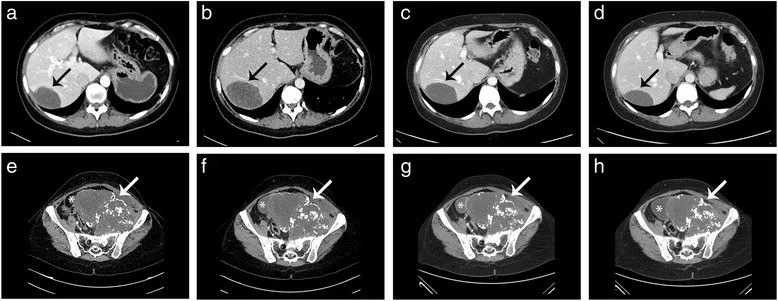
RECIST 1.1, solid tümörlü hastalarda anatomik görüntüleme üzerinden tedavi yanıtını standart biçimde sınıflandırmak için kullanılır; klinik uygulamadaki kullanımı her zaman tedavi protokolü ve tümör tipine özgü kurallarla birlikte düşünülmelidir. Başlangıçta seçilen ölçülebilir odaklar sonraki BT’lerde aynı tanımla ve aynı ölçüm ekseninde izlenir. Lenf düğümünde kısa aks, diğer hedef lezyonlarda uzun çap toplam yanıt hesabına girer. Yeni lezyonun veya hedef dışı hastalıkta belirgin ilerlemenin atlanması toplam çaplar küçülmüş olsa bile progresyonun gözden kaçmasına yol açar.
Faz ve pencere
- Portal tanısal
- Toraks-abdomen-pelviste ölçülebilir yumuşak doku ve nodal odakların sınırları kontrastlı BT serilerinde kaydedilir. RECIST 1.1, ölçümün tekrarlanabilirliği için kontrastlı BT kullanımını önerir ve seri incelemelerde görüntüleme parametrelerinin tutarlı olmasını gerektirir. RECIST 1.1, ölçümün tekrarlanabilirliği için kontrastlı BT kullanımını önerir ve ölçümlerin edinim düzleminde tutarlı olarak yapılmasını şart koşar. Olguların çoğunda RECIST 1.1 uygulanır; ancak hepatoselüler karsinom (mRECIST) veya gastrointestinal stromal tümörler (Choi kriterleri) gibi özel tümör tipleri için farklı yanıt değerlendirme kriterleri kullanılabilir.
Önerilen pencereler: Akciğer (G 1500 / M -600), Mediasten (G 350 / M 50), Batın (G 400 / M 50), Karaciğer (G 150 / M 30), Kemik (G 1800 / M 400), Yumuşak doku (G 400 / M 40).
BT bulguları
- Hedef lezyon — tümör yükünü temsil eden, sınırları seçilebilen ve sonraki kesitlerde güvenilir biçimde yeniden bulunabilen ölçülebilir odak.
- Solid organ veya akciğer kitlesi — aksiyel görüntüde uzun çap ölçülür; aynı düzlem ve lezyon tanımlayıcısı kontrollerde korunur.
- Hedef lenf düğümü — kısa aks ölçülür ve çap toplamına katılır; başlangıç hedef seçimi için kısa aks ≥ 15 mm eşik alınır.
- Hedef dışı hastalık — ölçülebilir eşik altında kalan odaklar, kemik lezyonları veya efüzyon gibi ölçülemeyen bulgular ayrı başlıkta izlenir.
- Yeni lezyon — önceki incelemede bulunmayan ve gerçek yeni hastalık olarak kabul edilebilir odak; hedef toplamı dışında ayrıca tanımlanır.
- Hedef dışı açık progresyon — küçük çap değişimleri değil, tümör yükünde belirgin ve tartışmasız artış karar için önem taşır.
- Kemik metastazı — yumuşak doku bileşeni ölçülebilir hedef olabilir; yalnız litik veya sklerotik kemik odağı çoğu durumda çap toplamına girmez.
Ölçütler ve sınıflamalar
- Toplam seçilebilir hedef lezyon sayısı; en çok iki hedef/organ
- 5 lezyon
- Solid lezyonda ölçülebilir hedef alt sınırı; kesit kalınlığı ≤5 mm
- 10 mm uzun çap
- Kesit kalınlığı >5 mm olduğunda solid lezyon alt sınırı
- 2 × kesit kalınlığı
- Hedef lenf düğümü
- ≥15 mm kısa aks
- Kısmi yanıt
- Başlangıç toplam çapında ≥%30 azalma
- Progresif hastalık
- En küçük toplam çapa göre ≥%20 artış ve mutlak ≥5 mm artış
- RECIST 1.1 genel yanıt kategorileri
- Tam yanıt (CR): hedef lezyonlar kaybolur ve patolojik hedef lenf düğümleri kısa aksta <10 mm olur. Kısmi yanıt (PR): başlangıçtaki hedef çapları toplamında en az %30 azalma. Progresif hastalık (PD): en küçük toplamdan en az %20 ve mutlak 5 mm artış, kesin yeni lezyon veya hedef dışı hastalıkta tartışmasız ilerleme. Stabil hastalık (SD): PR ya da PD eşiğine ulaşmayan değişim.
Normalde
Normal toraks ve batın BT’de lenf düğümleri oval, yağlı hilusu korunmuş ve kısa aksları patolojik boyutta değildir; karaciğer ve akciğer parankiminde fokal kitle görülmez. Solid odaklarda ve lenf düğümlerindeki ölçümler, genellikle aksiyel düzlemde (izotropik rekonstrüksiyon yoksa) alınmalı ve tekrarlanabilirliği açısından tutarlı planlama kullanılmalıdır. Normal görünen boyuttaki lenf düğümü RECIST değerlendirmesinde patolojik hedef sayılmaz.
Normal BT ile kıyasla
Aynı bölgenin, kaynak veri setinde patoloji içermediği belirtilen bir BT incelemesini kesit kesit kaydırın; organ sınırlarını açarak anatomiyi hasta görüntüsüyle karşılaştırın. Küçük rastlantısal bulgular tümüyle dışlanmamıştır.
Kaynak: TotalSegmentator v2.01 veri seti (Wasserthal ve ark., Radiology: Artificial Intelligence 2023), CC BY 4.0, vaka s0119; organ sınırları veri setinin otomatik segmentasyonundan, birleştirilerek sadeleştirildi. Görüntüler 2,5 mm kesit aralığına yeniden örneklendi.
Ayırıcı tanı
- Kaviter enfeksiyöz akciğer odağı
- çevresel konsolidasyon veya hava-sıvı içeriği metastatik solid nodüle karşı ipucu verir.
- Tedavi sonrası fibrozis
- bilinen radyasyon alanında çizgisel veya çekintili doku kitlesel canlı tümörle karıştırılabilir.
Tuzaklar
- Lenf düğümünün uzun aksını ölçmek, RECIST toplamına yanlış çap ekler; nodal ölçüm daima kısa akstan yapılır.
- Kontrol BT’de hedef dışı tek bir küçük odağın artması kendiliğinden PD değildir; değişim tüm hastalık yükünde açık ilerleme oluşturmalıdır.
- Yeni sklerotik kemik odağı tedavi yanıtı sırasında iyileşme sklerozu olabilir; eski seri ve eşlik eden litik/yumuşak doku bileşeniyle karşılaştırın.
- RECIST çapı anatomik tümör boyutunu ölçer; bazı etkili sitostatik tedavilerde tümör boyutunda belirgin değişiklik olmayabilir.
Kendini dene
Kontrol incelemede hedef çap toplamı başlangıca göre azalıyor; ancak önceki seride olmayan kesin yeni karaciğer metastazı var. RECIST 1.1 yanıtı nedir?
Cevabı göster
Progresif hastalık. Kesin yeni lezyon progresyon ölçütüdür; hedef çaplarının azalması yeni hastalığın sınıflamaya etkisini ortadan kaldırmaz. PR yalnız hedef çap toplamındaki azalmaya, SD eşik dışı değişime dayanır.
RECIST 1.1'de bir lenf düğümünün takip ölçümünde hangi aks kullanılır?
Cevabı göster
Kısa aks. Lenf düğümleri RECIST 1.1’de kısa aks üzerinden ölçülür; hedef lenf düğümü için başlangıç ölçüm eşiği 15 mm kısa akstır. Uzun aks, çapların toplamı ve hacim nodal ölçüm ölçütü değildir.
Bu konunun yer aldığı turlar
İlgili konular
Kaynaklar
Bu sayfadaki 47 cümle ve 2 quiz sorusu aşağıdaki kaynaklardan alıntılarla tek tek karşılaştırıldı; 6 cümle bu karşılaştırmada düzeltildi (2026-10-08).
- Cancer Response Criteria and Bone Metastases: RECIST 1.1, MDA and PERCISTpmc.ncbi.nlm.nih.gov
- Everolimus Reduces (89)Zr-Bevacizumab Tumor Uptake in Patients with Neuroendocrine Tumors.pubmed.ncbi.nlm.nih.gov
- 68 Ga-DOTATATE PET/CT parameters predict response to peptide receptor radionuclide therapy in neuroendocrine tumours.pubmed.ncbi.nlm.nih.gov
- The prognostic role of whole-body volumetric 68 GA-DOTATATE PET/computed tomography parameters in patients with gastroenteropancreatic neuroendocrine tumor treated with 177 LU-DOTATATE.pubmed.ncbi.nlm.nih.gov
- Prediction of [ 177 Lu]Lu-DOTA-TATE therapy response using the absorbed dose estimated from [ 177 Lu]Lu-DOTA-TATE SPECT/CT in patients with metastatic neuroendocrine tumour.pubmed.ncbi.nlm.nih.gov
- Validity of RECIST Version 1.1 for Response Assessment in Metastatic Cancer: A Prospective, Multireader Study.pubmed.ncbi.nlm.nih.gov
- Radiology Reports With Hyperlinks Improve Target Lesion Selection and Measurement Concordance in Cancer Trials.pubmed.ncbi.nlm.nih.gov
- Exploring CT Texture Parameters as Predictive and Response Imaging Biomarkers of Survival in Patients With Metastatic Melanoma Treated With PD-1 Inhibitor Nivolumab: A Pilot Study Using a Delta-Radiomics Approach.pubmed.ncbi.nlm.nih.gov
- Volume-based response evaluation with consensual lesion selection: a pilot study by using cloud solutions and comparison to RECIST 1.1.pubmed.ncbi.nlm.nih.gov
- A CT Dataset with RECIST Measurements and Comprehensive Segmentation Masks for Tumors and Lymph Nodes.pubmed.ncbi.nlm.nih.gov
- ESR Essentials: response assessment criteria in oncologic imaging-practice recommendations by the European Society of Oncologic Imaging.pubmed.ncbi.nlm.nih.gov
- Target lesion selection: an important factor causing variability of response classification in the Response Evaluation Criteria for Solid Tumors 1.1.pubmed.ncbi.nlm.nih.gov
- HAIC-Based Combination Therapy for Advanced Hepatocellular Carcinoma with Vp4 Portal Vein Tumor Thrombus and Child-Pugh B Liver Function: A Case Report.pubmed.ncbi.nlm.nih.gov
- Nivolumab Plus Lenvatinib and Intra-Arterial Locoregional Therapy as First-Line Treatment for Unresectable Hepatocellular Carcinoma: A Real-World Study.pubmed.ncbi.nlm.nih.gov
- Safety and Efficacy of Adebrelimab plus Apatinib Combined with Hepatic Artery Infusion Chemotherapy for the Treatment of Unresectable Hepatocellular Carcinoma: A Retrospective Study.pubmed.ncbi.nlm.nih.gov
- Radiologic Response Assessment With RECIST 1.1 and mRECIST in Patients With Hepatocellular Carcinoma Treated With Atezolizumab Plus Bevacizumab.pubmed.ncbi.nlm.nih.gov
- Multicenter AI- versus expert-assisted RECIST target lesion measurements in follow-up body CT of patients with cancer.pubmed.ncbi.nlm.nih.gov
- Assessing the reliability of Response Evaluation Criteria In Solid Tumors (RECIST): a systematic review of the factors contributing to inter-observer variability.pubmed.ncbi.nlm.nih.gov
- Medical imaging in immunotherapy response evaluation: from RECIST to AI-driven longitudinal models, and the distinction between risk prediction and kinetic diagnosis.pubmed.ncbi.nlm.nih.gov
- WiNGPT-32B: An Open-Source, Locally Deployable LLM for RECIST Assessment via Chained Task Execution Using Radiology Report Text.pubmed.ncbi.nlm.nih.gov
- Pretreatment prognostic nutritional index and immune status for response to preoperative neoadjuvant chemotherapy in cervical squamous cell carcinoma: an exploratory retrospective study.pubmed.ncbi.nlm.nih.gov
- Case Report: Treatment of an unresectable mucoepidermoid carcinoma with osimertinib.pubmed.ncbi.nlm.nih.gov
- A partial response to atezolizumab in alveolar soft part sarcoma with near-complete resolution of extensive pulmonary metastases: a case report.pubmed.ncbi.nlm.nih.gov
- Heterogeneous treatment response in metastatic breast cancer: discordance between FDG-PET and CT classification.pubmed.ncbi.nlm.nih.gov
- Histological transformation into pulmonary sarcomatoid carcinoma from lung adenosquamous carcinoma after radical resection of EGFR gene Exon-21 L858R mutation: a case report and literature review.pubmed.ncbi.nlm.nih.gov
- Minimal residual disease and relapse surveillance in osteosarcoma: an action-linked framework integrating liquid biopsy and imaging biomarkers.pubmed.ncbi.nlm.nih.gov
- Cryoablation combined with immunotherapy: new strategies and progress in the treatment of tumors.pubmed.ncbi.nlm.nih.gov
- Bevacizumab plus iparomlimab/tuvonralimab with hepatic artery infusion chemotherapy followed by stereotactic body radiotherapy in patients with BCLC stage C hepatocellular carcinoma with thrombus and/or extrahepatic oligometastases (BITS-TO-HCC): study protocol of a prospective, single-center, single-arm, phase II study.pubmed.ncbi.nlm.nih.gov
- Stereotactic body radiation therapy for hepatocellular carcinoma: 2026 expert consensus-based practical recommendation of the Korean Liver Cancer Association.pubmed.ncbi.nlm.nih.gov
- The role of stereotactic body radiotherapy in the management of hepatocellular carcinoma with macroscopic vascular invasion: a narrative review.pubmed.ncbi.nlm.nih.gov
- Correlating Radiomic Features of Heterogeneity on CT with Circulating Tumor DNA in Metastatic Melanoma.pubmed.ncbi.nlm.nih.gov
- Commentary: an eye on PET quantification.pubmed.ncbi.nlm.nih.gov
- Long-term safety and effectiveness of the "OptEase" vena cava filter.pubmed.ncbi.nlm.nih.gov
- Immune checkpoint inhibition in bone metastases: lesion response heterogeneity, the osteoimmune niche, and microenvironment-directed therapy.pubmed.ncbi.nlm.nih.gov
- Automated model-based lesion tracking in CT: colorectal liver metastases as a use case for development and performance analysis.pubmed.ncbi.nlm.nih.gov
- A Chemotherapy Progression Decision Score for Treatment Selection After Initial Assessment in Pancreatic Ductal Adenocarcinoma.pubmed.ncbi.nlm.nih.gov
- Conversion-intent PD-1-based chemoimmunotherapy restores surgical feasibility in borderline resectable or unresectable non-head-and-neck cutaneous squamous cell carcinoma.pubmed.ncbi.nlm.nih.gov
- Deep Learning Quality Control for RECIST-Oriented Assessment: A Vision Transformer Predicts Inter-Reader Variability of Unidimensional Lesion Measurements on Contrast CT.pubmed.ncbi.nlm.nih.gov
- Defining the abscopal effect in non-small cell lung cancer in the era of immunotherapy and lung ablation treatment: a narrative review.pubmed.ncbi.nlm.nih.gov
- Treatment Patterns and Prognostic Nomograms for Overall Survival and Hepatic Progression-Free Survival in Unresectable Colorectal Liver Metastases Treated with Drug-Eluting Bead Chemoembolization: A Single-Center Study.pubmed.ncbi.nlm.nih.gov
- Challenges in tracer development for tumor microenvironment (TME) imaging.pubmed.ncbi.nlm.nih.gov
- Targeting VEGF signaling and stromal remodeling enhances chemoimmunotherapy efficacy in esophageal cancer.pubmed.ncbi.nlm.nih.gov
- Baseline and Early On-Treatment Prognostic Nutritional Index in Hormone Receptor-Positive, HER2-Negative Metastatic Breast Cancer Treated with CDK4/6 Inhibitors.pubmed.ncbi.nlm.nih.gov
- Modeling and targeting the hostile physicochemical niche in bone metastasis: from experimental platforms to niche-directed therapy.pubmed.ncbi.nlm.nih.gov
- Efficacy and Safety of Moderate-Dose Stereotactic Body Radiation Therapy (SBRT) for Patients with Oligometastatic Lung Cancer Unfit for Standard SBRT: A Preliminary Single-Center Study.pubmed.ncbi.nlm.nih.gov
- Consensus statements on the definition, diagnosis, and management of oligoprogressive disease: results of an expert survey of Kazakhstan Cancer Society.pubmed.ncbi.nlm.nih.gov
- Theranostic Approaches to Radioiodine-Refractory Differentiated Thyroid Cancer: A Narrative Review.pubmed.ncbi.nlm.nih.gov
- CT radiomics showed no improvement beyond volume dynamics for early lesion-level size response to immunotherapy in metastatic melanoma.pubmed.ncbi.nlm.nih.gov
- The legend of the response evaluation criteria in solid tumors: A historical overview.pubmed.ncbi.nlm.nih.gov
- A Foundation Model Based CT Biomarker for Non-Invasive Prediction of Response to Neoadjuvant Immunochemotherapy in Non-Small Cell Lung Cancer.pubmed.ncbi.nlm.nih.gov
- Radiomics-Based Prediction of Treatment Response in Non-Small Cell Lung Cancer Using Pre-Treatment CT Imaging Features.pubmed.ncbi.nlm.nih.gov
- Computed tomographic Characteristics of Presumed Normal Canine Iliosacral Lymph Nodes.pubmed.ncbi.nlm.nih.gov
- Radiologic response assessment in patients with desmoid-type fibromatosis treated with percutaneous cryoablation.pubmed.ncbi.nlm.nih.gov
- Pulsed Electric Field Ablation for Advanced Lung and Oligometastatic Disease: A Retrospective Study of 32 Consecutive Patients in a Community Hospital Setting.pubmed.ncbi.nlm.nih.gov
- Safety and efficacy of drug-eluting beads versus conventional bronchial arterial chemoembolization for lung cancer: a systematic review and meta-analysis.pubmed.ncbi.nlm.nih.gov
- Hypofractionated radiotherapy for localized prostate cancer.pubmed.ncbi.nlm.nih.gov
- High-affinity alphavbeta3 integrin targeted optical probe as a new imaging biomarker for early atherosclerosis: initial studies in Watanabe rabbits.pubmed.ncbi.nlm.nih.gov
- A Rare Case of Hodgkin Lymphoma With Isolated Epitrochlear Lymphadenopathy. Our Experience and Main Differential Diagnosis.pubmed.ncbi.nlm.nih.gov
- Anatomy, Imaging, and Surgical Treatment of Thoracic Lymphadenopathies in Advanced Epithelial Ovarian Cancer.pubmed.ncbi.nlm.nih.gov
- Linear endoscopic ultrasound: Current uses and future perspectives in mediastinal examination.pubmed.ncbi.nlm.nih.gov
- Navigating the immunosuppressive abyss: current hurdles and innovative breakthroughs in neoadjuvant immunotherapy for osteosarcoma.pubmed.ncbi.nlm.nih.gov
- Advancing Esophageal Cancer Staging and Restaging: The Role of MRI in Precision Diagnosis.pubmed.ncbi.nlm.nih.gov
- Fully Automated AI-Based Lymph Node Measurements in Chest CT: Accuracy and Reproducibility Compared with Multi-Reader Assessment.pubmed.ncbi.nlm.nih.gov
- Correlation between tumor mutational burden and CT radiographic features in EGFR exon 19 deletion-mutated lung adenocarcinoma: a diagnostic accuracy study.pubmed.ncbi.nlm.nih.gov
- Lymph Node Staging and Treatment in Pediatric Patients With Soft Tissue Sarcomas: A Consensus Opinion From the Children's Oncology Group, European paediatric Soft Tissue Sarcoma Study Group, and the Cooperative Weichteilsarkom Studiengruppe.pubmed.ncbi.nlm.nih.gov
- Integrated longitudinal analysis of ctDNA, radiologic response, and tumor volume reveals spatial and temporal heterogeneity in advanced melanoma.pubmed.ncbi.nlm.nih.gov
- Complete response of a giant metastatic neck mass in tonsillar squamous cell carcinoma achieved with radiotherapy combined with immunotherapy: a case report.pubmed.ncbi.nlm.nih.gov
- All-site radiotherapy for metastatic ewing's sarcoma: a short-term analysis of feasibility, response, and safety.pubmed.ncbi.nlm.nih.gov
- Radiologists and treatment response assessment: conventional and functional radiological criteria for predicting therapeutic response in virus-related and non-virus-related cancers.pubmed.ncbi.nlm.nih.gov
- Safety and efficacy of first-line iparomlimab and tuvonralimab (QL1706) plus carboplatin and etoposide in patients with extensive-stage small cell lung cancer: an open-label, single-arm, phase 2 trial (DUBHE-L-209).pubmed.ncbi.nlm.nih.gov
- Efficacy and safety of neoadjuvant chemotherapy with immunotherapy versus chemotherapy alone in esophageal squamous cell carcinoma: a meta-analysis based on randomized controlled trials.pubmed.ncbi.nlm.nih.gov
- Efficacy and safety of bupleurum-containing formulas combined with chemotherapy for triple-negative breast cancer: a systematic review and meta-analysis.pubmed.ncbi.nlm.nih.gov
- A prospective pilot study to evaluate the impact of palliative radiotherapy in upfront inoperable/chemo unfit patients with extrahepatic biliary tract tumors.pubmed.ncbi.nlm.nih.gov
- Insights on Oligometastatic Non-Small-Cell Lung Cancer.pubmed.ncbi.nlm.nih.gov
- 2025 American Thyroid Association Management Guidelines for Adult Patients with Differentiated Thyroid Cancer.pubmed.ncbi.nlm.nih.gov
- Tumor-Informed ddPCR for Personalized Longitudinal ctDNA Monitoring in Advanced Solid Tumors: Molecular-Radiological Concordance and Molecular Lead Time.pubmed.ncbi.nlm.nih.gov
- [<sup>99m</sup>Tc]Tc-FAPI-04 SPECT/CT for initial staging of gastrointestinal malignancies: a prospective comparison with contrast-enhanced CT.pubmed.ncbi.nlm.nih.gov
- Double Diagnostic Dilemma in Metaplastic Breast Carcinoma.pubmed.ncbi.nlm.nih.gov
- Current Advances of Treatments, Therapeutic Targets, Biomarkers, Novel Drugs, and Machine Learning for Hypopharyngeal Squamous Cell Carcinoma.pubmed.ncbi.nlm.nih.gov
- Characteristic CT Imaging Features of Atraumatic Peritoneal and Subperitoneal Pathologies in Emergency Settings: A Pictorial Review.pubmed.ncbi.nlm.nih.gov
- Update on Renal Cell Carcinoma Diagnosis with Novel Imaging Approaches.pubmed.ncbi.nlm.nih.gov
- Tips and Tricks in Thoracic Radiology for Beginners: A Findings-Based Approach.pubmed.ncbi.nlm.nih.gov
- Lipoid Pneumonia: HRCT and MRI Spectrum, Diagnostic Pitfalls, and Imaging-Based Diagnostic Workflow.pubmed.ncbi.nlm.nih.gov
- Aspergillosis: An Update on Epidemiology, Risk Factors, Diagnosis, Susceptibility, and Treatment.pubmed.ncbi.nlm.nih.gov
- Spectrum of Imaging Patterns of Lung Cancer following Radiation Therapy.pubmed.ncbi.nlm.nih.gov
- Integrating Immunotherapy Into Head and Neck Surgery: Bridging Tumor Biology to Perioperative Decision-Making, a Review.pubmed.ncbi.nlm.nih.gov
- The Invasive Margin of Glioblastoma as a Molecular Ecosystem: Spatial Heterogeneity, Tumor-Host Interactions, and Therapeutic Opportunities.pubmed.ncbi.nlm.nih.gov
- Therapeutic Time Migration in Hepatocellular Carcinoma: Rethinking the Timing of Systemic Therapy Across the Disease Continuum.pubmed.ncbi.nlm.nih.gov
- Modified RECIST submodels and ordinal regression model predict neoadjuvant chemoimmunotherapy response in locally advanced gastric cancer.pubmed.ncbi.nlm.nih.gov
- Setting the standard: empirical benchmarks for case-level site-central discordance in radiographic endpoints in oncology clinical trials.pubmed.ncbi.nlm.nih.gov
- Comprehensive review of post-treatment imaging in head and neck cancers: from expected to unexpected and beyond.pubmed.ncbi.nlm.nih.gov
- Bone Metastases Are Measurable: The Role of Whole-Body MRI and Positron Emission Tomography.pubmed.ncbi.nlm.nih.gov
- Measurable imaging-based changes in enhancement of intrahepatic cholangiocarcinoma after radiotherapy reflect physical mechanisms of response.pubmed.ncbi.nlm.nih.gov
- Magnetic Resonance-Guided Radiotherapy for Unresectable Hepatocellular Carcinoma with Bile Duct Tumor Thrombus: A Case Series and Review of Treatment Options.pubmed.ncbi.nlm.nih.gov
- TACE-HAIC Plus Targeted Therapy and Immunotherapy for HCC with Tumor Thrombus and Arteriovenous Fistula.pubmed.ncbi.nlm.nih.gov
- Liver transplantation as a treatment for cancer: comprehensive review.pubmed.ncbi.nlm.nih.gov
- Exploring the Interobserver Agreement in Computer-Aided Radiologic Tumor Measurement and Evaluation of Tumor Response.pubmed.ncbi.nlm.nih.gov
- From CNNs to SAM: A Survey of Deep Learning Techniques for Liver Tumor Segmentation in CT Images.pubmed.ncbi.nlm.nih.gov
- From RECIST to PERCIST: Evolving Considerations for PET response criteria in solid tumors.pubmed.ncbi.nlm.nih.gov
- DICOM structured reporting and cancer clinical trials results.pubmed.ncbi.nlm.nih.gov
- Urothelial carcinoma with trophoblastic differentiation: case report and review of literature.pubmed.ncbi.nlm.nih.gov
- Correlation of the Diagnostic Accuracy of Dual Energy Computed Tomography and Positron Emission Tomography/Computed Tomography in Mediastinal Lymph Node Staging in Lung Cancer: A Systematic Review.pubmed.ncbi.nlm.nih.gov
- Artificial intelligence for rapid on-site evaluation of lymph node fine-needle aspiration: improving diagnostic efficiency and accuracy.pubmed.ncbi.nlm.nih.gov
- Radiologic-Pathologic Correlation in Biliary Cystic Neoplasms: Insights From a Single-Centre Experience.pubmed.ncbi.nlm.nih.gov
- Multiphase CT-derived markers for the characterization of large solid and cystic renal masses by histology and grade.pubmed.ncbi.nlm.nih.gov
- RADS ALPHABET: news and tips for young and general radiologists.pubmed.ncbi.nlm.nih.gov
- Metagenomic next-generation sequencing facilitates precision treatment and prognostic improvement in pulmonary cryptococcosis.pubmed.ncbi.nlm.nih.gov
- Cavitary Pneumonia Causes in the Arid Landscapes of Southern Arizona.pubmed.ncbi.nlm.nih.gov
- Role of Multidetector Computed Tomography in Differentiation of Benign and Malignant Cavitary Lung Lesions With a Histopathological Correlation: A Retrospective Cross-Sectional Study.pubmed.ncbi.nlm.nih.gov
- Accuracy of percutaneous ultrasound-guided needle biopsy of abdominal lymph nodes for the diagnosis of malignant disease.pubmed.ncbi.nlm.nih.gov
- Fusing Radiomics and Ultrasonic Features: A Superior Nomogram for Diagnosing Cervical Tuberculous Lymphadenitis.pubmed.ncbi.nlm.nih.gov
Eğitim amaçlıdır; hasta başında tanı ve tedavi kararının yerine geçmez. İçerik yapay zekâ destekli bir süreçle güncel literatüre göre cümle cümle kaynaklarla karşılaştırıldı, ancak uzman radyolog incelemesinden geçmedi. Klinik kararlarda güncel kılavuzları, kurum protokollerini ve radyoloji raporunu esas alın.