Özet
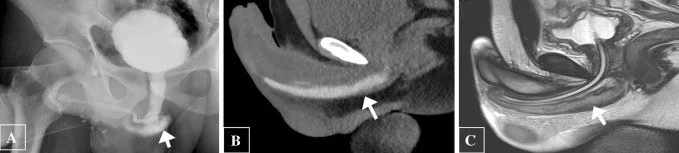
Pelvik kırıklar alt üriner sistem yaralanmalarıyla ilişkili olabilir; pelvik travmada meatus kanı üretra yaralanması şüphesini artırır. BT, ürogenital diyafram yağ planı bozulması, prostat kontur düzensizliği veya bulbokavernöz ve obturator internus kaslarında hematom gibi üretra yaralanmasını düşündüren dolaylı bulgular gösterebilir; üretra yaralanmalarını saptamada BT, retrograd üretrografiden daha az etkilidir. Erken değerlendirmede erkek üretra yaralanmasının standart görüntülemesi retrograd üretrografidir. BT, üretra yaralanmasını düşündüren dolaylı bulgular gösterebilir; tanıda retrograd üretrografi altın standarttır ve yaralanma üretral darlık, erektil disfonksiyon veya üriner inkontinans gibi uzun dönem sorunlara yol açabilir.
Faz ve pencere
- Kontrastsız
- BT, ürogenital diyafram yağ planı bozulması, prostat kontur düzensizliği veya bulbokavernöz ve obturator internus kaslarında hematom gibi üretra yaralanmasını düşündüren dolaylı bulgular gösterebilir; bu bulgular tanı koydurucu değildir.
- Portal
- IV kontrastlı travma serisinde pelvis içi kanamanın yayılımı ve eşlik eden organ yaralanmaları değerlendirilir; damar yoluyla verilen kontrast üretra içine retrograd dolum sağlamaz.
Önerilen pencereler G genişlik, M merkez; değerler Hounsfield birimi (HU)
- KemikG 1800 / M +400
- Yumuşak dokuG 400 / M +40
- BatınG 400 / M +50
BT bulguları
- Pelvik kırıkla birlikte, bulbokavernöz veya obturator internus kasını tutan hematom üretra yaralanması için dolaylı bir BT bulgusu olabilir.
- Prostat kontur düzensizliği veya bulbokavernöz ya da obturator internus kasını tutan hematom, üretra yaralanmasını düşündürebilecek dolaylı BT bulgularıdır.
- Straddle travmaları ve diğer darbe mekanizmaları üretra yaralanmalarına yol açabilir.
- Retrograd üretrografide (BT bulgusu değildir) üretra konturundan dışarı taşan opak maddenin perine ya da pelvik taban planlarına dağılması üretra yaralanmasını gösterir.
- Pelvik kırıkla ilişkili üretra yaralanmasının ilk değerlendirmesinde retrograd üretrografi tercih edilen yöntemdir; çocuk ve ergenlerde gecikmiş rekonstrüksiyon öncesinde çıkan üretrografi, işeme sistoüretrografisi ve retrograd/antegrad üretroskopi üretral açıklığın yerini ve uzunluğunu tanımlamaya yardımcı olur.
- Çocuklarda posterior üretra rüptürüne mesane boynu yırtığı veya rektal laserasyon eşlik edebilir.
Normalde
Normal pelvik BT'de prostat apeksi çevresindeki yağ planları korunur; üretra çevresinde hematom veya kırığa komşu ekstraperitoneal kanama yoktur. Rutin IV kontrastlı seride üretra lümeni zaten opaklaşmayabileceğinden normal kıyas, kemik halkasının ve periüretral dokuların simetrisini gösterir; açıklık kararı üretrografiye bırakılır.
Normal BT ile kıyasla
Aynı bölgenin, kaynak veri setinde patoloji içermediği belirtilen bir BT incelemesini kesit kesit kaydırın; organ sınırlarını açarak anatomiyi hasta görüntüsüyle karşılaştırın. Küçük rastlantısal bulgular tümüyle dışlanmamıştır.
Kaynak: TotalSegmentator v2.01 veri seti (Wasserthal ve ark., Radiology: Artificial Intelligence 2023), CC BY 4.0, vaka s0119; organ sınırları veri setinin otomatik segmentasyonundan, birleştirilerek sadeleştirildi. Görüntüler 2,5 mm kesit aralığına yeniden örneklendi.
Ayırıcı tanı
- Mesane ekstraperitoneal rüptürü
- pelvik kırıkla ilişkili olabilir; mesane yaralanmaları retrograd sistografi veya BT sistografiyle değerlendirilir.
- Pelvik hematom
- damar dışı kanama yumuşak dokuyu doldurur; lümen içi kontrast incelemesi yoksa üretral yırtığı kanıtlamaz.
- Bulber üretra yaralanması
- penoskrotal şişlikle ortaya çıkabilir; üretrografi yaralanmanın tanı ve iyileşme değerlendirmesinde kullanılabilir.
- Penil fraktür
- tunika albuginea ve korpus kavernozum yaralanması ön plandadır; üretra eşlikçi olarak ayrıca incelenir.
Tuzaklar
- Periüretral kanama yaralanma kuşkusunu artırır fakat BT bulguları kesin tanı koydurmaz.
- IV kontrastın mesanede görülmesi retrograd üretral opaklaştırma değildir; protokolde üretra içine uygulama yoksa lümen hakkında sonuç çıkarma.
- Retrograd üretrografi ve işeme sistoüretrografisi gecikmiş rekonstrüksiyon öncesinde defektin yerini ve uzunluğunu tanımlamaya yardımcı olur; defektin özellikleri en doğru biçimde cerrahi ekspozisyonda değerlendirilir.
- Pelvik kırık yokluğu straddle kaynaklı ön üretra hasarını dışlamaz; perineal mekanizmayı ve klinik şüpheyi ayrı değerlendir.
- Retrograd üretrografide üretra dışına kontrast kaçağı üretra yaralanmasını destekler.
Kendini dene
Pelvik kırık ve prostat apeksi çevresinde kanama var; rutin IV kontrastlı BT üretrayı doğrudan göstermiyor. Hasarı doğrulayacak bulgu hangisidir?
Cevabı göster
Retrograd üretrografide lümen dışı opaklaşma. Üretra içine retrograd verilen kontrastın lümen dışına yayılması yaralanmayı doğrular. IV kontrastlı BT'deki kanama kuşku uyandırır; venöz trombüs, prostat kalsifikasyonu ve üst üriner sistem bulguları üretra duvar bütünlüğünü göstermez.
Pelvik kırık sonrası üretra yaralanmasından kuşkulanılıyor; BT yalnızca dolaylı hematom gösteriyor. Tanıyı doğrulayacak ilk inceleme hangisidir?
Cevabı göster
Retrograd üretrografi. Üretra yaralanmasında retrograd üretrografi tanı için altın standarttır; BT bulguları kesin tanı koydurmaz, diğer seçenekler üretra lümenini değerlendirmez.
İlgili konular
Kaynaklar
Bu sayfadaki 36 cümle ve 2 quiz sorusu aşağıdaki kaynaklardan alıntılarla otomatik olarak karşılaştırıldı; 11 cümle bu karşılaştırmada düzeltildi (2026-10-10).
- Khat-induced intravesical coiling of a self-inserted urethral serum set: a rare cause of acute urinary retention requiring open bladder surgerypmc.ncbi.nlm.nih.gov
- Diagnostic challenges in blunt pelvic fracture-related lower urinary tract injuries: a 13-year retrospective studypmc.ncbi.nlm.nih.gov
- Clinical Presentation and Surgical Management of Penile Carcinoma: A Retrospective Case Series from a Tertiary Referral Centerpmc.ncbi.nlm.nih.gov
- Successful Endourological Management of Encrusted Metallic Ureteral Stents: A Case-Series of Three Patientspmc.ncbi.nlm.nih.gov
- Acute Cauda Equina Syndrome With Clinicoradiological Discordance Treated via Unilateral Biportal Endoscopy: A Case Reportpmc.ncbi.nlm.nih.gov
- Added Clinical Benefit of Voiding Cystourethrography Combined With Standard-of-Care Retrograde Urethrography for Adult Male Urethral Strictures and Urethral Injuries: A Pictorial Review.pubmed.ncbi.nlm.nih.gov
- Isolated Urethral Injury Without Penile Fracture: A Case Report.pubmed.ncbi.nlm.nih.gov
- Immediate repair in complete anterior urethral injury caused by blunt trauma: a case report and literature review.pubmed.ncbi.nlm.nih.gov
- Urinary tract injures: recognition and management.pubmed.ncbi.nlm.nih.gov
- Flexible cystoscopy-guided realignment of traumatic urethral disruption in pelvic fracture: A case report.pubmed.ncbi.nlm.nih.gov
- A novel innovation using modified platelet-rich plasma (mPRP) for preventing urethral stricture recurrence in a rabbit model.pubmed.ncbi.nlm.nih.gov
- Early versus delayed urethroplasty for pediatric pelvic fracture-related urethral injury in boys: a retrospective comparative cohort study of complications and surgical success rates from a single center.pubmed.ncbi.nlm.nih.gov
- Choosing the Right Catheter for Pediatric Procedures: Patient Considerations and Preference.pubmed.ncbi.nlm.nih.gov
- 2012 CUA Abstracts.pubmed.ncbi.nlm.nih.gov
- Patterns of injury and violence in Yaoundé Cameroon: an analysis of hospital data.pubmed.ncbi.nlm.nih.gov
- Irreducible Locked Symphysis Pubis Disruption Caused by Incarcerated Urinary Bladder in a 14-year-Old Boy, a Case Report and Review of the Literature.pubmed.ncbi.nlm.nih.gov
- Comprehensive Orthopedic Management of an Open-Book Pelvic Fracture: A Multidisciplinary Approach in Trauma Care.pubmed.ncbi.nlm.nih.gov
- Management of Pelvic Ring Injury Patients With Hemodynamic Instability.pubmed.ncbi.nlm.nih.gov
- A multimodality review of male urethral imaging: pearls and pitfalls with an update on urethral stricture treatment.pubmed.ncbi.nlm.nih.gov
- Traumatic Posterior Urethral Strictures in Children and Adolescents.pubmed.ncbi.nlm.nih.gov
- A Comprehensive Review Emphasizing Anatomy, Etiology, Diagnosis, and Treatment of Male Urethral Stricture Disease.pubmed.ncbi.nlm.nih.gov
- Simultaneous reconstruction of bulbar urethra and anal sphincter complex: A case report on dual repair in trauma management.pubmed.ncbi.nlm.nih.gov
- Urethral Injuries: Diagnostic and Management Strategies for Critical Care and Trauma Clinicians.pubmed.ncbi.nlm.nih.gov
- Isolated Spongy Urethral Rupture from Abrupt Coital Distractive Force.pubmed.ncbi.nlm.nih.gov
- The Japan Society of Coloproctology Practice Guidelines for Fecal Incontinence 2024 (Revised Second Edition).pubmed.ncbi.nlm.nih.gov
- Clinical Applications of Extracellular Vesicles: Promises and Pitfalls.pubmed.ncbi.nlm.nih.gov
- PI-RADS Prostate Imaging - Reporting and Data System: 2015, Version 2.pubmed.ncbi.nlm.nih.gov
- MR imaging of treated prostate cancer.pubmed.ncbi.nlm.nih.gov
- Isolated Lymphatic Injury Mimicking Bladder Rupture in a Young Male Following Blunt Trauma: A Case Report.pubmed.ncbi.nlm.nih.gov
- Computed tomography of pediatric abdominal trauma: optimizing utilization and enhancing diagnostic interpretation.pubmed.ncbi.nlm.nih.gov
- Spectrum of Multidetector Computed Tomography Imaging Findings in Iatrogenic Abdominopelvic Injuries: A Comprehensive Pictorial Review.pubmed.ncbi.nlm.nih.gov
- Love hurts: Conservative management of a rare isolated urethral tear after intercourse.pubmed.ncbi.nlm.nih.gov
- A Double Tragedy of Coexisting Penile Fracture and Urethral Injury: A Case Report and Review of Literature.pubmed.ncbi.nlm.nih.gov
- Penile Fracture; an Emergency Managed Successfully in A Rural Setting: A Case Report.pubmed.ncbi.nlm.nih.gov
- Total laparoscopic radical hysterectomy for cervical cancer in prolapsed uterus.pubmed.ncbi.nlm.nih.gov
- Imaging of the adult male urethra, penile prostheses and artificial urinary sphincters.pubmed.ncbi.nlm.nih.gov
- CT of Penetrating Abdominopelvic Trauma.pubmed.ncbi.nlm.nih.gov
- Bilateral traumatic testicular dislocation associated with an unstable pelvic ring injury: a rare case report and literature review.pubmed.ncbi.nlm.nih.gov
- Diagnostic challenges in blunt pelvic fracture-related lower urinary tract injuries: a 13-year retrospective study.pubmed.ncbi.nlm.nih.gov
- Pelvic ring injuries: Emergency assessment and management.pubmed.ncbi.nlm.nih.gov
- Use of Dynamic Magnetic Resonance of the Urethra in Surgical Planning of Vesicourethral Anastomotic Stenosis Urethroplasty.pubmed.ncbi.nlm.nih.gov
- Urinary tract infections and catheter-associated urinary tract infections caused by <i>Pseudomonas aeruginosa</i>.pubmed.ncbi.nlm.nih.gov
- International Harmonization of Nomenclature and Diagnostic Criteria (INHAND): Nonproliferative and Proliferative Lesions of the Rabbit.pubmed.ncbi.nlm.nih.gov
- Imaging modalities for the detection of posterior pelvic floor disorders in women with obstructed defaecation syndrome.pubmed.ncbi.nlm.nih.gov
- Penetrating Trauma to the Ureter, Bladder, and Urethra.pubmed.ncbi.nlm.nih.gov
- Commentary: an eye on PET quantification.pubmed.ncbi.nlm.nih.gov
- Long-term safety and effectiveness of the "OptEase" vena cava filter.pubmed.ncbi.nlm.nih.gov
- Khat-induced intravesical coiling of a self-inserted urethral serum set: a rare cause of acute urinary retention requiring open bladder surgery.pubmed.ncbi.nlm.nih.gov
- Clinical Presentation and Surgical Management of Penile Carcinoma: A Retrospective Case Series from a Tertiary Referral Center.pubmed.ncbi.nlm.nih.gov
- Reconstructing manhood: a unique case report of a penile gunshot wound and its surgical management.pubmed.ncbi.nlm.nih.gov
- Management of pelvic injuries in hemodynamically unstable polytrauma patients - Challenges and current updates.pubmed.ncbi.nlm.nih.gov
- Pseudoaneurysm of the Left Renal Segmental Artery With Delayed Detection After Blunt Trauma.pubmed.ncbi.nlm.nih.gov
- Congenital hypospadias complicated with pelvic cystic lesions and accessory urethra:A case report.pubmed.ncbi.nlm.nih.gov
- Disease- and Treatment-related Complication on F-18-Fluorodeoxyglucose Positron Emission Tomography/Computed Tomography in Oncology Practice: A Pictorial Review.pubmed.ncbi.nlm.nih.gov
- Managing urethral injuries in suburban India-general surgeon's perspective.pubmed.ncbi.nlm.nih.gov
- Noniatrogenic Urethral Trauma in Children: A Narrative Review.pubmed.ncbi.nlm.nih.gov
- Strategies for the removal of short-term indwelling urethral catheters in adults.pubmed.ncbi.nlm.nih.gov
- Diagnosis in Bytes: Comparing the Diagnostic Accuracy of Google and ChatGPT 3.5 as an Educational Support Tool.pubmed.ncbi.nlm.nih.gov
- Role of Perineal Urethrostomy in Reconstructive Urology.pubmed.ncbi.nlm.nih.gov
- Salvage of a Penetrating Bilateral Testicular Gunshot Injury Using an Autologous Free Tunica Albuginea Graft from the Excised Contralateral Testis: A Case Report.pubmed.ncbi.nlm.nih.gov
- Urine in the thigh, an extraordinary complication of pelvic fracture: Vesicocutaneous fistula.pubmed.ncbi.nlm.nih.gov
- Catastrophic pelvic-perineal injuries with traumatic hemipelvectomy following a motorcycle collision: a multidisciplinary reconstruction case report.pubmed.ncbi.nlm.nih.gov
- Combined Anterior Transmembranous Posterior Urethral Bulbar (CATPUB) cuff placement: A novel surgical technique for AUS implantation after severe pelvic trauma - a retrospective cohort study.pubmed.ncbi.nlm.nih.gov
- Clinical Characteristics and In-Hospital Outcomes of Traumatic Bladder Rupture: An 11-Year Retrospective Cohort Study at a Single Regional Trauma Center.pubmed.ncbi.nlm.nih.gov
- A Case of Bladder Perforation With Rectal Impalement Injury.pubmed.ncbi.nlm.nih.gov
- The Role of Magnetic Resonance Imaging in Preoperative Evaluation of Anterior Obliterative Urethral Strictures.pubmed.ncbi.nlm.nih.gov
- Management of pelvic fracture urethral injury.pubmed.ncbi.nlm.nih.gov
- Bladder neck displacement and its relevance to difficult repair of pelvic fracture urethral injury: A retrospective study.pubmed.ncbi.nlm.nih.gov
- Bleeding without fracture: Unmasking a penile arterial leak as a cause of urethrorrhagia.pubmed.ncbi.nlm.nih.gov
- Surgical Management of Extensive Urine Extravasation Resulting in Urethrocutaneous Fistulation and Soft Tissue Necrosis of the Femoral Region Secondary to Pelvic Urethral Rupture in Two Cats.pubmed.ncbi.nlm.nih.gov
- The space of Retzius: anatomy, imaging features, and patterns of disease spread.pubmed.ncbi.nlm.nih.gov
- Surgical excision of acquired urethral diverticulum and single-stage urethroplasty for a 32-year-old male. Case report and literature review.pubmed.ncbi.nlm.nih.gov
- Pelvic heterotopic ossification causing bladder compression: a rare post-traumatic case report.pubmed.ncbi.nlm.nih.gov
- Explosive Weapons Trauma Care Collective (EXTRACCT) Blast Injury Clinical Practice Guideline: Genito-Urinary Trauma.pubmed.ncbi.nlm.nih.gov
- An Unexpected Cause of De Novo Urge Incontinence Following Artificial Urinary Sphincter Placement: A Case Report.pubmed.ncbi.nlm.nih.gov
- 음경 응급 상황-초음파 영상의 스펙트럼 이해.pubmed.ncbi.nlm.nih.gov
- A rare complication following excision and primary anastomosis urethroplasty: Osteomyelitis: a case report.pubmed.ncbi.nlm.nih.gov
- Posterior Bulboprostatic Excision and Primary Anastomosis for Pelvic Fracture Urethral Injury: Long-term Objective and Patient-reported Outcomes.pubmed.ncbi.nlm.nih.gov
- Gender-Affirming Phalloplasty: A Comprehensive Review.pubmed.ncbi.nlm.nih.gov
- Anatomy and techniques in posterior urethroplasty.pubmed.ncbi.nlm.nih.gov
- Posterior urethroplasty for pelvic fracture urethral injuries: risk factors for recurrence and complications.pubmed.ncbi.nlm.nih.gov
- Repair of Traumatic Urethral Strictures: La Paz University Hospital Experience.pubmed.ncbi.nlm.nih.gov
- Primary Synovial Sarcoma of the Prostate: A Case Report and Review of the Literature.pubmed.ncbi.nlm.nih.gov
- Contemporary Management of Bulbar Urethral Strictures.pubmed.ncbi.nlm.nih.gov
- Microbubble-enhanced ultrasound to demonstrate urethral transection in a case of penile fracture.pubmed.ncbi.nlm.nih.gov
- Recent advances and future directions in urinary system tissue engineering.pubmed.ncbi.nlm.nih.gov
- Urotrauma: AUA guideline.pubmed.ncbi.nlm.nih.gov
- Pelvic-fracture urethral injury in children.pubmed.ncbi.nlm.nih.gov
- Therapeutic effects of minimally invasive adjustable and locking compression plate for unstable pelvic fractures via posterior approach.pubmed.ncbi.nlm.nih.gov
- Multi-Institutional Outcomes of Dorsal Onlay Buccal Mucosal Graft Urethroplasty in Patients With Postprostatectomy, Postradiation Anastomotic Stenosis.pubmed.ncbi.nlm.nih.gov
- Interventional Radiology-Guided Foley Catheterization for Pelvic Fracture with Urethral Injury: A Single-Center Retrospective Case Series.pubmed.ncbi.nlm.nih.gov
- Clinical applications of vascular and non-vascular interventional procedures for various urologic diseases: a pictorial essay.pubmed.ncbi.nlm.nih.gov
- Occult bladder injury in low displacement anterior-posterior compression pelvic fractures type I: a retrospective analysis of incidence and predictors.pubmed.ncbi.nlm.nih.gov
- Evaluation of animal models for urethral stricture: a systematic review.pubmed.ncbi.nlm.nih.gov
- Substitution urethroplasty for posterior urethral stenosis.pubmed.ncbi.nlm.nih.gov
- Tissue Engineering of the Urethra: From Bench to Bedside.pubmed.ncbi.nlm.nih.gov
- Intraoperative Ultrasound-Guided Repair of Penile Fracture: A Case Report.pubmed.ncbi.nlm.nih.gov
- Penile fracture following masturbation: a case report.pubmed.ncbi.nlm.nih.gov
- Immediate Repair for Laceration of the Tunica Albuginea of the Corpora Cavernosa and Penile Urethral Injury Caused by Blunt Trauma to the Flaccid Penis: A Case Report.pubmed.ncbi.nlm.nih.gov
- An International Continence Society (ICS)/ International Urogynecological Association (IUGA) joint report on the terminology for the assessment and management of obstetric pelvic floor disorders.pubmed.ncbi.nlm.nih.gov
- Real-Time MRI-Guided Prostate Interventions.pubmed.ncbi.nlm.nih.gov
- Anorectal emergencies: WSES-AAST guidelines.pubmed.ncbi.nlm.nih.gov
- Principles of Microsurgery for Experimental Urethroplasty.pubmed.ncbi.nlm.nih.gov
- Erectile dysfunction severity and penile Doppler findings in pelvic fracture urethral injury: A descriptive cohort study.pubmed.ncbi.nlm.nih.gov
- Defining Long-term Success after Anterior Augmentation Urethroplasty: 10-yr Patient-reported and Objective Outcomes According to the Novel Stricture-fecta Criteria.pubmed.ncbi.nlm.nih.gov
- Perineal approach with penile invagination for one-stage oral mucosa graft urethroplasty in adults with hypospadias-associated strictures.pubmed.ncbi.nlm.nih.gov
- Developing a predictive model for early urinary incontinence after laparoscopic radical prostatectomy: a retrospective cohort study.pubmed.ncbi.nlm.nih.gov
- Indonesian update of urethral stricture characteristics and treatment patterns.pubmed.ncbi.nlm.nih.gov
- Demonstration of anatomical and technical details of robotic laparoscopic radical prostatectomy as described in the current literature.pubmed.ncbi.nlm.nih.gov
- A case report of urethral corpus cavernosum pseudoaneurysm formation after ultrasound-guided transperineal prostate biopsy.pubmed.ncbi.nlm.nih.gov
- Initial surgical management of injuries to the urogenital tract in patients with polytrauma and/or severe injuries: a systematic review and clinical practice guideline update.pubmed.ncbi.nlm.nih.gov
- Complications of Semirigid Ureteroscopy in Ureteric Stone Treatment.pubmed.ncbi.nlm.nih.gov
- Efficacy and intrarenal pressure analysis of flexible and navigable suction ureteral access sheaths with flexible ureteroscopy in modified surgical positions for 2-6 cm upper urinary tract stones: a multicenter retrospective study.pubmed.ncbi.nlm.nih.gov
- Congenital aphallia: From embryology to management - a focused minireview.pubmed.ncbi.nlm.nih.gov
- Immediate Urethral Reconstruction for Membranous Urethral Injury During Rectal Surgery: A Case Report.pubmed.ncbi.nlm.nih.gov
Eğitim amaçlıdır; hasta başında tanı ve tedavi kararının yerine geçmez, tıbbi tavsiye değildir. Metinler yapay zekâ desteğiyle yazıldı ve otomatik bir adımda kaynak alıntılarıyla karşılaştırıldı; bu bir tıbbi doğrulama değildir ve içerik uzman radyolog incelemesinden geçmedi. Klinik kararlarda güncel kılavuzları, kurum protokollerini ve radyoloji raporunu esas alın.