Özet
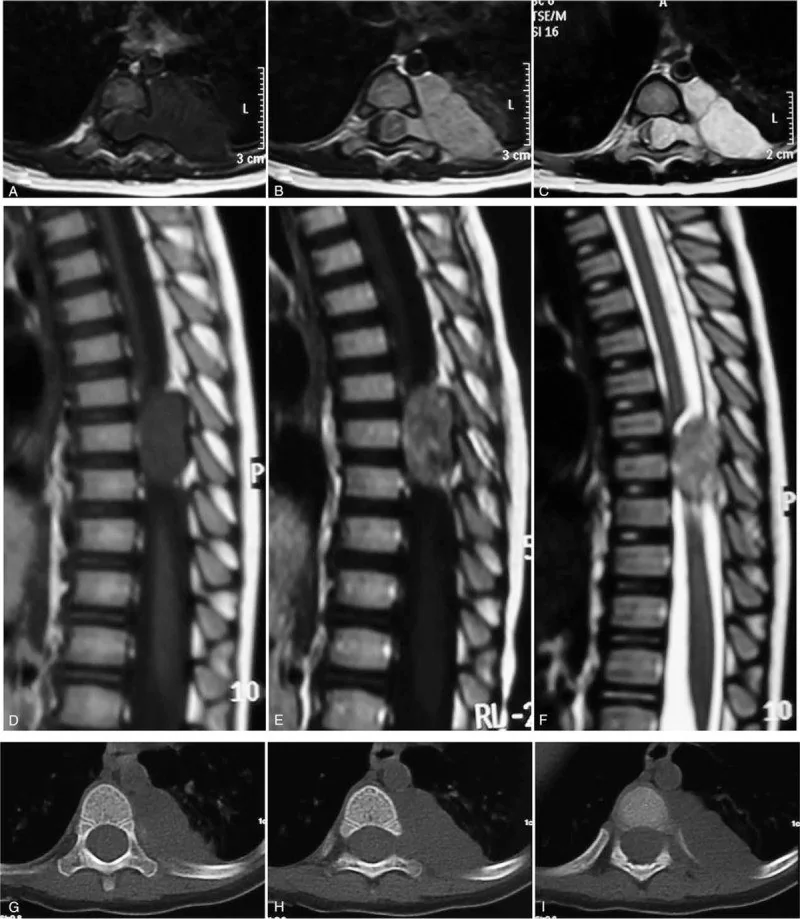
Akut güçsüzlük, duyu seviyesi veya sfinkter bozukluğunda spinal kanal içindeki kemik ve yumuşak doku nedenleri hızlıca aranmalıdır. BT kemik korteksini iyi gösterir; epidural lezyonların saptanması ve omurilik basısının derecesinin değerlendirilmesinde MR tercih edilir. Bu nedenle normal ya da sınırlı BT görünümü klinik kord basısını dışlamaz ve MR'ın yerini tutmaz. Bası seviyesinin atlanması kalıcı motor, duyu veya otonom kayıpla sonuçlanabilir.
Faz ve pencere
- Kontrastsız tanısal
- BT kemik korteksini ve kortikal bütünlüğü değerlendirmede yararlıdır; erken epidural metastazları saptamadaki rolü sınırlıdır ve epidural lezyon şüphesinde MR tercih edilir. Klinik olarak metastatik kord basısı şüphesinde omurilik, epidural yumuşak doku ve bası düzeyi MR ile değerlendirilir; MR yapılamıyorsa BT kemik ve kanal anatomisi için kullanılır. Erken evre epidural metastazlar ve paravertebral yumuşak doku uzanımı BT ile saptanması zordur; BT epidural lezyonları yalnızca ileri evrede belirgin yumuşak doku kitlesi oluşturduğunda gösterebilir. BT, vertebra korteksini ve trabekülasyonu ayrıntılı göstererek kortikal bütünlük ve destrüktif değişikliklerin değerlendirilmesine yardımcı olur.
Önerilen pencereler G genişlik, M merkez; değerler Hounsfield birimi (HU)
- KemikG 1800 / M +400
- Yumuşak dokuG 400 / M +40
BT bulguları
- Osteofitler spinal kord basısına yol açabilen nedenler arasındadır.
- Kırıkla ilişkili kemik fragmanı kanal içine yer değiştirerek basıya yol açabilir.
- Epidural yumuşak doku — tümör, kanama veya enfeksiyon kanal içi yağ/dansite planlarını silerek dural kese alanını daraltabilir.
- Kanal konturunda fokal silinme — normalde kanal içinde seçilebilen epidural yağ veya dural kese sınırı kompresyon odağında kaybolur.
- Nöral foramen daralması çıkan spinal siniri sıkıştırabilir ve radiküler belirtilerle ilişkili olabilir.
- Paravertebral devamlılık — kanal içi kitlenin foramenden yumuşak dokulara uzanması nedenin kapsamını gösterir.
- BT yumuşak doku kontrast çözünürlüğü düşük olduğu için spinal kordun ödem, kontüzyon veya miyelopati gibi sinyal değişikliklerini ve gerçek bası derecesini güvenilir biçimde karakterize edemez.
Normalde
Spinal kanalın epidural aralığında epidural yağ, venöz pleksus, lenfatikler, küçük arteriyoller ve spinal sinirler bulunur. Epidural lezyonlar MR'da epidural yağı silebilir ve dural keseyi içe itebilir; erken epidural metastazların BT ile saptanması sınırlıdır.
Normal BT ile kıyasla
Aynı bölgenin, kaynak veri setinde patoloji içermediği belirtilen bir BT incelemesini kesit kesit kaydırın; organ sınırlarını açarak anatomiyi hasta görüntüsüyle karşılaştırın. Küçük rastlantısal bulgular tümüyle dışlanmamıştır.
Kaynak: TotalSegmentator v2.01 veri seti (Wasserthal ve ark., Radiology: Artificial Intelligence 2023), CC BY 4.0, vaka s1338; organ sınırları veri setinin otomatik segmentasyonundan, birleştirilerek sadeleştirildi. Görüntüler 2,5 mm kesit aralığına yeniden örneklendi.
Ayırıcı tanı
- Kanal daralması; osteofit veya ekstrüde disk materyali, travmaya bağlı retropulse kemik fragmanı ya da epidural apse gibi nedenlerle oluşabilir. BT’de kemik bulguları daha belirgin; kord ve epidural yumuşak dokular için MR daha duyarlıdır.
- Osteofitler spinal kord basısına yol açabilen dejeneratif nedenler arasındadır.
- Kırıkla ilişkili kemik fragmanı kanal içine yer değiştirerek basıya yol açabilir.
- Epidural kitle
- vertebra korteksini aşan veya bağımsız yumuşak doku kitlesi epidural yağ planını siler.
Tuzaklar
- BT'de kordun belirgin seçilememesini kordun normal olduğu şeklinde yorumlama; MR, kord dokusu ve çevresindeki BOS'u gösterir.
- MR değerlendirmesinde sagittal T2 ağırlıklı görüntülere eklenen aksiyel T2 ağırlıklı görüntüler, kord basısı ve yer değiştirmesinin kapsamını daha ayrıntılı değerlendirmeyi sağlar.
- Omurganın yoğun kortikal kemiğine bağlı ışın sertleşmesi artefaktı, BT'de epidural metastaz bulgularını örtebilir.
- BT kemik korteksini iyi gösterse de epidural lezyonların ve omurilik basısının değerlendirilmesinde MR daha uygundur.
- Standart BT'nin erken epidural metastazları saptamadaki rolü sınırlıdır; MR yapılamadığında spinal kanal içeriğini ve bası derecesini değerlendirmek için BT miyelografi alternatif olabilir.
Kendini dene
BT'de spinal kanal çapı normal görünüyor; hastada yeni ilerleyen bacak güçsüzlüğü ve duyu seviyesi var. Kord basısını dışlamak için en uygun inceleme hangisidir?
Cevabı göster
Tüm omurga MR. MR kord parankimini, epidural alanı ve BOS çevresini değerlendirir; normal görünen BT yumuşak doku/kord patolojisini dışlamaz. Tekrar BT ve direkt grafi kord sinyalini göstermez.
Sagittal BT'de kanal dar; aksiyel kesitte posterior vertebra duvarından ayrılan kortike fragman görülüyor. En olası neden nedir?
Cevabı göster
Retropulse kırık fragmanı. Posterior duvardan ayrılan kortike kemik parçası retropulsiyonu tanımlar. Lipomatozis yağ dansitesinde yumuşak dokudur; diskit disk aralığı ve son plakları etkiler; kord ödemi BT ile saptanmaz.
İlgili konular
Kaynaklar
Bu sayfadaki 40 cümle ve 2 quiz sorusu aşağıdaki kaynaklardan alıntılarla otomatik olarak karşılaştırıldı; 20 cümle bu karşılaştırmada düzeltildi (2026-10-09).
- Imaging of metastatic epidural spinal cord compressionpmc.ncbi.nlm.nih.gov
- Myelopathy.pubmed.ncbi.nlm.nih.gov
- Cervical Vertebral Lesions in Equine Stenotic Myelopathy.pubmed.ncbi.nlm.nih.gov
- Malunion of post-traumatic thoracolumbar fractures.pubmed.ncbi.nlm.nih.gov
- Congenital Fusion of Dens to T3 Vertebra in Klippel-Feil Syndrome.pubmed.ncbi.nlm.nih.gov
- Dynamic Cord Compression Causing Cervical Myelopathy.pubmed.ncbi.nlm.nih.gov
- Long-Term Follow-up in Medullary Thyroid Carcinoma.pubmed.ncbi.nlm.nih.gov
- Surgical treatment for dropped head syndrome with cervical spondylotic amyotrophy: a case report.pubmed.ncbi.nlm.nih.gov
- A case of adult-onset Grisel's syndrome.pubmed.ncbi.nlm.nih.gov
- Candida: The Ruthless Opportunist.pubmed.ncbi.nlm.nih.gov
- Unilateral Hemilaminectomy for Intradural Lesions.pubmed.ncbi.nlm.nih.gov
- Imaging of Spinal Bone Tumors: Principles and Practice.pubmed.ncbi.nlm.nih.gov
- Rib head dislocation causing spinal canal stenosis in a child with neurofibromatosis, type 1.pubmed.ncbi.nlm.nih.gov
- Intra-operative vertebroplasty combined with posterior cord decompression. A report of twelve cases.pubmed.ncbi.nlm.nih.gov
- Interest of Denosumab for the Treatment of Giant-cells Tumors and Aneurysmal Bone Cysts of the Spine. About Nine Cases.pubmed.ncbi.nlm.nih.gov
- Case of idiopathic cervical spinal subarachnoid hematoma mimicking an epidural hematoma: A case report.pubmed.ncbi.nlm.nih.gov
- Case Report: Thoracic spinal metastasis without definite intrahepatic recurrence after conversion therapy and hepatectomy for hepatocellular carcinoma.pubmed.ncbi.nlm.nih.gov
- Acute Paraplegia in the Emergency Department: Acute Leriche Syndrome as a Vascular Mimic of a Spinal Cord Emergency.pubmed.ncbi.nlm.nih.gov
- The Role of CT in Cervical Spine Imaging for Suspected Cervical Myelopathy.pubmed.ncbi.nlm.nih.gov
- Risk evaluation of neck extension in patients with degenerative or ossified cervical spine undergoing extension-dependent surgical procedures: A retrospective observational study.pubmed.ncbi.nlm.nih.gov
- Radiologically Devastating Yet Neurologically Intact: A Rare Case of Ambulatory C6-C7 Translational Injury with Bilateral Facet Dislocation and Vertebral Artery Thrombosis.pubmed.ncbi.nlm.nih.gov
- Teaching common cognitive biases and associated errors in veterinary neurologic diagnosis using clinical vignettes: a narrative review.pubmed.ncbi.nlm.nih.gov
- Initial Negative MRI Spine and Persistent Staphylococcus aureus Bacteraemia Lead to Delayed Diagnosis of Lumbar Spondylodiscitis and Epidural Abscess: A Case Report.pubmed.ncbi.nlm.nih.gov
- Comparative analysis of two modified TLICS systems in guiding surgical decision-making for thoracolumbar fractures.pubmed.ncbi.nlm.nih.gov
- Blunt Traumatic Posterior Cord Syndrome Following a Hangman Fracture: A Case Report.pubmed.ncbi.nlm.nih.gov
- Delayed diagnosis of spinal tuberculosis mimicking spondyloarthritis: a case report.pubmed.ncbi.nlm.nih.gov
- Giant Thoracic Meningioma: Missed Diagnosis and Challenging Management in a Resource-Limited Setting.pubmed.ncbi.nlm.nih.gov
- Single-position robot-assisted lateral lumbar corpectomy with minimally invasive posterior spinal fusion for traumatic burst fracture showing MRI-demonstrated indirect decompression: illustrative case.pubmed.ncbi.nlm.nih.gov
- Anatomical and biological reconstruction of traumatic complete burst fractures of the thoracolumbar vertebrae using pedicle fixation combined with stent-armed kyphoplasty and intracorporeal bone grafting: technique rationale, 7-year experience and clinical, imaging, and histological outcomes.pubmed.ncbi.nlm.nih.gov
- Emergency radiology of severe acute injury in extreme alpine summer sports: a pictorial essay.pubmed.ncbi.nlm.nih.gov
- Recommendations of the International Consensus Meeting (ICM) 2025 on Spinal Infections: Part B Tubercular Spondylodiscitis.pubmed.ncbi.nlm.nih.gov
- Vertebral metastatic disease: A paradigm shift.pubmed.ncbi.nlm.nih.gov
- An exploratory multimodal imaging and clinicopathological strategy for suspected Kümmell's disease in the absence of MRI.pubmed.ncbi.nlm.nih.gov
- Evaluation of corticosteroid treatment in patients with post-traumatic ascending myelopathy and spinal cord injury: three case reports and review of the literature.pubmed.ncbi.nlm.nih.gov
- Case Report: Repeated imaging and surgical treatment of a vascular hamartoma arising from the cervical vertebral column of a cat.pubmed.ncbi.nlm.nih.gov
- Progressive Spastic Paraparesis Caused by Thoracic Spinal Epidural Lipomatosis: A Case Report and Systematic Review.pubmed.ncbi.nlm.nih.gov
- Synthesizing lumbar computed tomography myelography from plain computed tomography images using a cycle-consistent generative adversarial network.pubmed.ncbi.nlm.nih.gov
- Accessory Articulation of Elongated Anterior Tubercles of the Transverse Processes at C5-C6 in a Young Adult Female Patient: A Case Report.pubmed.ncbi.nlm.nih.gov
- Association of supine apical vertebral rotation with three-dimensional deformity and global spinal alignment in adult degenerative scoliosis: a retrospective study.pubmed.ncbi.nlm.nih.gov
- Intracanal bridging ossification after lumbar decompression: a case report and imaging analysis of postoperative bone regrowth.pubmed.ncbi.nlm.nih.gov
- Ten Years of Lumbar Transforaminal Epidural Steroid Injections in a Tertiary Referral Center: Trends in Clinical Indications and Outcomes.pubmed.ncbi.nlm.nih.gov
- Diagnostic decision-making, vertebral augmentation, and osteoporosis therapy in vertebral compression fractures: a narrative review.pubmed.ncbi.nlm.nih.gov
- Breast Cancer Metastases Presenting as Musculoskeletal Complaints.pubmed.ncbi.nlm.nih.gov
- Neurolymphomatosis: A Comprehensive Review of Clinical and Imaging Features.pubmed.ncbi.nlm.nih.gov
- Dural Tear and Cerebrospinal Fluid Leakage in Anterior Cervical Spine Surgery: Pathophysiology, Management, and Evolving Repair Techniques.pubmed.ncbi.nlm.nih.gov
- Interlaminar Contralateral Endoscopic Foraminotomy Reduces Postoperative Dysesthesia in Patients With Degenerative Lumbar Deformity: A Multicenter Comparative Cohort Study.pubmed.ncbi.nlm.nih.gov
- Presumed cervical subperiosteal vertebral hemorrhage in nine greyhounds.pubmed.ncbi.nlm.nih.gov
- Duropathies as Unifying Concept-Part Two: A Narrative Overview of Clinical and Neuroradiological Features.pubmed.ncbi.nlm.nih.gov
- An Evaluation of Lumbar Foraminal Stenosis Radiologic Grading Systems: A Systematic Review.pubmed.ncbi.nlm.nih.gov
- Transforaminal Endoscopic Lumbar Foraminotomy for Radiculopathy at the Fused Segment After Lumbar Fusion: Clinical Outcomes and Surgical Considerations.pubmed.ncbi.nlm.nih.gov
- Preliminary Quantitative MRI Assessment After Combined Posterior Endoscopic Cervical Discectomy and Foraminotomy: An Exploratory Retrospective Cohort Study.pubmed.ncbi.nlm.nih.gov
- Contralateral trans-spinous base inclined approach using AUSS for two-level lumbar lateral recess and foraminal stenosis: a case report.pubmed.ncbi.nlm.nih.gov
- Spinal hydatid disease with epidural extension and spinal cord compression: A radiology case report.pubmed.ncbi.nlm.nih.gov
- Purely extradural cervical cavernous hemangioma presenting with quadriparesis and urinary retention: a case report.pubmed.ncbi.nlm.nih.gov
- Primary Spinal Marginal Zone Lymphoma Presenting With Spinal Cord Compression: A Case Report.pubmed.ncbi.nlm.nih.gov
- An iPSC-derived neural progenitor cell therapy for subacute spinal cord injury: a phase 1 trial with long-term follow-up.pubmed.ncbi.nlm.nih.gov
- Guidance for a clinical and forensic diagnosis of pediatric abusive head trauma: a narrative review.pubmed.ncbi.nlm.nih.gov
- The evolution of cervical spine trauma classification: a paradigm shift from morphological description to clinical decision-making.pubmed.ncbi.nlm.nih.gov
- The Konakondla-Telfeian-Shen (KTS) Pyramid: a safe entry zone for ventral thoracic pathologies.pubmed.ncbi.nlm.nih.gov
- Occipital plate-assisted posterior reduction for tumor-related severe atlantoaxial dislocation: a single-case surgical technique.pubmed.ncbi.nlm.nih.gov
- Salvage Full-Endoscopic Resection of Residual Giant Thoracic Disc Herniation After Transpedicular Decompression and Instrumented Fusion: Technical Note, Literature Review, and Supplemental Video.pubmed.ncbi.nlm.nih.gov
- Case Report: Segment-specific minimally invasive surgical management of lumbar spinal epidural lipomatosis with adjacent-level degenerative stenosis.pubmed.ncbi.nlm.nih.gov
- Anatomy-guided context-aware deep learning for lumbar degenerative disease grading and burden-aware risk assessment on MRI.pubmed.ncbi.nlm.nih.gov
- A Retrospective Comparative Study on Arthroscopic-Assisted Uni-Portal Spinal Surgery (AUSS/UNSES) Versus Unilateral Biportal Endoscopy for Double-Segment Lumbar Spinal Stenosis.pubmed.ncbi.nlm.nih.gov
- Artificial intelligence in spine care: A scoping review of diagnostic applications.pubmed.ncbi.nlm.nih.gov
- Deep learning for the diagnosis of lumbar disc herniation: a systematic review and meta-analysis.pubmed.ncbi.nlm.nih.gov
- Eight months of misdiagnosis: Intra-articular osteoid osteoma in a 48-year-old woman.pubmed.ncbi.nlm.nih.gov
- Degenerative lumbosacral spondylolisthesis: Instability as the primary pathology and stabilization as definitive treatment. Experience with 28 cases treated by only fixation without any decompression.pubmed.ncbi.nlm.nih.gov
- The Prone-Transpsoas Approach for Single-Position Lateral Corpectomy: A Case Series.pubmed.ncbi.nlm.nih.gov
- Traumatic Durotomy with Entrapment of Nerve Roots in a Lumbar Burst Fracture Diagnosed Intraoperatively: A Case Report.pubmed.ncbi.nlm.nih.gov
- Rapid spontaneous regression of a massive post-thrombolysis intracerebral hemorrhage: A case report.pubmed.ncbi.nlm.nih.gov
- Diagnostic Accuracy and Time Efficiency of Artificial Intelligence for Intracranial Hemorrhage Detection on Emergency Brain CT.pubmed.ncbi.nlm.nih.gov
- Cervical Osteophyte as a Rare Etiology of Spontaneous Intracranial Hypotension With Bilateral Subdural Hematomas: A Case Report and Literature Review.pubmed.ncbi.nlm.nih.gov
- Primary intraosseous anastomosing hemangioma of the sacrum: illustrative case.pubmed.ncbi.nlm.nih.gov
- Anatomy, Imaging, and Clinical Significance of the Cervicothoracic (Stellate) Ganglion.pubmed.ncbi.nlm.nih.gov
- Risk factors for poor neurological recovery after anterior cervical discectomy and fusion: imaging characteristics.pubmed.ncbi.nlm.nih.gov
- Concomitant Distal Radius Fracture, Scaphoid Fracture, and Pisiform Dislocation with Ulnar Nerve Neuropraxia: A Case Report with Biomechanical Analysis.pubmed.ncbi.nlm.nih.gov
- Spinal cord imaging in multiple sclerosis: from diagnosis to disease progression.pubmed.ncbi.nlm.nih.gov
- Artificial Intelligence in Intraoperative Imaging and Navigation for Spine Surgery: A Narrative Review.pubmed.ncbi.nlm.nih.gov
- Innovative approaches in precision radiation oncology: advanced imaging technologies and challenges which shape the future of radiation therapy.pubmed.ncbi.nlm.nih.gov
- Sinogram + image domain neural network approach for metal artifact reduction in low-dose cone-beam computed tomography.pubmed.ncbi.nlm.nih.gov
- Evaluating cone-beam computed tomography vs. intraoral radiography for the detection of endodontal disease in dogs: diagnostic performance and inter-rater agreement.pubmed.ncbi.nlm.nih.gov
- Idiopathic Syringomyelia: A Systematic Scoping Review.pubmed.ncbi.nlm.nih.gov
- Assessment of paediatric vertebral body and canal dimension in the cervical spine considering the influence of ethnicity in a New Zealand cohort.pubmed.ncbi.nlm.nih.gov
- Application of AUSS-TLIF for the treatment of a lumbar burst fracture: A case report.pubmed.ncbi.nlm.nih.gov
- Individualized finite element simulation integrating high-resolution magnetic resonance imaging and clinical imaging validation elucidates the effects of laminoplasty and laminectomy on postoperative mechanical stability and degeneration risk.pubmed.ncbi.nlm.nih.gov
- Primary chondrosarcoma arising from the L5 transverse process: A rare cause of chronic low back pain.pubmed.ncbi.nlm.nih.gov
- Purely osteolytic bone lesions in the early osteoarticular phase of synovitis, acne, pustulosis, hyperostosis and osteitis syndrome.pubmed.ncbi.nlm.nih.gov
- Spinal granulocytic sarcoma with both extradural and intradural involvement: a case report.pubmed.ncbi.nlm.nih.gov
- Radiomics in spinal research: a narrative review.pubmed.ncbi.nlm.nih.gov
- Suture-Related Delayed Epidural Hematoma Following Cervical Open-Door Laminoplasty: A Report of Two Cases and Literature Review.pubmed.ncbi.nlm.nih.gov
- Diagnostic imaging and emerging image-guided neurointervention in brain tumors: a narrative review.pubmed.ncbi.nlm.nih.gov
- Osteitis Pubis in Athletes in the Era of Pubic-Related Groin Pain: Contemporary Concepts in Diagnosis, Rehabilitation, and Surgical Decision-Making.pubmed.ncbi.nlm.nih.gov
- Dural Lymphomas Unmasked: A Narrative Review of Extra-Axial Mimics and a Pragmatic Diagnostic Decision Algorithm.pubmed.ncbi.nlm.nih.gov
- Oblique lateral interbody fusion versus transforaminal lumbar interbody fusion for single-level lumbar adjacent segment disease: a retrospective comparative study of clinical and radiographic outcomes.pubmed.ncbi.nlm.nih.gov
- Imaging and physiology across the high-low cerebrospinal fluid pressure spectrum: Navigating diagnostic uncertainty in headache practice.pubmed.ncbi.nlm.nih.gov
- Full-endoscopic lateral laminectomy on both sides with central line preservation under local anesthesia with monitored anesthesia care for thoracic spinal stenosis in a very old patient unsuitable for general anesthesia: illustrative case.pubmed.ncbi.nlm.nih.gov
- Dural tears from traumatic spinal fractures: an illustrative case and systematic review of its incidence, diagnosis, risk factors, and management.pubmed.ncbi.nlm.nih.gov
- The clinical and radiological outcomes of a transfacet pedicle-sparing approach for directly addressing the compression of unstable thoracolumbar burst fractures with retropulsion.pubmed.ncbi.nlm.nih.gov
- Staged endovascular and surgical management of vertebral arteriovenous fistula with ruptured aneurysm and pseudoaneurysm in neurofibromatosis type 1 complicated by fatal reperfusion injury: illustrative case.pubmed.ncbi.nlm.nih.gov
- Surgery of the tumors of the spine.pubmed.ncbi.nlm.nih.gov
- Computed Tomography Prevalence of Cervicothoracic Endplate Junction Alterations in Dogs.pubmed.ncbi.nlm.nih.gov
- Imaging for Plasma Cell Dyscrasias: What, When, and How?pubmed.ncbi.nlm.nih.gov
- Recommendations for acquisition, interpretation and reporting of whole body low dose CT in patients with multiple myeloma and other plasma cell disorders: a report of the IMWG Bone Working Group.pubmed.ncbi.nlm.nih.gov
- Keyhole Foraminotomy Combined With Unilateral Laminotomy for Bilateral Decompression Under Biportal Endoscopic Spinal Surgery for the Treatment of Mixed-Type Cervical Spondylosis.pubmed.ncbi.nlm.nih.gov
- The Complex Surgical Management of Vertebral Fracture in a Patient With Undiagnosed Ankylosing Spondylitis: A Case Report.pubmed.ncbi.nlm.nih.gov
- The Infraneural Approach to Lumbar Transforaminal Epidural Steroid Injections: A Practical Review for Trainees and Interventionalists.pubmed.ncbi.nlm.nih.gov
- Uni-portal non-coaxial spinal endoscopic surgery via crossing midline approach for cervical radiculopathy: a case series of four patients.pubmed.ncbi.nlm.nih.gov
- Anatomical Variants of the Cervical Spine and Sports-Related Injury in Athletes: A Narrative Review.pubmed.ncbi.nlm.nih.gov
- Transarterial embolization in musculoskeletal care: an indication-stratified narrative review.pubmed.ncbi.nlm.nih.gov
- Transforaminal lumbar interbody fusion combined with fat decompression for grade III idiopathic spinal epidural lipomatosis: a case report.pubmed.ncbi.nlm.nih.gov
Eğitim amaçlıdır; hasta başında tanı ve tedavi kararının yerine geçmez, tıbbi tavsiye değildir. Metinler yapay zekâ desteğiyle yazıldı ve otomatik bir adımda kaynak alıntılarıyla karşılaştırıldı; bu bir tıbbi doğrulama değildir ve içerik uzman radyolog incelemesinden geçmedi. Klinik kararlarda güncel kılavuzları, kurum protokollerini ve radyoloji raporunu esas alın.