
Özet
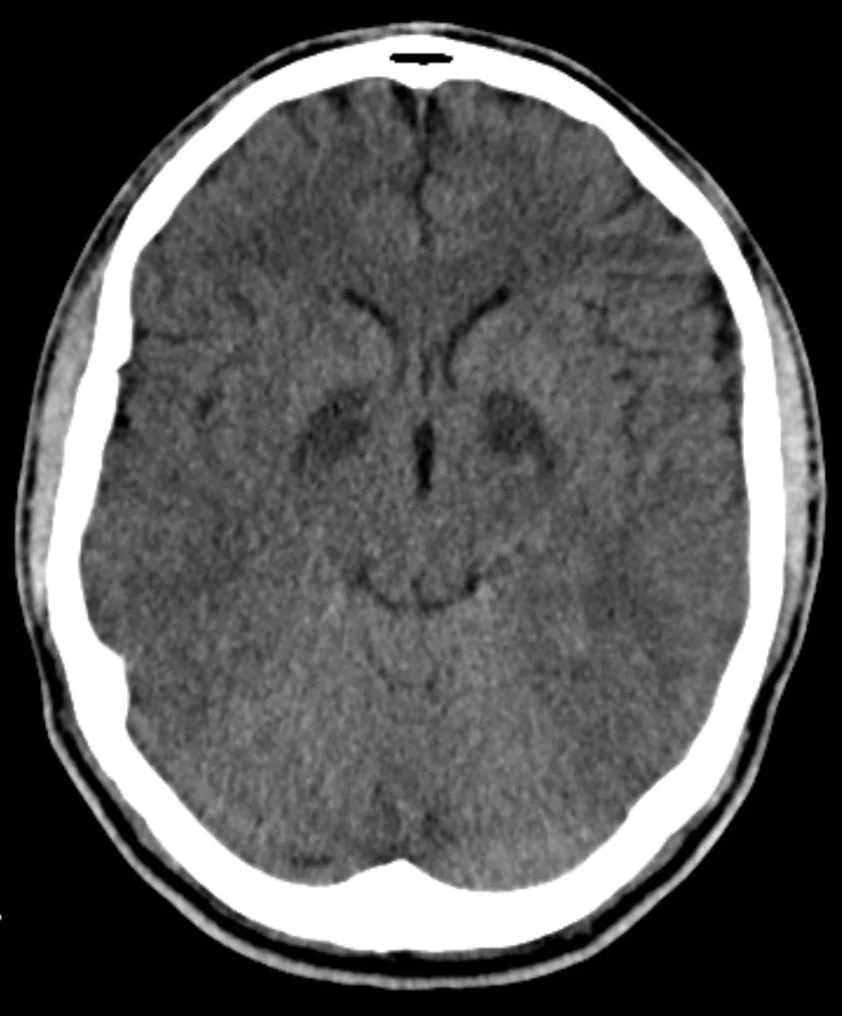
Kardiyak arrest, şok veya ağır hipoksemi sonrasında gelişen hipoksik-iskemik beyin hasarında kontrastsız BT, yapısal ödemi ve eşlik eden kanama ya da kitle etkisini hızla değerlendirmek için kullanılır. Kontrastsız BT'de hipoksik-iskemik değişiklikler hafif gri-beyaz ayrım kaybından düşük yoğunluklu genel ödemine kadar değişir; derin gri çekirdeklerin hipodensitesi ve sulkus basılması sık görülür. Yaygın ödem bazal sisternleri daraltıp herniasyona ilerleyebilir; bu bulgular kritik radyolojik uyarıdır. Tek başına erken BT ile hasarı veya prognozu dışlamak, gecikmiş ödemi ve klinik kötüleşmeyi kaçırabilir; nöroprognostik karar çoklu klinik ve nörofizyolojik verilerle ele alınır.
Faz ve pencere
- Kontrastsız tanısal
- Başlangıç incelemesi doğal olabilir; belirginleşen hasarda damar alanlarını aşan bilateral kortikal ve derin gri cevher hipodensitesi, gri-beyaz ayrım kaybı, sulkus silinmesi ve bazal sistern basısı görülür. Kontrastsız BT, hipoksik-iskemik hasarın gri-beyaz ayrım kaybı ve ödem paternini göstermek için temel görüntüleme yöntemidir.
Önerilen pencereler: Beyin (G 80 / M 40), Subdural (G 200 / M 75).
BT bulguları
- Yaygın gri-beyaz ayrım kaybı — korteks ile komşu subkortikal beyaz cevher arasındaki normal dansite sınırı iki hemisferde silikleşir.
- Kortikal sulkus silinmesi — serebral ödemle birlikte konveksite sulkusları daralır veya seçilemez.
- Derin gri cevher hipodensitesi — kaudat başı, putamen, globus pallidus veya talamuslar korteksteki ödemle birlikte düşük atenüasyon gösterebilir.
- Bazal sistern daralması — suprasellar ve perimezensefalik sisternlerin basılması artmış kitle etkisini gösterir.
- Ventrikül basısı — lateral ve üçüncü ventrikül küçülür; eşlik eden hidrosefali varsa ventrikül görünümü farklılaşabilir.
- Yaygın ödem ve herniasyon — orta hat kayması, unkal veya tonsiller yer değiştirme ileri basınç etkisini gösterir.
Normalde
Normal gri-beyaz ayrımda kortikal gri cevher, hemen altındaki beyaz cevherden daha yüksek dansitelidir; kaudat, lentiform çekirdekler ve talamuslar da seçilebilir sınırlarını korur. Konveksite sulkusları açık, suprasellar ve perimezensefalik sisternler dolgun, ventriküller basısız görünür; aynı düzeylerde bu sınırların yaygın silinip silinmediğini ve simetrisini karşılaştır.
Normal BT ile kıyasla
Aynı bölgenin, kaynak veri setinde patoloji içermediği belirtilen bir BT incelemesini kesit kesit kaydırın; organ sınırlarını açarak anatomiyi hasta görüntüsüyle karşılaştırın. Küçük rastlantısal bulgular tümüyle dışlanmamıştır.
Kaynak: TotalSegmentator v2.01 veri seti (Wasserthal ve ark., Radiology: Artificial Intelligence 2023), CC BY 4.0, vaka s0103; organ sınırları veri setinin otomatik segmentasyonundan, birleştirilerek sadeleştirildi. Görüntüler 2,5 mm kesit aralığına yeniden örneklendi.
Ayırıcı tanı
- Hipoglisemik ensefalopati
- iki taraflı korteks, bazal ganglionlar veya periventriküler bölge lezyonları olabilir; klinik glukoz bilgisi ve paternin yaygın ödem derecesi ayırıcıdır.
- Metanol toksisitesi
- bilateral putaminal nekroz, özellikle kanama bileşeni, daha bölgesel toksik hasar paternidir.
Tuzaklar
- Arrest sonrası hemen çekilen doğal BT’yi beyin hasarı yokluğu şeklinde yorumlama; erken incelemenin ödem gelişmeden yapılmış olabileceğini raporda belirt.
- Tek bir silik kortikal sulkusu yaygın ödem sayma; hareket, kemik kaynaklı sertleşme ve parsiyel hacim etkisi gri-beyaz sınırı yanıltabilir.
- Gri-beyaz ayrım kaybını tek başına kesin prognoz olarak sunma; kılavuzlar görüntülemeyi klinik bağlam ve diğer nöroprognostik verilerle birlikte ele alır.
- Orta hat kayması olmamasını ağır ödemi dışlamak için kullanma; simetrik yaygın şişmede kayma belirgin olmayabilir, sisternleri ve sulkusları da incele.
Kendini dene
Kardiyak arrest sonrası BT’de iki hemisferde gri-beyaz sınırlar silik, sulkuslar dar ve lentiform çekirdekler hipodens. Patern en çok neyi düşündürür?
Cevabı göster
Hipoksik-iskemik hasar. Birden fazla damar alanına yayılan gri-beyaz ayrım kaybı ve yaygın sulkal silinme global hipoksik-iskemik ödemle uyumludur. MCA enfarktı tipik olarak tek damar alanına uyar; kanama hiperdens görünür, normal yaşlanma bu akut yaygın ödem paternini oluşturmaz.
Arrestten hemen sonra alınan BT’de parankim doğal, klinik koma sürüyor. Bu inceleme neyi gösterir?
Cevabı göster
Erken BT hasarı dışlamaz. Erken BT’de hipoksik-iskemik değişiklikler henüz görünür olmayabilir; normal görünüm hasarı veya ilerleyen ödemi dışlamaz. Beyin ölümü yalnız BT ile tanınmaz; metanol için maruziyet ve tipik putaminal patern, atrofi için kronik hacim kaybı gerekir.
İlgili konular
Kaynaklar
Bu sayfadaki 33 cümle ve 2 quiz sorusu aşağıdaki kaynaklardan alıntılarla tek tek karşılaştırıldı; 3 cümle bu karşılaştırmada düzeltildi (2026-10-09).
- Update on hypoxic-ischemic brain injury: Prognosis and managementpmc.ncbi.nlm.nih.gov
- Neuroprotective effects of noble gases following acquired brain injury: a narrative reviewpmc.ncbi.nlm.nih.gov
- Hypoxic-Ischemic Brain Injury in ECMO: Pathophysiology, Neuromonitoring, and Therapeutic Opportunitiespmc.ncbi.nlm.nih.gov
- Hypoxic-ischemic spinal cord injury following resuscitated cardiac arrest: a case series and rapid literature reviewpmc.ncbi.nlm.nih.gov
- Optimizing infection management after cardiac arrest: addressing diagnostic uncertainty and therapeutic dilemmas—a narrative reviewpmc.ncbi.nlm.nih.gov
- Neuroimaging in the term newborn with neonatal encephalopathy.pubmed.ncbi.nlm.nih.gov
- Metabolic brain measurements in the newborn: Advances in optical technologies.pubmed.ncbi.nlm.nih.gov
- Birth Asphyxia and Hypoxic-Ischemic Brain Injury in the Preterm Infant.pubmed.ncbi.nlm.nih.gov
- Brain imaging in comatose survivors of cardiac arrest: Pathophysiological correlates and prognostic properties.pubmed.ncbi.nlm.nih.gov
- Hypermetabolism on Pediatric PET Scans of Brain Glucose Metabolism: What Does It Signify?pubmed.ncbi.nlm.nih.gov
- In vivo multiparametric magnetic resonance imaging and spectroscopy of rodent visual system.pubmed.ncbi.nlm.nih.gov
- MR imaging in inflicted brain injury.pubmed.ncbi.nlm.nih.gov
- Pseudosubarachnoid hemorrhage: A systematic review of causes, diagnostic modalities, and outcomes in patients who present with pseudosubarachnoid hemorrhage.pubmed.ncbi.nlm.nih.gov
- Prediction of poor outcome after hypoxic-ischemic brain injury by diffusion-weighted imaging: A systematic review and meta-analysis.pubmed.ncbi.nlm.nih.gov
- Ultra-Low-Field Portable Brain Magnetic Resonance Imaging in Patients With Cardiac Devices: Current Evidence and Future Directions.pubmed.ncbi.nlm.nih.gov
- Principles of Management of Postcardiac Arrest Patients in the ICU.pubmed.ncbi.nlm.nih.gov
- Temporal Evolution of Signal Alterations in the Deep Gray Nuclei in term Neonates With Hypoxic-Ischemic Brain Injury: A Comprehensive Review.pubmed.ncbi.nlm.nih.gov
- Prognostic value of new neuron-specific biomarkers in patients recovered from cardiac arrest.pubmed.ncbi.nlm.nih.gov
- Hypoxic-ischemic spinal cord injury following resuscitated cardiac arrest: a case series and rapid literature review.pubmed.ncbi.nlm.nih.gov
- Neurological prognostication after cardiac arrest: evidence review and institutional protocol proposal.pubmed.ncbi.nlm.nih.gov
- Serial Changes in CSF Volume Proportion on Brain CT and 6-Month Neurologic Outcomes After Cardiac Arrest: A 72-96-h Landmark Cohort Study.pubmed.ncbi.nlm.nih.gov
- Neuroprognostication After Extracorporeal Cardiopulmonary Resuscitation: ECMO-Specific Challenges and a Multimodal Time-Sensitive Framework.pubmed.ncbi.nlm.nih.gov
- Severe Diabetic Ketoacidosis With Fatal Cerebral Edema in an Adult.pubmed.ncbi.nlm.nih.gov
- Biot's respiratory pattern under mechanical ventilation: Two case reports and literature review.pubmed.ncbi.nlm.nih.gov
- Contrast-Induced Encephalopathy After Simultaneous Embolization of Multiple Intracranial Aneurysms: A Case Report and Management.pubmed.ncbi.nlm.nih.gov
- Successfully treated delayed upward trans-tentorial herniation (UTTH) following ventriculoperitoneal shunt placement for an acute obstructive hydrocephalus secondary to midline posterior fossa mass in a low-resource setting: case report.pubmed.ncbi.nlm.nih.gov
- Pseudo-SAH in a patient with methanol poisoning: a case report.pubmed.ncbi.nlm.nih.gov
- Neuroworsening in traumatic brain injury: A consensus of the Latin American Brain Injury Consortium (LABIC) and the Latin American Federation of Neurosurgical Societies (FLANC) expert group.pubmed.ncbi.nlm.nih.gov
- 18F-FDG PET/CT for post-cardiac-arrest brain injury: current evidence and future directions.pubmed.ncbi.nlm.nih.gov
- Cerebellar Infarction Following Pulseless Electrical Activity Arrest in Advanced Heart Failure With Reduced Ejection Fraction: A Post-resuscitation Diagnostic Pitfall.pubmed.ncbi.nlm.nih.gov
- Beta-ketothiolase deficiency with progressive basal ganglia and extra basal ganglia involvement: CT-MRI correlation in a pediatric metabolic encephalopathy: A case report.pubmed.ncbi.nlm.nih.gov
- Choking leading to cardiac arrest and subsequent atypical radiological features of brain damage: A case report.pubmed.ncbi.nlm.nih.gov
- Venous-significant intracranial hemorrhage in neonatal HIE treated with therapeutic hypothermia: imaging phenotypes, diagnostic pitfalls, and prognostic implications.pubmed.ncbi.nlm.nih.gov
- Cerebral Hemodynamics in Pediatric Abusive Head Trauma: 3 Severe Cases with Preserved Motor Cortex, Hyperperfusion, and Recovery of Mild Paralysis.pubmed.ncbi.nlm.nih.gov
- Suspected Pregabalin Overdose Presenting With Out-of-Hospital Asystolic Cardiac Arrest and Fatal Multiorgan Failure: A Case Report.pubmed.ncbi.nlm.nih.gov
- Time-specific comparison of gray-white matter ratio models for predicting outcomes after cardiac arrest: basal ganglia as the leading model.pubmed.ncbi.nlm.nih.gov
- Robotic-Assisted Navigational Bronchoscopy Complicated by Systemic Air Embolism.pubmed.ncbi.nlm.nih.gov
- Catastrophic Hypoxic-Ischemic Brain Injury Following Influenza A Illness in a Young Woman: A Case Report.pubmed.ncbi.nlm.nih.gov
- A case of contrast-induced encephalopathy after thoracic endovascular aortic repair for a ruptured thoracic aortic aneurysm.pubmed.ncbi.nlm.nih.gov
- Update on hypoxic-ischemic brain injury: Prognosis and management.pubmed.ncbi.nlm.nih.gov
- Non-invasive intracranial pressure estimation in the intensive care unit: narrative review of methods and clinical applications.pubmed.ncbi.nlm.nih.gov
- Continuum of Irreversible and Potentially Reversible Traumatic Brain Injury Sequelae: Axonal Injury and Hydrocephalus.pubmed.ncbi.nlm.nih.gov
- Syndrome of the trephined: from pathophysiology to cranioplasty - an updated narrative review.pubmed.ncbi.nlm.nih.gov
- Staged endovascular and surgical management of vertebral arteriovenous fistula with ruptured aneurysm and pseudoaneurysm in neurofibromatosis type 1 complicated by fatal reperfusion injury: illustrative case.pubmed.ncbi.nlm.nih.gov
- Fulminant cerebral edema in the setting of acute dengue fever after mechanical thrombectomy in a patient with massive stroke and severe hypoalbuminemia: a case report.pubmed.ncbi.nlm.nih.gov
- Mesenchymal stem cell therapy as adjunctive treatment in pediatric patients with severe acquired brain injury: a single-center retrospective case series.pubmed.ncbi.nlm.nih.gov
- Balancing Radiation Dose and Image Quality: Protocol Optimization for Mobile Head CT in Neurointensive Care Unit Patients.pubmed.ncbi.nlm.nih.gov
- 40 Years of diffusion MRI in the brain: From history to emerging frontiers.pubmed.ncbi.nlm.nih.gov
- Subarachnoid cisterns as surgical corridors: Integrating microsurgical anatomy and neuroimaging for intracranial navigation.pubmed.ncbi.nlm.nih.gov
- The Effects of Endoscopic Third Ventriculostomy Versus Ventriculoperitoneal Shunt on Neuropsychological and Motor Performance in Patients with Idiopathic Normal Pressure Hydrocephalus-ENVENTOR-iNPH: Study Protocol.pubmed.ncbi.nlm.nih.gov
- A systematic approach to detection of epileptogenic foci on imaging: protocols, entities, search pattern, and reporting tools.pubmed.ncbi.nlm.nih.gov
- Hypoglycemic Encephalopathy Caused by Insulinoma With Reversible High Signals in the White Matter on Diffusion-Weighted MRI: A Case Report.pubmed.ncbi.nlm.nih.gov
- Severe hypoglycemic coma with radiological evidence of hypoglycemic encephalopathy due to impaired awareness to hypoglycemia: a case report.pubmed.ncbi.nlm.nih.gov
- Rapidly Progressing Encephalopathy in a 49-Year-Old Female: Creutzfeldt-Jakob Disease.pubmed.ncbi.nlm.nih.gov
- Secondary parkinsonism associated with focal brain lesions.pubmed.ncbi.nlm.nih.gov
- Toxic-Induced Encephalopathy Following Chemsex in a Young HIV-Positive Male: A Complex Case of Acute Cognitive Impairment with Anterograde Amnesia and Behavioral Alterations.pubmed.ncbi.nlm.nih.gov
- Neurocognitive impairments and brain abnormalities resulting from opioid-related overdoses: A systematic review.pubmed.ncbi.nlm.nih.gov
- Advanced Imaging in Methanol Toxicity: Bilateral Putaminal Necrosis and Frontal-Occipital Ischemia-A Case Report.pubmed.ncbi.nlm.nih.gov
- Case Report: Methanol poisoning mimicking acute coronary syndrome-a fatal case of massive intracranial hemorrhage on dual antiplatelet therapy.pubmed.ncbi.nlm.nih.gov
- New-Onset Psychotic Episode as the Primary Manifestation One Week After Liver Transplantation: A Case Report and Comprehensive Review About the Risk Factors.pubmed.ncbi.nlm.nih.gov
- Treatment and Diagnostic Challenges in a Patient with Atypical SARS-CoV-2-Associated Encephalitis Mimicking a Neoplasm: A Case Report.pubmed.ncbi.nlm.nih.gov
- Hippocampal texture asymmetry features on <sup>18</sup>F-FDG PET differentiating anti-LGI1 and anti-GABABR encephalitis.pubmed.ncbi.nlm.nih.gov
- Alternating Hemispheric Episodes in Bilateral Rasmussen Encephalitis: The Crucial Role of Sequential Multimodal Neuroimaging.pubmed.ncbi.nlm.nih.gov
- Early Prediction of Neurological Outcome After Cardiac Arrest-Rationale and Design of the Prospective International Observational EARLY-NEURO, a STEPCARE Substudy.pubmed.ncbi.nlm.nih.gov
- Brain computed tomography after resuscitation from in-hospital cardiac arrest.pubmed.ncbi.nlm.nih.gov
- Encephalitis in Patients with COVID-19: A Systematic Evidence-Based Analysis.pubmed.ncbi.nlm.nih.gov
- Bilateral temporal lobe disease: looking beyond herpes encephalitis.pubmed.ncbi.nlm.nih.gov
- Neuroimaging of neonatal brain post therapeutic hypothermia: a practical guide to the non-pediatric neuroradiologist.pubmed.ncbi.nlm.nih.gov
- The spectrum of neurological derangement due to fat embolism: a case series.pubmed.ncbi.nlm.nih.gov
- Multifocal intracranial hemorrhage on emergency brain CT in a child with end-stage nephrotic syndrome.pubmed.ncbi.nlm.nih.gov
- Malignant Posterior Reversible Encephalopathy Syndrome (PRES) After Allogeneic Hematopoietic Stem Cell Transplantation Requiring Emergency Decompressive Craniectomy: A Case Report.pubmed.ncbi.nlm.nih.gov
- Adult-recognized 22q11.2 deletion syndrome in adult neurology practice: a brief report of two diagnostic pitfalls.pubmed.ncbi.nlm.nih.gov
- Multi-scale covariance filtering for edge-preserving medical image fusion.pubmed.ncbi.nlm.nih.gov
- Diabetic striatopathy presenting as stroke-mimicking hemiparesis without involuntary movements: A case report.pubmed.ncbi.nlm.nih.gov
- Caudate Head Ischemic Stroke with Concurrent Tubercular Meningoencephalitis: A Case Report.pubmed.ncbi.nlm.nih.gov
- Stroke risk following bee and wasp stings: a systematic review of ischemic and hemorrhagic events.pubmed.ncbi.nlm.nih.gov
- Multidisciplinary Management of Pediatric Craniopharyngioma: From Diagnosis to Long-Term Outcomes.pubmed.ncbi.nlm.nih.gov
- Suprasellar Desmoplastic Infantile Ganglioglioma in a 7-Month-Old Infant: A Rare Diagnostic Consideration in Infant Suprasellar Masses.pubmed.ncbi.nlm.nih.gov
- Pediatric endocrine disorders: a review of intracranial findings and appropriate imaging.pubmed.ncbi.nlm.nih.gov
- Prognostic value of computed tomography score in patients after extracorporeal cardiopulmonary resuscitation.pubmed.ncbi.nlm.nih.gov
- 2025 Heart Disease and Stroke Statistics: A Report of US and Global Data From the American Heart Association.pubmed.ncbi.nlm.nih.gov
- 2024 Heart Disease and Stroke Statistics: A Report of US and Global Data From the American Heart Association.pubmed.ncbi.nlm.nih.gov
- Staged visceral revascularization prior to central aortic repair in acute type A aortic dissection complicated by mesenteric malperfusion: a case report.pubmed.ncbi.nlm.nih.gov
- Fat Embolism Syndrome Following Elective Orthopedic Surgery in a Patient With Duchenne Muscular Dystrophy.pubmed.ncbi.nlm.nih.gov
- Pathophysiology-driven neuroimaging: decoding brain injury in sepsis.pubmed.ncbi.nlm.nih.gov
- Seizure prophylaxis versus epilepsy prevention after acquired brain injury: a cross-sectional clinicaltrials.gov registry analysis, 2000-2026.pubmed.ncbi.nlm.nih.gov
- Pilocytic astrocytoma: A rare case report.pubmed.ncbi.nlm.nih.gov
- The Unspoken Danger of the Mount Fuji Sign Leading to Sudden Death.pubmed.ncbi.nlm.nih.gov
- Lidocaine-Associated CNS Toxicity at Therapeutic Dosage: A Case Report and Literature Review.pubmed.ncbi.nlm.nih.gov
- Prolonged Hypoglycemic Encephalopathy: A Case Report.pubmed.ncbi.nlm.nih.gov
- Serum Hepatocyte-Derived Fibrinogen-Related Protein-1: A Novel Biomarker for Severity and Clinical Outcome in Acute Ischemic Stroke.pubmed.ncbi.nlm.nih.gov
- Pediatric Stroke in a United Arab Emirates (UAE) Tertiary Care Center: A Retrospective Descriptive Study.pubmed.ncbi.nlm.nih.gov
- Tissue clock-guided prediction and intervention of futile recanalization: towards precision therapy in mechanical thrombectomy.pubmed.ncbi.nlm.nih.gov
- When a Transient Ischemic Attack Is Not a Transient Ischemic Attack: Super-refractory Status Epilepticus in GAD65 Antibody-Associated Autoimmune Encephalitis.pubmed.ncbi.nlm.nih.gov
- Hypoglycemic Encephalopathy in a Patient With Diabetes Mellitus: A Case Report.pubmed.ncbi.nlm.nih.gov
- Hypoglycemic Encephalopathy.pubmed.ncbi.nlm.nih.gov
- Safety and Efficacy of Remote Ischaemic Conditioning for Acute Ischaemic Stroke Treated with Mechanical Thrombectomy (RECAST-MT): rationale and design.pubmed.ncbi.nlm.nih.gov
- Comorbidity Between Anti-GAD65 Autoimmune Encephalitis and Behavioral Variant Frontotemporal Dementia: A Case Report.pubmed.ncbi.nlm.nih.gov
- Bilateral Vocal Cord Paralysis Following Influenza A: Case Report.pubmed.ncbi.nlm.nih.gov
- Simultaneous perfusion and dopaminergic imaging using dual-isotope CZT SPECT/CT in dementia with Lewy bodies.pubmed.ncbi.nlm.nih.gov
- A Case of Persistent Ataxia and Atypical Brain Lesions: From the National Multiple Sclerosis Society Case Conference Proceedings.pubmed.ncbi.nlm.nih.gov
- Persistent Delirium in the Elderly: A Case Report and Review of Multifactorial Contributors and Management Challenges.pubmed.ncbi.nlm.nih.gov
- A Case Series of Steroid-Responsive Encephalopathy Associated With Autoimmune Thyroiditis (SREAT) With Atypical Thyroid Lab and Imaging Findings.pubmed.ncbi.nlm.nih.gov
Eğitim amaçlıdır; hasta başında tanı ve tedavi kararının yerine geçmez. İçerik yapay zekâ destekli bir süreçle güncel literatüre göre cümle cümle kaynaklarla karşılaştırıldı, ancak uzman radyolog incelemesinden geçmedi. Klinik kararlarda güncel kılavuzları, kurum protokollerini ve radyoloji raporunu esas alın.