Özet
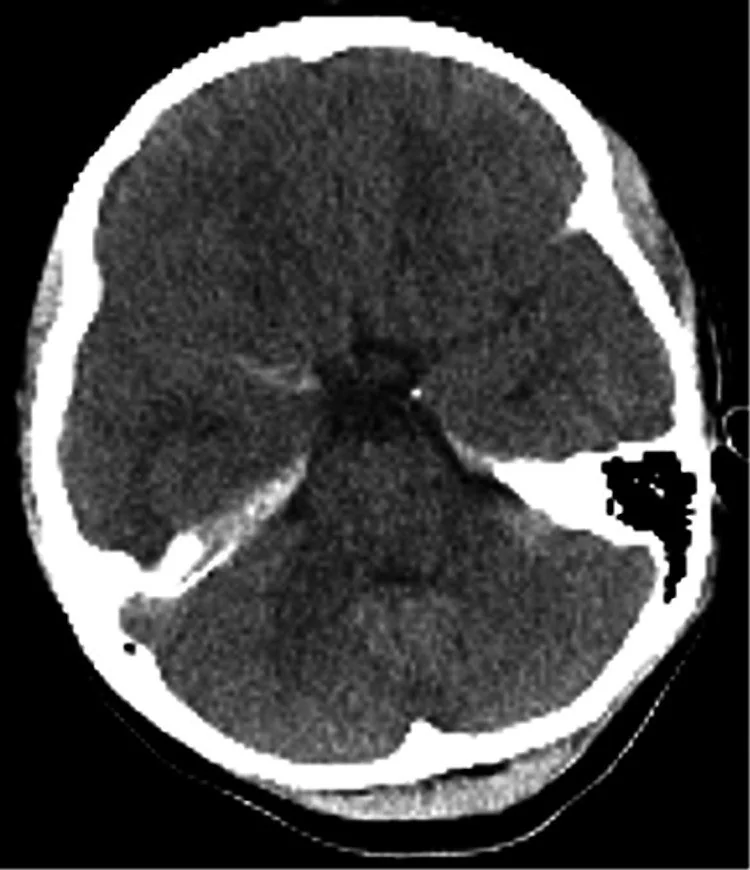
Künt kafa travması sonrası beyin yüzeyinde kanama olmadan gelişen fokal doku ezilmesi ve ödem, özellikle erken BT'de kolayca gözden kaçabilir. Kontrastsız BT'de kortikal şişlik, sulkusların silinmesi ve gri-beyaz ayrımında bulanıklaşma görülebilir; MRI küçük ve hemorajik olmayan lezyonları daha duyarlı gösterir. Travmanın ilk görüntülemesinde normal ya da belirsiz bir BT, aksonal yaralanma veya kontüzyonu dışlamaz. Fokal ödemin ilerlemesi ve bası etkisi fark edilmezse ikincil beyin hasarı küçümsenebilir.
Faz ve pencere
- Kontrastsız tanısal
- Kontüzyon bölgesinde edemaya bağlı fokal düşük atenüasyon görülebilir; belirgin hiperdens kan bulunmayabilir veya varsa kan ürünleri hiperdensitedir. Akut kafa travmasında başlangıç BT incelemesi kontrastsız yapılır; intravenöz kontrast, vasküler yaralanma olasılığı yoksa endike değildir.
Önerilen pencereler: Beyin (G 80 / M 40), Subdural (G 200 / M 75).
BT bulguları
- Kortikal şişlik — odaksal girus kalınlaşması ve komşu sulkusun karşı hemisfere göre daralması.
- Fokal düşük atenüasyon — travma alanına uyan kortikal veya yüzeyel subkortikal hipodensite; kanama eşlik etmeyebilir.
- Gri-beyaz ayrımında silinme — etkilenmiş girusta korteks ile altındaki beyaz cevher sınırının seçilememesi.
- İnferior frontal ve anterior inferior temporal dağılım — kontüzyonlar en sık bu bölgelerde görülür; bu bölgeler kafa tabanındaki kemik kaynaklı sertleşme artefaktından etkilenebilir.
- Sulkus silinmesi, travmada artmış kafa içi basınçla ilişkili BT bulgularından biridir. Kontrastsız BT'de yaygın gri-beyaz ayrım kaybı ve ventriküllerin kısmen silinmesi, yaygın serebral ödemi destekleyebilir.
- Eşlik eden travma işaretleri — aynı anatomik bölgede küçük hemorajik noktalar, subdural/subaraknoid kan veya komşu kafatası yaralanması.
- İzlemde belirginleşme — seri görüntülemede kontüzyon boyutu artabilir ve yeni ya da artan hemorajik bileşen görülebilir.
- Kontüzyonlar ilk 48 saatte belirgin biçimde büyüyebilir; takip görüntülerinde boyut ve hemorajik bileşendeki değişiklikler karşılaştırılır.
Normalde
Normal frontal ve temporal giruslar benzer kalınlıkta, gri cevher-beyaz cevher sınırı net ve üzerlerindeki sulkuslar açıktır; parankimde odaksal düşük atenüasyon görülmez. Aynı seviyedeki karşı girusla kıyaslayıp kortikal kalınlaşma, sulkus kaybı ve gri-beyaz ayrımındaki bulanıklığın travma bölgesine sınırlı olup olmadığını değerlendirin.
Normal BT ile kıyasla
Aynı bölgenin, kaynak veri setinde patoloji içermediği belirtilen bir BT incelemesini kesit kesit kaydırın; organ sınırlarını açarak anatomiyi hasta görüntüsüyle karşılaştırın. Küçük rastlantısal bulgular tümüyle dışlanmamıştır.
Kaynak: TotalSegmentator v2.01 veri seti (Wasserthal ve ark., Radiology: Artificial Intelligence 2023), CC BY 4.0, vaka s0103; organ sınırları veri setinin otomatik segmentasyonundan, birleştirilerek sadeleştirildi. Görüntüler 2,5 mm kesit aralığına yeniden örneklendi.
Ayırıcı tanı
- Akut arteriyel infarkt ayırıcı tanıda düşünülmelidir; erken iskemik değişiklikler BT’de karşı hemisferle karşılaştırmalı beyin dansitometrisiyle değerlendirilebilir.
- Yaygın serebral ödem
- BT'de gri-beyaz ayrımında yaygın silinme ve ventriküllerde kısmi bası görülebilir.
- Ensefalit
- enfeksiyöz veya inflamatuvar nedenler akut nörolojik bulguların ayırıcı tanısında yer alabilir.
- Lezyon çevresi ödemi
- ödem ve kitle etkisi; kitle, enfeksiyon veya inflamasyon gibi farklı nedenlerle de görülebilir.
- Parsiyel hacim veya hareket artefaktı
- hareket artefaktı kafa BT görüntüsünü bozabilir.
Tuzaklar
- Hemorajik odak bulunmamasını kontüzyon yokluğu şeklinde yorumlamayın; kortikal şişlik ve gri-beyaz bulanıklık, özellikle erken travma BT'sinde tek ipucu olabilir.
- Yaygın sulkus silinmesini fokal kontüzyonla karıştırmayın; iki taraflı kortikal oluklar ve bazal sisternalar birlikte basılıysa global şişme olasılığını düşünün.
- Kafa tabanı yakınındaki temporal ve inferior frontal parankim kemik kaynaklı sertleşme artefaktından etkilenebilir; odak sonraki kesitlerde anatomik devamlılık gösteriyor mu kontrol edin.
- Erken BT'nin negatifliği küçük hemorajik olmayan kontüzyonu dışlamaz; klinik uyumsuzlukta daha duyarlı MRI ve zaman içindeki değişim önem taşır.
- İnferior frontal ve anterior inferior temporal kontüzyonlar komşu kafa tabanından kaynaklanan ışın sertleşmesi artefaktının bulunduğu bölgelerde görülebilir; bu artefakt görüntülemeyi güçleştirebilir.
Kendini dene
Travma sonrası temporal lobda fokal hipodensite var; belirgin hiperdens kanama yok. En uygun yorum nedir?
Cevabı göster
Hemorajik olmayan kontüzyon. Akut kontüzyon BT'de ödem kaynaklı fokal hipodensite olarak görülebilir; kanama yoksa hiperdens kan odağı bulunmayabilir. Kaynakta kontüzyonun BT'de ödem kaynaklı fokal hipodensite gösterebildiği, kanama eşlik ettiğinde kan ürünlerinin hiperdens olduğu belirtilir.
Kontrastsız BT'de yaygın serebral ödemi en iyi destekleyen bulgu hangisidir?
Cevabı göster
Gri-beyaz ayrımının yaygın silinmesi. Yaygın serebral ödemde gri-beyaz ayrımında yaygın tersine dönüş ve ventriküllerde kısmi silinme görülebilir.
İlgili konular
Kaynaklar
Bu sayfadaki 38 cümle ve 2 quiz sorusu aşağıdaki kaynaklardan alıntılarla otomatik olarak karşılaştırıldı; 20 cümle bu karşılaştırmada düzeltildi (2026-10-09).
- Role of Magnetic Resonance Imaging in Acute Head Injury Patients with Normal Computed Tomography Brain Findingspmc.ncbi.nlm.nih.gov
- Imaging of Neurotrauma in Acute and Chronic Settingspmc.ncbi.nlm.nih.gov
- Research progress on biomarkers of traumatic brain injurypmc.ncbi.nlm.nih.gov
- Incorporating algorithmic uncertainty into a clinical machine deep learning algorithm for urgent head CTspmc.ncbi.nlm.nih.gov
- Computed Tomographic Imaging Appraisal of Traumatic Brain Injury in a Tertiary Hospital in South-South Nigeria: A 6-Year Reviewpmc.ncbi.nlm.nih.gov
- Dual-Energy CT in Hemorrhagic Progression of Cerebral Contusion: Overestimation of Hematoma Volumes on Standard 120-kV Images and Rectification with Virtual High-Energy Monochromatic Images after Contrast-Enhanced Whole-Body Imaging.pubmed.ncbi.nlm.nih.gov
- Enoxaparin in the treatment of severe traumatic brain injury: A randomized clinical trial.pubmed.ncbi.nlm.nih.gov
- Outcomes of Spinal Cord Injury: WFNS Spine Committee Recommendations.pubmed.ncbi.nlm.nih.gov
- Postmortem CT: Applications in Clinical and Forensic Medicine.pubmed.ncbi.nlm.nih.gov
- Imaging for the diagnosis and management of traumatic brain injury.pubmed.ncbi.nlm.nih.gov
- Neuroimaging of structural pathology and connectomics in traumatic brain injury: Toward personalized outcome prediction.pubmed.ncbi.nlm.nih.gov
- Role of Magnetic Resonance Imaging in Acute Head Injury Patients with Normal Computed Tomography Brain Findings.pubmed.ncbi.nlm.nih.gov
- Updates in Management of Acute Disorders of Consciousness After Traumatic Injury.pubmed.ncbi.nlm.nih.gov
- Evaluating clinical characteristics and neuroimaging indications of paediatric traumatic brain injury patients using Scandinavian paediatric traumatic brain injury guidelines in Southwest Finland.pubmed.ncbi.nlm.nih.gov
- The Anticoagulation Dilemma: Concurrent Traumatic Brain Hemorrhage and Cerebral Venous Thrombosis in a Blast Injury Patient.pubmed.ncbi.nlm.nih.gov
- Dual Impact: Coup-Contrecoup Brain Injury in a Young Cyclist-A Case Report.pubmed.ncbi.nlm.nih.gov
- Correlation of Contusion Morphology and Volume With Functional Recovery and in Hospital Mortality in Traumatic Brain Injury.pubmed.ncbi.nlm.nih.gov
- An interpretable multimodal model for early prediction of delayed hematoma progression in frontal lobe contusion: a machine learning approach.pubmed.ncbi.nlm.nih.gov
- Advances in imaging studies of contusion penumbra.pubmed.ncbi.nlm.nih.gov
- Neuroimaging of Traumatic Brain Injury.pubmed.ncbi.nlm.nih.gov
- Imaging in Chronic Traumatic Encephalopathy and Traumatic Brain Injury.pubmed.ncbi.nlm.nih.gov
- Changes in brain morphology over the first year in adult mixed-mechanism mild traumatic brain injury: the role of injury severity factors.pubmed.ncbi.nlm.nih.gov
- Seizure and aspiration complicating acute expanding epidural hematoma in a tuberous sclerosis adolescent: a case report of clinical and surgical emergency.pubmed.ncbi.nlm.nih.gov
- Cerebral contusions - Pathomechanism, predictive factors for progression and historical and current management.pubmed.ncbi.nlm.nih.gov
- Injury Patterns in Soccer-Induced Maxillofacial Fractures and Ocular Trauma: A Narrative Review.pubmed.ncbi.nlm.nih.gov
- Review of the Brain's Behaviour after Injury and Disease for Its Application in an Agent-Based Model (ABM).pubmed.ncbi.nlm.nih.gov
- Reversibility of cognitive and psychiatric impairments following surgical resection of frontotemporal meningiomas: a predictive factor analysis.pubmed.ncbi.nlm.nih.gov
- Development of the SIMPLE scoring system for predicting malignant brain edema in patients with large hemispheric infarction following acute ischemic stroke.pubmed.ncbi.nlm.nih.gov
- Development and validation of a prediction model for postoperative cerebral edema progression in emergency traumatic brain injury patients.pubmed.ncbi.nlm.nih.gov
- Predictors of Intracranial Hemorrhage on Initial Head Computed Tomography After Mild Traumatic Brain Injury.pubmed.ncbi.nlm.nih.gov
- Successful endoscopic evacuation of traumatic intracerebral hemorrhage: A report of two cases.pubmed.ncbi.nlm.nih.gov
- Clinical and Radiological Characteristics of Pediatric Skull Fractures and Their Association with Neurosurgical Intervention: A Retrospective Cohort Study.pubmed.ncbi.nlm.nih.gov
- Post-Traumatic Middle Cerebral Artery Pseudoaneurysm Following Depressed Skull Fracture: Case Report and PRISMA-Guided Literature Review.pubmed.ncbi.nlm.nih.gov
- Acute fatal delayed subdural hemorrhage diagnosed with head computed tomography scan 19 days after hospital admission: A case report.pubmed.ncbi.nlm.nih.gov
- Adjunctive middle meningeal artery embolization with low-viscosity liquid embolic agents for acute epidural hematoma: technical considerations and a case series.pubmed.ncbi.nlm.nih.gov
- Grey and white matter alteration in patients with patent foramen ovale: A cross-sectional observational study using combined surface-based morphometry and voxel-based morphometry.pubmed.ncbi.nlm.nih.gov
- Linking changes in sulcal morphometry to cognitive development from childhood to adolescence.pubmed.ncbi.nlm.nih.gov
- Magnetic Resonance Imaging of the Neonatal Brain: Modalities, Scoring Systems, and Clinical Applications.pubmed.ncbi.nlm.nih.gov
- Tissue clock-guided prediction and intervention of futile recanalization: towards precision therapy in mechanical thrombectomy.pubmed.ncbi.nlm.nih.gov
- Probabilistic MRI Maps for the Presentation and Management of Intracranial Meningiomas.pubmed.ncbi.nlm.nih.gov
- Automated brain computed tomographic densitometry of early ischemic changes in acute stroke.pubmed.ncbi.nlm.nih.gov
- Developmental Venous Anomaly Presenting as an Acute Stroke Mimic.pubmed.ncbi.nlm.nih.gov
- Subarachnoid Hemorrhage Confirmed by Magnetic Resonance Imaging in a Patient with Brain Death owing to Hypoxic Encephalopathy Following Suicide by Hanging.pubmed.ncbi.nlm.nih.gov
- Increased brain microvascular hemoglobin concentrations in children with cerebral malaria.pubmed.ncbi.nlm.nih.gov
- Neuromonitoring after Pediatric Cardiac Arrest: Cerebral Physiology and Injury Stratification.pubmed.ncbi.nlm.nih.gov
- Research progress on the association between Hashimoto's thyroiditis and autoimmune encephalitis: a review.pubmed.ncbi.nlm.nih.gov
- Case Report: Myelin oligodendrocyte glycoprotein antibody-associated cortical encephalitis masked by peri-ictal magnetic resonance imaging abnormalities.pubmed.ncbi.nlm.nih.gov
- The first reported case of <i>Balamuthia</i> amoebic encephalitis initially presenting as anti-NMDAR encephalitis.pubmed.ncbi.nlm.nih.gov
- Central Nervous System Tuberculoma in Qatar: Clinical, Radiological, and Pathological Insights From a Rare Case With Literature Review.pubmed.ncbi.nlm.nih.gov
- Predominantly cystic glioblastoma mimicking benign cystic lesions: A radiological diagnostic challenge.pubmed.ncbi.nlm.nih.gov
- Posterior reversible encephalopathy syndrome associated with <i>Rickettsia conorii</i> infection: a rare case report.pubmed.ncbi.nlm.nih.gov
- Cinematic Rendering of Brain Magnetic Resonance Imaging: Photorealistic Visualization of Normal Neuroanatomy and Primary Brain Tumors.pubmed.ncbi.nlm.nih.gov
- PET Imaging of the Human Brain with Microvolumetric Spatial Resolution.pubmed.ncbi.nlm.nih.gov
- Venous-significant intracranial hemorrhage in neonatal HIE treated with therapeutic hypothermia: imaging phenotypes, diagnostic pitfalls, and prognostic implications.pubmed.ncbi.nlm.nih.gov
- Dementia resulting from traumatic brain injury.pubmed.ncbi.nlm.nih.gov
- Donanemab: Appropriate use recommendations.pubmed.ncbi.nlm.nih.gov
- Establishment and validation of prognosis model for patients with cerebral contusion.pubmed.ncbi.nlm.nih.gov
- Parenchymal Insults in Abuse-A Potential Key to Diagnosis.pubmed.ncbi.nlm.nih.gov
- Spectral CT and Photon-counting Detector CT: Principles and Applications in Neuroradiology.pubmed.ncbi.nlm.nih.gov
- Where Does the Signal Go? Technical Challenges of CT Perfusion in Lacunar and Infratentorial Stroke.pubmed.ncbi.nlm.nih.gov
- Intracranial venous thrombosis imaging by anatomical location: an educational review with mimics and diagnostic pitfalls.pubmed.ncbi.nlm.nih.gov
- Pediatric Mild Traumatic Brain Injury and Concussion: Modern Pathophysiological Insights, Diagnostic Advances, and Active Management Protocols.pubmed.ncbi.nlm.nih.gov
- Continuum of Irreversible and Potentially Reversible Traumatic Brain Injury Sequelae: Axonal Injury and Hydrocephalus.pubmed.ncbi.nlm.nih.gov
- Cervical Collar in Adult Trauma: Evidence, Controversies, and Clinical Decision-Making.pubmed.ncbi.nlm.nih.gov
- [<sup>18</sup>F]DPA-714 PET in presurgical evaluation of drug-resistant epilepsy: from clinical to pathology.pubmed.ncbi.nlm.nih.gov
- Mapping the multiscale neuroanatomy of GRN-related frontotemporal dementia using mode-based morphometry.pubmed.ncbi.nlm.nih.gov
- Metabolic connectivity alterations in amyotrophic lateral sclerosis: Individual network analysis based on Wasserstein distances.pubmed.ncbi.nlm.nih.gov
- Digital Cognitive Phenotyping for Differential Diagnosis and Monitoring in Neurological Conditions.pubmed.ncbi.nlm.nih.gov
- Early Signs of Elevated Intracranial Pressure on Computed Tomography Correlate With Measured Intracranial Pressure in the Intensive Care Unit and Six-Month Outcome After Moderate to Severe Traumatic Brain Injury.pubmed.ncbi.nlm.nih.gov
- The Dynamics of Neuroinflammation in Traumatic Brain Injury: Molecular Markers Useful for Establishing the Post-Traumatic Interval in Forensic Practice.pubmed.ncbi.nlm.nih.gov
- Forward and inverse electroencephalographic modeling in health and in acute traumatic brain injury.pubmed.ncbi.nlm.nih.gov
- Cutting-edge imaging of the spine.pubmed.ncbi.nlm.nih.gov
- Contusions bias cortical thickness estimates after traumatic brain injury: A TRACK-TBI study.pubmed.ncbi.nlm.nih.gov
- Brain lesions in pediatric abusive head trauma: prevalence, pathophysiology, patterns, and a classification system.pubmed.ncbi.nlm.nih.gov
- Imaging of Neurotrauma in Acute and Chronic Settings.pubmed.ncbi.nlm.nih.gov
- Research progress on biomarkers of traumatic brain injury.pubmed.ncbi.nlm.nih.gov
- Incidence, risk factors, and clinical outcomes of acute brain swelling associated with traumatic acute subdural hematoma: a retrospective study utilizing novel diagnostic criteria.pubmed.ncbi.nlm.nih.gov
- Integrative Diagnostic and Prognostic Paradigms in Diffuse Axonal Injury: Insights from Clinical, Histopathological, Biomolecular, Radiological, and AI-Based Perspectives.pubmed.ncbi.nlm.nih.gov
- Assessment value of blood pressure variability combined with serum tau protein for the prognosis of patients with traumatic brain injury.pubmed.ncbi.nlm.nih.gov
- Neuroprotective effect of triptolide on neuronal inflammation in rats with mild brain injury.pubmed.ncbi.nlm.nih.gov
- Incorporating algorithmic uncertainty into a clinical machine deep learning algorithm for urgent head CTs.pubmed.ncbi.nlm.nih.gov
- Trauma Unmasking Pituitary Apoplexy: Coexisting Epidural Hematoma and Sellar Mass - A Case Report with Selected Cases from the Literature.pubmed.ncbi.nlm.nih.gov
- Neuroimaging in traumatic brain imaging.pubmed.ncbi.nlm.nih.gov
- Ischemic stroke and intervention strategies based on the timeline of stroke progression: Review and prospects.pubmed.ncbi.nlm.nih.gov
- Acute stroke magnetic resonance imaging: current status and future perspective.pubmed.ncbi.nlm.nih.gov
- Diagnostic and Prognostic Capability of Newer Magnetic Resonance Imaging Brain Sequences in Diffuse Axonal Injury Patient.pubmed.ncbi.nlm.nih.gov
- A case-control study on the driving factors of childhood brain volume loss: What pediatricians must explore.pubmed.ncbi.nlm.nih.gov
- Seizure after surgical treatment of chronic subdural hematoma-Associated factors and effect on outcome.pubmed.ncbi.nlm.nih.gov
- Evaluation of Cognitive Function in Stroke Patients With Lesions in Different Brain Regions Using P300 Event-Related Potentials Combined With Video EEG.pubmed.ncbi.nlm.nih.gov
- Traumatic Brain Injury and Chronic Traumatic Encephalopathy: Not Only Trigger for Neurodegeneration but Also for Cerebral Amyloid Angiopathy?pubmed.ncbi.nlm.nih.gov
- Neuropsychological and Structural Neuroimaging Outcomes in LGI1-Limbic Encephalitis: A Case Study.pubmed.ncbi.nlm.nih.gov
- Cerebral white matter: neuroanatomy, clinical neurology, and neurobehavioral correlates.pubmed.ncbi.nlm.nih.gov
- A survey of transformer-based architectures in medical image analysis: models, applications, and challenges.pubmed.ncbi.nlm.nih.gov
- Deep Learning-Based Versus Iterative Image Reconstruction for Unenhanced Brain CT: A Quantitative Comparison of Image Quality.pubmed.ncbi.nlm.nih.gov
- Multiscale Coupling From Mastication to Retronasal Aroma Perception: The PG-DTCFN Model and Multiphysics Simulation.pubmed.ncbi.nlm.nih.gov
- Postviral encephalitis in a child with bilateral basal ganglia involvement: MRI findings and diagnostic considerations.pubmed.ncbi.nlm.nih.gov
- The role of brain MRI in autoimmune encephalitis.pubmed.ncbi.nlm.nih.gov
- A systematic approach to MR spectroscopy of the brain: Indications, protocol, metabolites, and spectral analysis in neurologic diseases.pubmed.ncbi.nlm.nih.gov
- Thai Guideline for Nuclear Medicine Investigations of Neurocognitive Disorders: Nuclear Medicine Society of Thailand, the Neurological Society of Thailand, and Thai Medical Physicist Society Collaboration.pubmed.ncbi.nlm.nih.gov
- Cerebellar hypermetabolism disrupts fronto-cerebellar resting-state functional connectivity and associated executive compensation.pubmed.ncbi.nlm.nih.gov
- Advancing the Paradigm of Temporal Lobe Epilepsy as a Network Disease: The Promise of Biomarkers and Targeted Disease Modification.pubmed.ncbi.nlm.nih.gov
- A systematic approach to detection of epileptogenic foci on imaging: protocols, entities, search pattern, and reporting tools.pubmed.ncbi.nlm.nih.gov
- Neurological and Neuropsychiatric Manifestations of Pediatric Inflammatory Multisystem Syndrome (PIMS/MIS-C): A Narrative Review.pubmed.ncbi.nlm.nih.gov
- Ultra-low-field MRI for bedside imaging of severe multiple sclerosis.pubmed.ncbi.nlm.nih.gov
- The role of magnetic resonance imaging (MRI) in the detection of intracellular lipid content in adrenal adenomas.pubmed.ncbi.nlm.nih.gov
- Migratory vasodilatation of cerebral arteries in MELAS episodes: a case report and literature review.pubmed.ncbi.nlm.nih.gov
- Molecular Hydrogen Therapy Enhances Immune Markers in Treg, Plasma, Tr1 Cells, and KLRG1 Expression on Tc Cells: A Case of Acute SDH With Midline Shift and Uncal Herniation Post-decompressive Craniectomy.pubmed.ncbi.nlm.nih.gov
- Severe intracranial hemorrhage or ischemia associated with unfavorable outcomes after pediatric in-hospital cardiac arrest.pubmed.ncbi.nlm.nih.gov
- Anatomy-Guided Microsurgical Resection of a Dominant Frontal Lobe Tumor Without Intraoperative Adjuncts: A Case Report from a Resource-Limited Context.pubmed.ncbi.nlm.nih.gov
- Glasgow coma scale-pupils at 24-hours as a reliable marker for extremely poor prognosis in traumatic brain injury - A prospective cohort.pubmed.ncbi.nlm.nih.gov
- Aberrant Hippocampal Neurogenesis Is a Conserved Response to Stroke in Mice: A Multicenter Multimodel Study.pubmed.ncbi.nlm.nih.gov
- Peri-Microvascular Glycogen and Lactate Regulate Capillary Constrictions and Ischemia Outcome in Mice.pubmed.ncbi.nlm.nih.gov
- Post-Traumatic Cerebral Infarction: A Narrative Review of Pathophysiology, Diagnosis, and Treatment.pubmed.ncbi.nlm.nih.gov
- Deep learning algorithm in detecting intracranial hemorrhages on emergency computed tomographies.pubmed.ncbi.nlm.nih.gov
- Stab Wounds to the Head; Case Series, Review of Literature, and Proposed Management Algorithm.pubmed.ncbi.nlm.nih.gov
Eğitim amaçlıdır; hasta başında tanı ve tedavi kararının yerine geçmez, tıbbi tavsiye değildir. Metinler yapay zekâ desteğiyle yazıldı ve otomatik bir adımda kaynak alıntılarıyla karşılaştırıldı; bu bir tıbbi doğrulama değildir ve içerik uzman radyolog incelemesinden geçmedi. Klinik kararlarda güncel kılavuzları, kurum protokollerini ve radyoloji raporunu esas alın.